US-Canada trade deal near finalisation, but key details remain sketchy
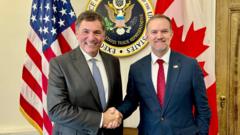
Washington and Ottawa are closing in on a new trade agreement, with leaders on both sides declaring the effort a success. However, significant questions remain about what the deal actually covers, what concessions each nation has made, and what unresolved issues still need to be addressed.
President Donald Trump and Canadian Prime Minister Mark Carney both touted the proposed agreement as a milestone. Trump said it would be welcomed by American farmers and manufacturers, while Carney said it would secure "the best terms" for Canada's strategic sectors and provide long-sought certainty for cross-border commerce.
The announcement comes after trade negotiators met for the third time in as many days, following Trump's decision to pause a fresh wave of tariffs he had threatened to impose on a range of Canadian goods. The temporary reprieve has offered room for dialogue, but the precise shape of the eventual deal remains unclear.
Speaking to reporters on Wednesday after a 45-minute session with his Canadian counterpart, United States Trade Representative Jamieson Greer said American officials were "very happy" with the latest discussions. He signalled that he would soon brief Congress and US stakeholders on the agreement's details.
"We feel confident that we've reached an agreement that will not only continue to protect American workers, American jobs, American supply chains, but really strengthen the North American economy," Greer said. He added that the deal would eliminate "some of the irritants" that the US has had with Canada.
Yet beyond these broad assurances, few specifics have been made public. Negotiators have not disclosed which sectors are covered, what tariffs will remain or be lifted, or how the deal will handle contentious issues such as dairy, automotive manufacturing, and digital trade. The lack of transparency has left businesses and analysts guessing about the practical impact of the agreement.
The US-Canada trading relationship is one of the largest in the world, with billions of dollars in goods and services crossing the border daily. The two nations are deeply integrated in sectors such as energy, agriculture, and manufacturing, particularly in automotive supply chains. Any shift in tariffs or trade rules can have immediate ripple effects on businesses and consumers in both countries.
The current negotiations follow years of friction over trade policy. The previous United States-Mexico-Canada Agreement, which replaced the older NAFTA in 2020, was itself the product of intense talks. Now, with new tariff threats looming, the two countries appear to be seeking a fresh framework to stabilise their economic ties.
Carney's office said the deal would prioritise Canada's strategic sectors, but did not specify what those sectors are beyond general references to resources and technology. Similarly, Trump administration officials have emphasised the importance of American manufacturing and agriculture, but have not detailed how the agreement would benefit those industries.
The lack of concrete details has also raised questions about the ratification process. In the United States, trade agreements require Congressional approval and must satisfy a wide range of domestic interests. In Canada, the federal government may need to consult provinces and industry groups before signing off.
Analysts note that the final wording of any trade pact can take weeks or months to settle, even after leaders announce a political deal. The current discussions appear to be at a framework stage, where broad principles have been agreed but the legal text is still being drafted.
Greer's commitment to brief Congress and stakeholders suggests that Washington is preparing for a more formal review. It remains unknown when a full text will be released to the public, or when both governments will hold formal signing ceremonies.
For now, businesses on both sides of the border are watching closely, hoping that the promised deal will bring stability. But until the specifics are made public, the true scope of this agreement will remain guesswork.







