US, Canada claim trade deal progress as tariffs paused, but details scarce
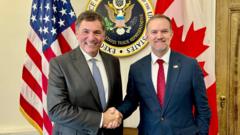
The United States and Canada say they are close to finalising a trade agreement, with both leaders hailing the outcome as a success. Yet, key details about the scope of the deal and the concessions made by each side remain undisclosed, leaving many questions unanswered.
President Donald Trump said the proposed agreement would be welcomed by American farmers and manufacturers. Prime Minister Mark Carney of Canada stated that it would secure 'the best terms' for Canada's strategic sectors and provide much-needed certainty for future bilateral trade. Both leaders spoke optimistically, though neither provided specifics.
Trade negotiators met on Wednesday for the third time in as many days. The discussions came after Trump paused a new wave of tariffs that he had threatened to impose overnight on a range of Canadian goods. The pause appears to have created a window for further negotiations, but the temporary nature of the relief underscores the fragility of the process.
After a 45-minute meeting with his Canadian counterpart, United States Trade Representative Jamieson Greer told reporters that the Americans were 'very happy' with the latest discussions. He said he would soon brief Congress and US stakeholders on the details of the deal. 'We feel confident that we've reached an agreement that will not only continue to protect American workers, American jobs, American supply chains, but really strengthen the North American economy,' Greer said. He added that the deal eliminates 'some of the irritants' that the US has had with Canada.
Despite the upbeat tone, the substance of the agreement remains murky. There is no public information on which sectors are covered, what tariffs will be reduced or removed, and what mechanisms will be put in place for enforcement or dispute resolution. Neither side has disclosed the specific concessions made to break the impasse. Analysts note that the lack of transparency could create uncertainty for businesses and investors who depend on predictable cross-border trade rules.
The negotiations take place against a backdrop of heightened trade tensions. Earlier this year, the US threatened sweeping tariffs on Canadian goods, citing trade imbalances and border security concerns. Canada responded with threats of retaliatory measures. The new agreement, if finalised, would aim to ease those tensions and restore a degree of stability to one of the world's largest trading relationships.
For now, the focus shifts to the next steps. Greer's promise to brief Congress suggests that a formal announcement may be forthcoming, but it is unclear when that will happen or whether the deal will require legislative approval. The pause on tariffs offers temporary relief, but without detailed terms, the long-term outlook remains uncertain.
Observers will be watching closely to see whether the deal lives up to the leaders' billing. The international community, particularly industries on both sides of the border, is looking for clarity and concrete measures. Until then, the 'success' can only be measured by the progress made in the talks, not by the specifics, which have yet to see the light of day.







