Trump Says US 'Thinking About' Striking Iran — and Hints at a Deal Too
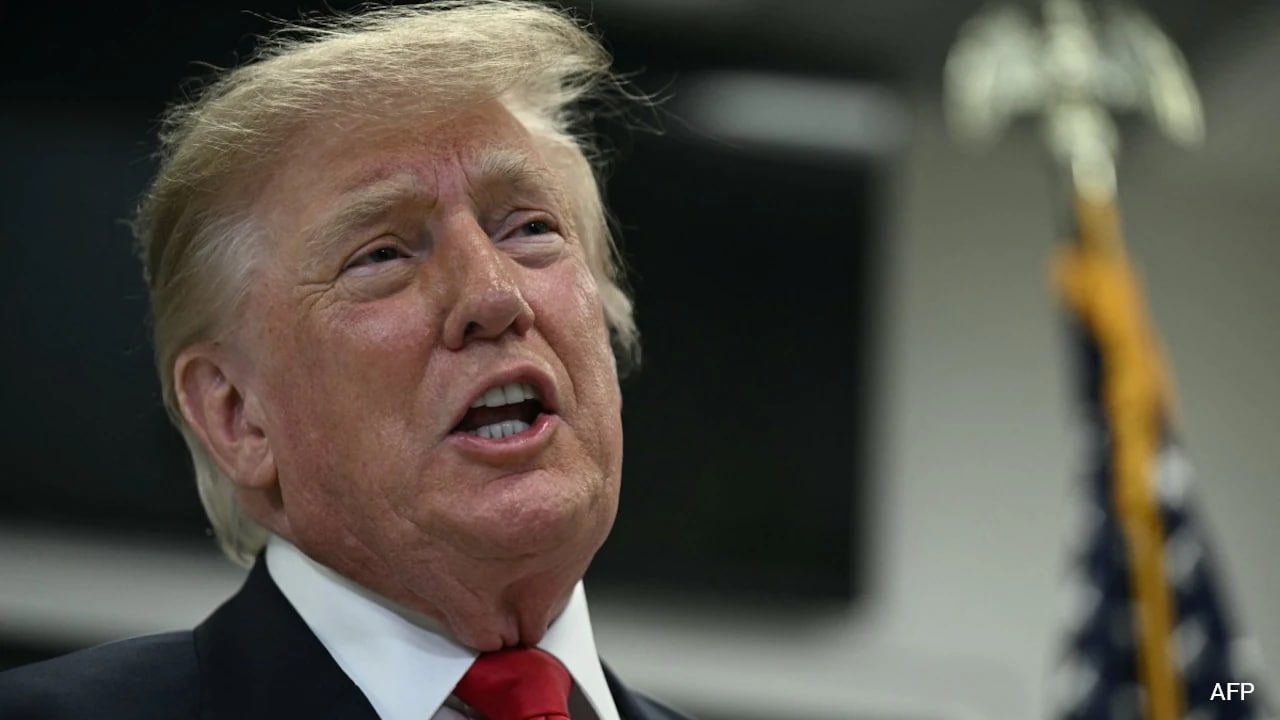
United States President Donald Trump has said Washington is "thinking about" carrying out military strikes on Iran, indicating an attack could come as early as Sunday, even as he held out the prospect of a negotiated end to the war in the Middle East.
Speaking to reporters in Florida on Saturday after casting his ballot ahead of the November 3 congressional elections, Mr. Trump was asked whether the United States would strike Iran. "Do you really think I'd tell you that?" he replied.
When the reporter persisted, saying the question had to be asked, the President called it "stupid" but confirmed that military action was under consideration. "Maybe tomorrow... There's a possibility I will. There's also a possibility we'll have a nice, big, beautiful agreement," he said. "They want to make a deal, but the problem is, will they hold the deal."
Mr. Trump repeated that the earlier strikes were intended to prevent Tehran from acquiring a nuclear weapon.
His remarks follow a comment on Friday that the United States "may do another little Epic Fury" — a reference to the name Washington has used for its attacks on Iran. He had earlier said no strikes would take place before the November 3 congressional elections. Separately, Tom Barrack, the US ambassador to Turkey, said in a podcast interview on Friday that a strike that weekend was possible. "Could there be a strike this weekend? Absolutely," he said.
The war in the Middle East began on February 28, when the United States and Israel launched joint strikes on Iran. According to accounts at the time, the strikes killed Iran's Supreme Leader, Ali Khamenei, along with several senior military commanders. Tehran retaliated by attacking American bases in the region and closing the Strait of Hormuz, the world's most vital energy conduit, sending oil prices worldwide sharply higher.
On June 17, Mr. Trump and his Iranian counterpart, Masoud Pezeshkian, signed a 14-point agreement to end hostilities. The deal provided for an immediate halt to military operations, including in Lebanon, and committed both countries to working towards a final settlement within 60 days. On July 8, however, Mr. Trump declared the agreement "over", and Tehran suspended the memorandum of understanding a week later, accusing Washington of "violating all its commitments". Since then, the President has said he is in no hurry to reach a deal.
Israeli Prime Minister Benjamin Netanyahu, who faces elections on Tuesday, has in recent days repeatedly vowed to topple the clerical leadership in Iran, following two major bombing campaigns against the country since last year.
Iranian officials have warned that any resumption of hostilities would be met with retaliation, including threats against undersea communications cables — infrastructure whose disruption could affect internet and financial networks far beyond the region.
Officials have not confirmed the timing, scale or targets of any potential operation, and the signals from Washington have been contradictory. Mr. Trump has in the past publicly floated military action and then deferred it, and his remarks on Saturday left both options — a strike and a settlement — open.
What is clear is that nearly eight months of war have left the region at a stalemate, with a fragile truce in place, a final agreement out of reach, and energy markets still exposed to any escalation. For ordinary people across the Middle East — and for consumers elsewhere paying more for fuel — the practical question is whether the coming days bring another round of fighting or a return to negotiations.