Trump says Strait of Hormuz could reopen 'by tomorrow' amid Iran talks
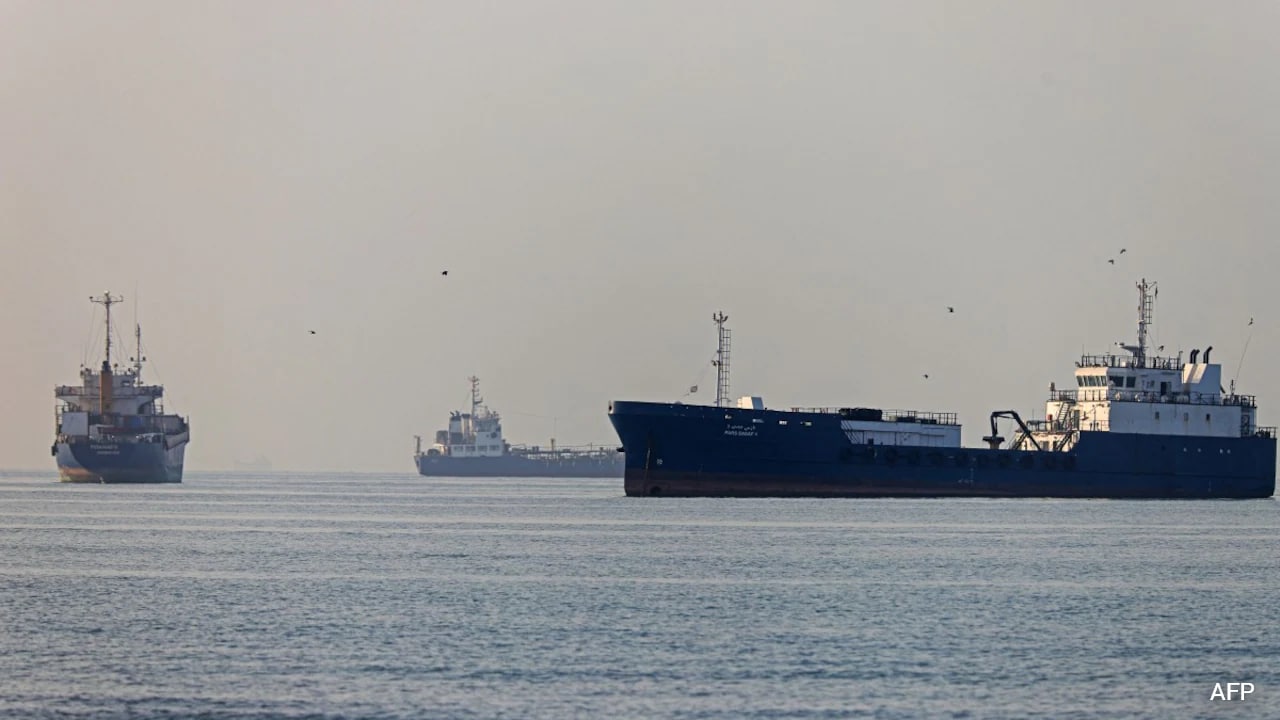
US President Donald Trump said on Monday that discussions were underway to “completely” reopen the Strait of Hormuz “by tomorrow” as part of the first phase of ongoing talks with Iran. Speaking to reporters in the Oval Office, Trump expressed optimism that a development on the strategic waterway could happen within a day.
“Well, we'll find out today or tomorrow. I mean, they're going to go quickly one way or the other. It's not very complex. We're talking about the Strait, the opening of the Strait, having it open, literally by tomorrow. Completely open. And that's Phase 1,” Trump said.
The US President said the next stage of negotiations would focus on the “denuclearisation” of Iran, reiterating that Tehran would never be allowed to possess a nuclear weapon. “Phase 2 is we then will talk about the nuclear capacity... I think most accurately, the denuclearisation of Iran has to happen. Has to happen. That'll be the second phase. But the first phase is the opening of the Strait, the second phase will be the denuclearisation, and that'll take a little while. But we're very strong on it. They cannot have a nuclear weapon. Iran cannot have a nuclear weapon, and I have never changed that position,” Trump said.
Trump also claimed that Iran had been given a “last chance” to reach an agreement, and that the United States had paused a planned military strike after requests from Saudi Arabia, the United Arab Emirates (UAE), Qatar, and Iran to allow diplomacy to proceed. “This is a last chance. This is not something that if it doesn't happen, this is a last chance for them to sign a good document,” he said.
Asserting that negotiations were taking place at Tehran's request, Trump said, “We are talking right now, we're talking, and we're talking at the request of Iran, backed by Saudi Arabia, backed by UAE, and backed by Qatar in particular, but others also. Many countries called... they all wanted to give this a last chance.”
The President also accused Iran of publicly denying negotiations despite engaging in discussions with US officials. “It's an amazing thing... we have many talks... they'll sometimes deny it, even though they've spent hours and hours together talking. But the talks are going along,” he said.
Trump further claimed Washington had been prepared to launch a major military operation against Iran before diplomatic interventions from regional countries. “We were going to hit them very hard yesterday, very, very hard, harder than any attack... since World War II. We were set to go, and they called and, in addition, Saudi Arabia called, UAE called, Qatar called. I got calls from numerous people,” Trump said. He added, “Now, I don't want to use the word begging, but some were in particular. Iran did not want to be hit. And they said we want to talk... more importantly, from my standpoint, we want to talk about the de-nuclearisation of Iran because that's what it's all about.”
Earlier, Trump intensified his criticism of Iran in a post on Truth Social, describing the Iranian leadership as “unbelievably duplicitous” for allegedly seeking talks with Washington while publicly denying that negotiations were underway. He also reiterated that “Iran will never have a nuclear weapon” and claimed the United States maintained control over access through the Strait of Hormuz until a deal or “total surrender” was achieved.
Trump's remarks came after Iranian Foreign Ministry spokesperson Esmail Baghaei rejected reports of direct or indirect negotiations with the United States, maintaining that Tehran was not engaged in bilateral talks with Washington. Baghaei also said that an understanding between Iran and Oman on a new regional initiative was separate from any US engagement.
The Strait of Hormuz, a vital chokepoint for global oil shipments, has been a flashpoint in US-Iran tensions. The claims made by Trump have not been independently verified, and Iran has consistently denied any talks with Washington. The situation remains fluid, with diplomatic efforts reportedly continuing.