Trump Returns to White House Early as Middle East Tensions Rise
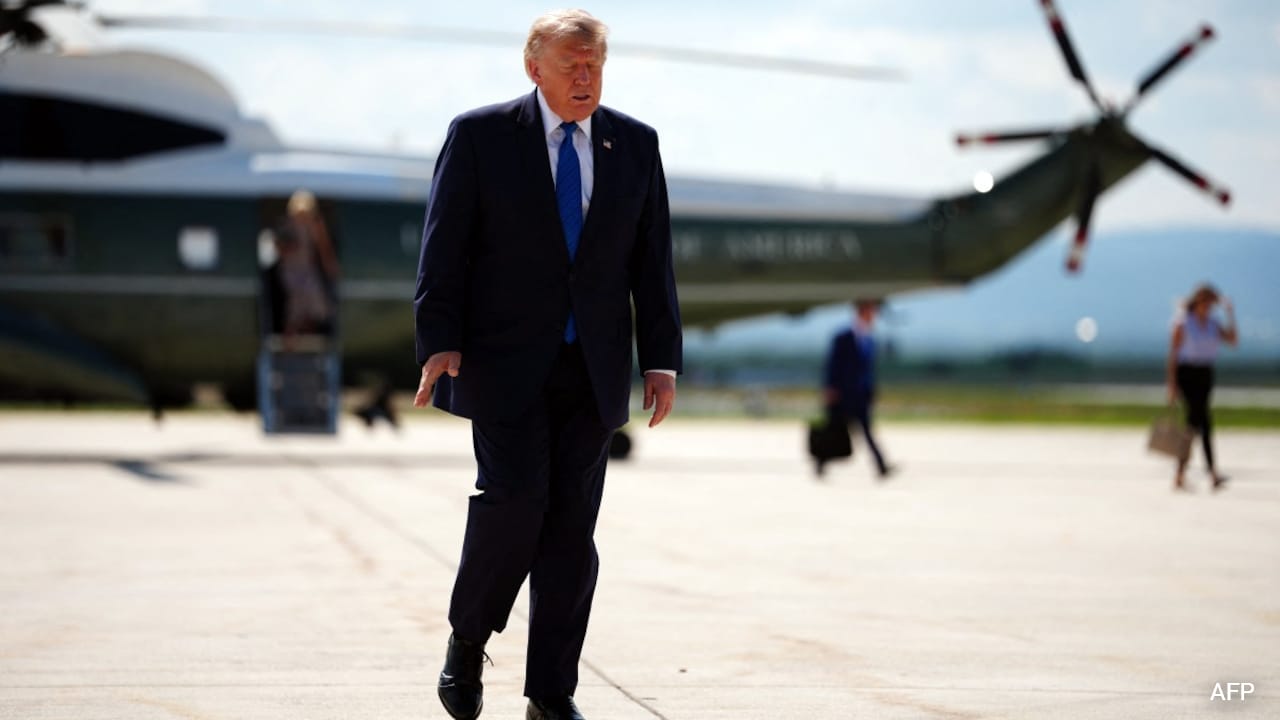
Washington: US President Donald Trump cut short a weekend at Camp David and returned unexpectedly to the White House on Saturday, as tensions rose in the Middle East. The administration offered no explanation for why Trump was no longer returning on Sunday from the secluded presidential retreat in rural Maryland, as had been previously announced.
The change in plan came the same day that the Saudi-led coalition fighting Yemen's Houthis said the Iran-backed group fired a ballistic missile at Riyadh at dawn. The coalition statement followed a fire that broke out near the Saudi capital's international airport.
The State Department and a string of US embassies issued security alerts to Americans. The alerts cited "the potential for unforeseen escalation" and noted that "Iranian-supported Houthis have engaged in hostilities against Saudi Arabia, including civilian airports."
"This military conflict has the potential to escalate rapidly," the State Department warning said. "Americans outside the Middle East should seriously reconsider travel to and through the region."
The alerts did not specify any direct threat to the United States mainland, but they reflected growing concern about the trajectory of the conflict in Yemen, which has been mired in war for years. The Saudi-led coalition intervened in Yemen in 2015 to restore the internationally recognised government after Houthi forces captured the capital, Sanaa. The Houthis, whom the coalition and Western nations accuse Iran of supporting, have since controlled large parts of northern Yemen. Iran has repeatedly denied supplying the Houthis with advanced weaponry.
The United States has historically provided logistical and intelligence support to the Saudi-led coalition, a role that has been debated in Congress amid concerns over civilian casualties. The Trump administration has taken a firm line against Iran and its regional allies, including the Houthis. Saturday's security alerts were issued by the State Department and several US embassies, including those in the Middle East. They advised Americans to remain vigilant and to monitor local news.
The White House has not said whether Trump's return is directly linked to the missile attack or the security alerts. The president had been expected to stay at Camp David until Sunday. Camp David, officially known as Naval Support Facility Thurmont, is a presidential retreat used for meetings, rest and confidential discussions. It is located in Catoctin Mountain Park in Maryland, about 100 kilometres from Washington.
Regional tensions have been high amid the long-running conflict in Yemen, which has killed tens of thousands of people and left millions on the brink of famine, according to the United Nations. The war has also drawn in regional powers and caused repeated cross-border attacks. The latest missile launch and the US travel warnings underscore the risk that the conflict could widen further.
The Houthis have previously fired missiles and drones at Saudi targets, including airports and oil facilities. The Saudi-led coalition has responded with airstrikes inside Yemen. The war is widely viewed as a proxy conflict between Saudi Arabia and Iran, with both sides backing different factions. The United Nations has repeatedly called for a political solution, but peace efforts have so far failed to end the fighting.
As of Saturday evening, there was no further word from the administration on Trump's schedule or on any planned response. US embassies in the region continued to urge citizens to exercise caution. The situation remains fluid, and officials said they were monitoring developments closely.