Trump Denies Offering to Sell US Arms to Xi, Contradicting His Own Envoy
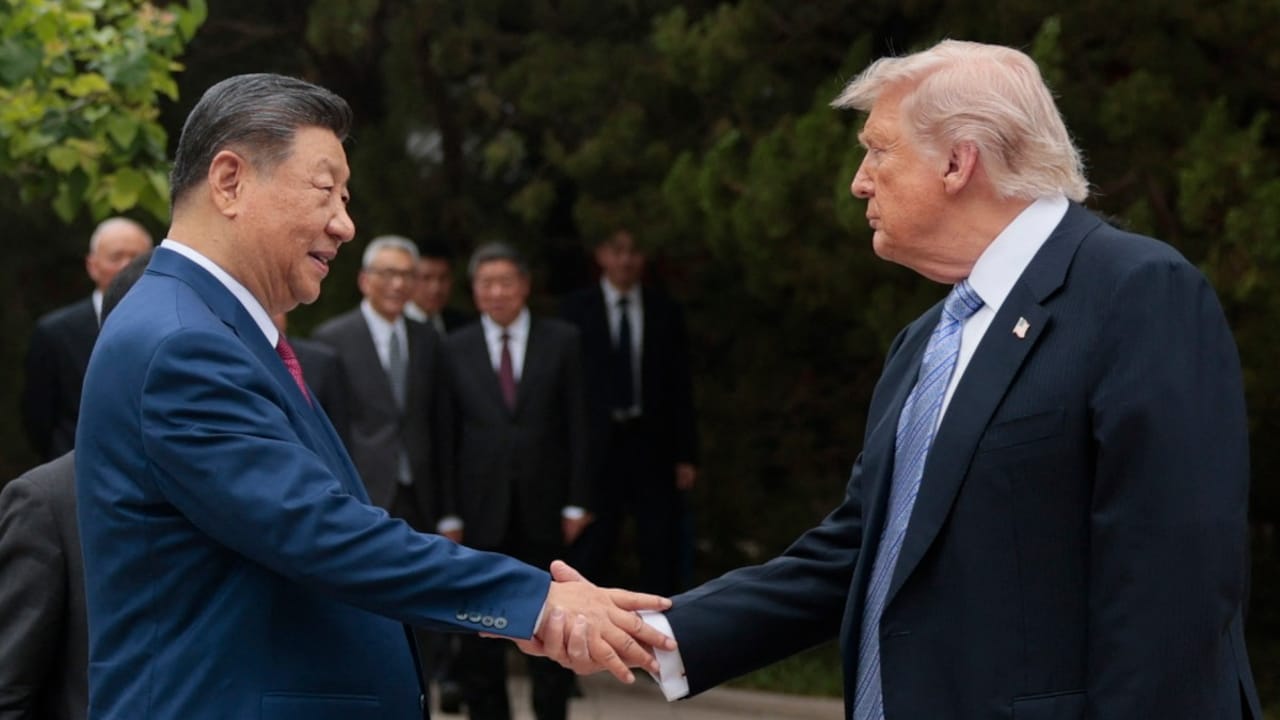
United States President Donald Trump on Monday denied offering to sell American weapons to Chinese President Xi Jinping, contradicting his own ambassador to China, who said such an offer had been made during Mr Xi's visit to the White House last week.
Ambassador David Perdue told Fox News on Sunday that Mr Trump had asked Mr Xi whether China would like to buy US arms. He said the remark came in response to Chinese concerns about American weapons sales to Taiwan, and that "there are continuing conversations about other sales". He added that the US position on Taiwan has not changed.
Asked about the comments in the Oval Office, Mr Trump said he had not heard of such an offer. "I've never heard of that one, I'm going to have to ask him," he told reporters. He added: "They'd probably like to buy it because we do make better equipment than them, so maybe it's a good idea. But we didn't discuss it."
The State Department told The New York Times that "US law prohibits arms sales to China and there is no offer or plan to sell arms to China". A US official, speaking to the news agency AFP, said the government "has no plans to sell weapons to China". The differing accounts left the administration's position on the matter unclear.
In Beijing, the Chinese foreign ministry did not answer directly when asked about the remarks. It said China has "always strengthened its national defence capabilities based on its own needs, and remains committed to maintaining world peace and stability".
Taiwan remains the central point of friction between the two powers. China claims the island as part of its territory and has not renounced the use of force to bring it under its control. The United States is required by its own law to supply Taiwan with weapons for its defence, and has done so for decades.
Mr Perdue said the December approval of an $11.1 billion arms package amounted to "more arms to Taiwan than any other president since 1979" — the year Washington switched diplomatic recognition from Taipei to Beijing. In May, however, the United States paused a $14 billion weapons purchase by Taiwan. Mr Trump described that decision as a "very good negotiating chip" in dealings with China, raising concern that Taiwan's security could form part of a broader bargain.
Beijing warned Taiwan in June that pursuing independence "by relying on the United States or through military means is a dead end".
Mr Trump has kept a deliberately ambiguous position on Taiwan, declining to say directly whether the United States would defend the island if China attacks, while continuing to approve arms sales. During his Washington visit, Mr Xi repeated his call for "prudence" on the issue and urged Washington to state its opposition to Taiwan independence explicitly. Mr Trump has not said whether Taiwan was discussed during the visit, preferring to emphasise his relationship with the Chinese leader as the two countries try to manage their tensions.
The two leaders have met twice this year, and are due to meet again at the APEC summit in Shenzhen, China, in November and at the G20 forum at Mr Trump's Doral resort in Miami in December.







