Trump Considered Strikes on Iran but Favours Diplomacy, WSJ Reports
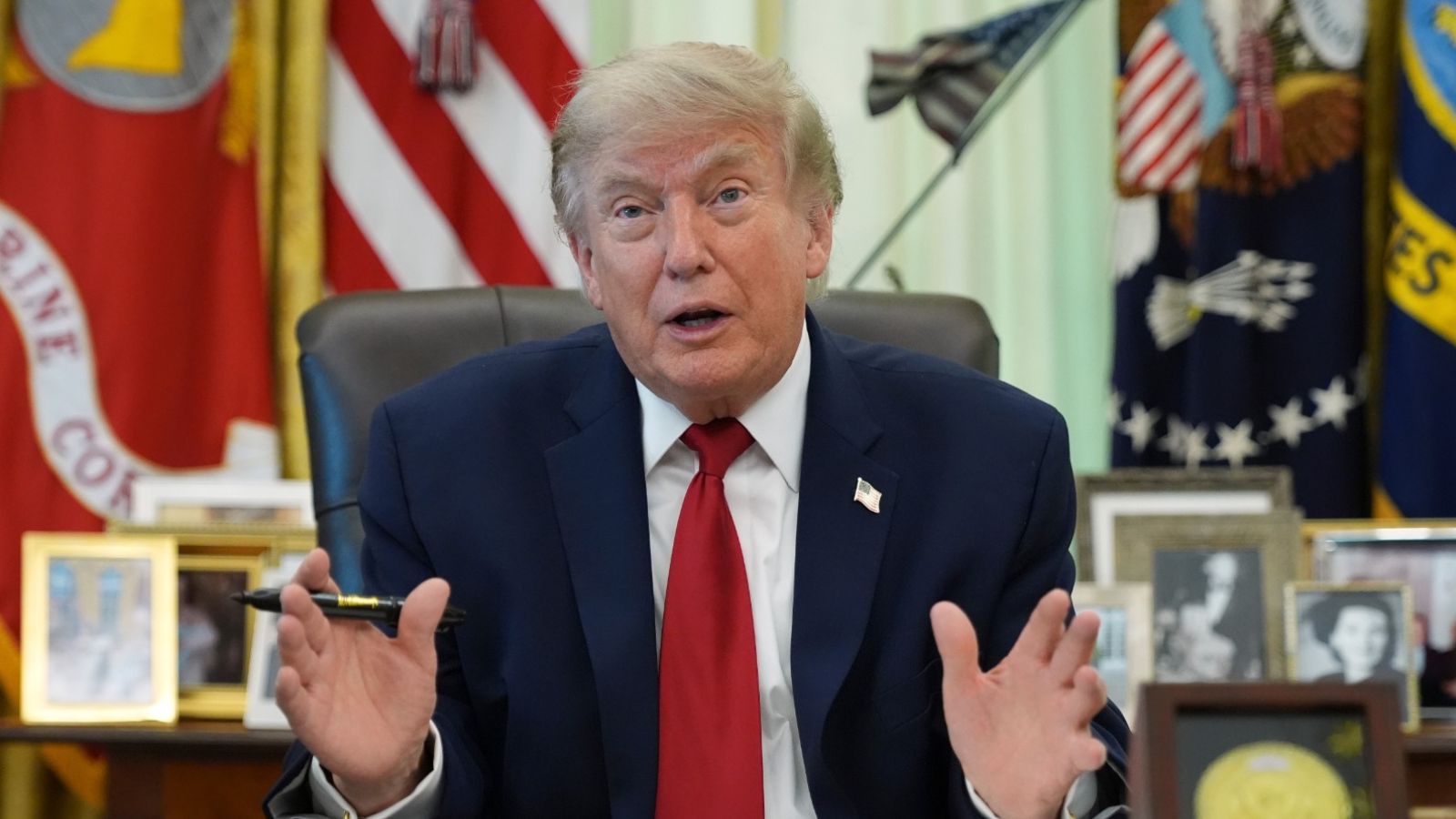
United States President Donald Trump recently weighed the option of returning to military strikes against Iran but has instead decided to continue diplomatic efforts, according to a report by The Wall Street Journal. The report, citing US officials, said Trump discussed with Defence Secretary Pete Hegseth and Chairman of the Joint Chiefs of Staff General Dan Caine whether to pursue negotiations or launch attacks on Iran.
The discussions come amid a 60-day deadline set under a preliminary agreement signed on June 17, which aims to reach a permanent peace deal. That agreement followed US and Israeli strikes on Iran on February 28. Trump reportedly told advisors that if a nuclear deal is not completed by the August 18 deadline, it would not be a problem.
Unnamed individuals described any potential attacks as “finishing the job,” but Trump does not appear inclined toward military action in response to Iranian violations of the memorandum. He is said to believe that restarting the conflict would not dismantle Iran’s nuclear programme and could damage the possibility of a diplomatic solution.
A deconfliction channel established between Washington and Tehran, involving Iran’s Islamic Revolutionary Guard Corps (IRGC) and the US Army’s Central Command, has already been used by both sides, a White House official told the Journal. The US has designated the IRGC as a Foreign Terrorist Organisation.
Meanwhile, the situation in the Strait of Hormuz remains tense. On Tuesday, US envoys Steve Witkoff and Jared Kushner arrived in Doha for meetings with Qatari mediators to further discussions with Iran. However, both Qatar and Iran denied any high-level meeting between Washington and Tehran, contradicting a claim made by Trump on Monday that Iran had agreed to hold talks.
Iran’s chief negotiator, Mohammad Bagher Ghalibaf, said in an interview with Iranian state television: “We are pursuing dialogue, but if the dialogue is not implemented, we are also prepared for war and will respond accordingly.” Ghalibaf noted that since the blockade was lifted, oil exports have increased, with more than 50 barrels of oil exported daily, compared to almost none during the previous 50–60 days.
US Vice President JD Vance stated that Iran would not be allowed to control the Strait of Hormuz. “This is not going to end in a place where the Iranians are collecting tolls on ships going through the Strait of Hormuz,” he said in an interview. Iran maintains its sovereignty over the strait, with Ghalibaf asserting that “the sovereignty of the Strait of Hormuz lies with Iran and Oman, and traffic in the strait is subject to arrangements determined by Iran.”
The 14-point pact finalised on June 17 set a 60-day timeline to reach a permanent peace agreement. However, both sides remain far apart on the initial framework, which required Iran to surrender control of the Strait of Hormuz in exchange for financial incentives. Iranian officials have said they will begin levying tolls when the 60-day period expires. The opening clause of the agreement states that the US, Iran, and “their allies” will permanently end the war, which has caused resentment from Israel, which was not involved in negotiating the memorandum.