Tharoor Questions Low Fellowship Rate for UGC-NET Qualifiers; Government Response Evasive
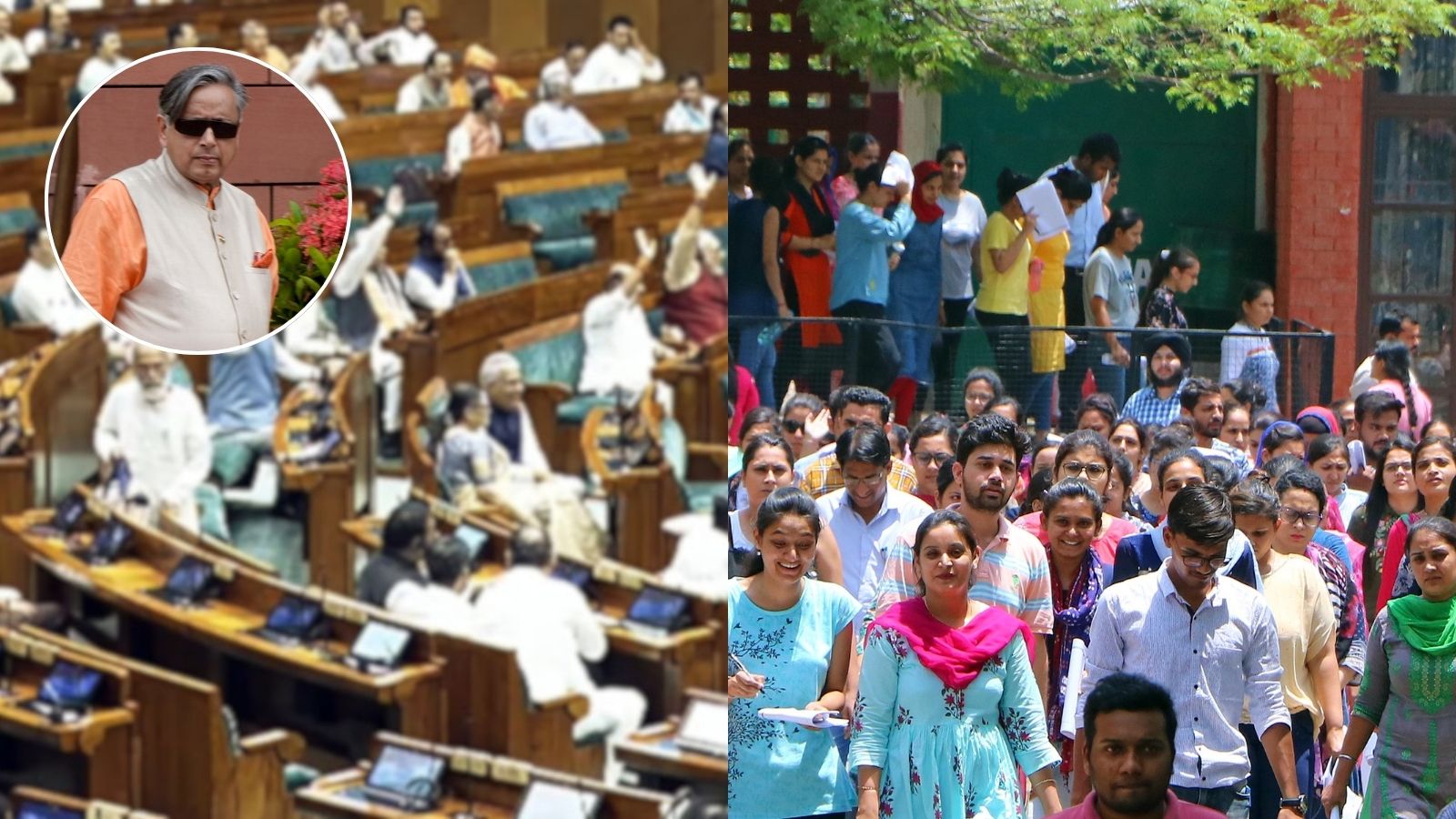
Congress MP Shashi Tharoor on Monday raised concerns in the Lok Sabha over the low proportion of UGC-NET qualifiers awarded Junior Research Fellowships (JRFs), drawing attention to data showing that fewer than 1% of candidates receive the fellowship despite qualifying.
According to official statistics cited by Tharoor, in the June 2022 session, only 5,269 candidates qualified for JRF out of 7,51,907 who appeared. In the December 2022 session, the number was 5,108 out of 7,35,614. This means that over both sessions, just 0.7% of test-takers were awarded the fellowship.
Tharoor sought a year-wise breakup of qualifiers and actual JRF recipients over the past five years, along with the proportion of qualified candidates who received fellowships. He also asked whether the government had fixed any cap on the number of JRFs awarded each year.
In response, the Ministry of Education provided figures for the number of qualifiers and JRF awards for the last few years but did not directly address Tharoor's question about the proportion or any potential cap. The ministry stated that the number of JRFs is determined based on the availability of vacancies and the guidelines of the University Grants Commission (UGC).
Tharoor termed the response unsatisfactory, noting that the government had failed to provide the specific data he requested. The issue underscores a broader concern among research scholars who argue that the limited number of JRFs discourages many qualified candidates from pursuing doctoral studies.
The UGC-NET, conducted twice a year, is the primary eligibility test for JRFs and assistant professor positions in Indian universities. While thousands clear the exam each year, only a small fraction secure the fellowship, which provides a monthly stipend and contingency grant for research.
Experts say the low fellowship rate could hinder India’s research output, as many potential scholars may opt out of PhD programmes due to financial constraints. The matter is likely to be raised again in the ongoing Monsoon Session of Parliament.