Tejaswin Shankar wins historic decathlon bronze at Commonwealth Games 2026
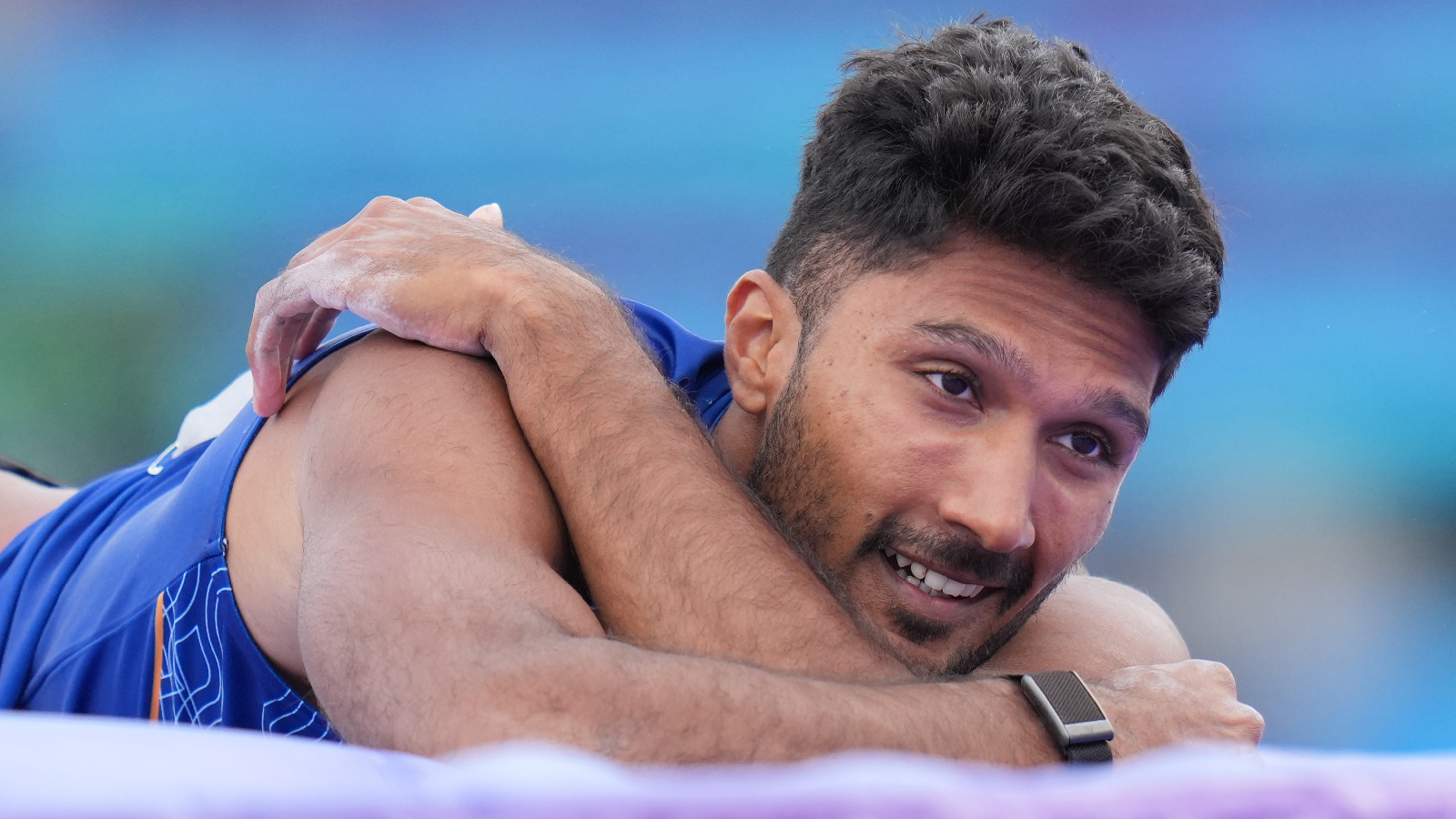
The decathlon is widely regarded as the ultimate test of an athlete's versatility, requiring skill, endurance, and mental strength across ten track and field events. India's Tejaswin Shankar delivered a performance for the ages at the Commonwealth Games 2026 in Glasgow, securing a historic bronze medal in the men's decathlon on Friday.
Shankar, the national record holder, compiled 7,976 points over two days of intense competition. He finished behind Damian Warner of Canada, the Tokyo Olympic champion, and Lindon Victor of Grenada, the reigning Commonwealth Games champion. This achievement marks India's first-ever medal in the decathlon at the Commonwealth Games.
The journey to the podium was fraught with difficulty. Shankar was battling a flare-up of patellar tendinitis, also known as 'jumper's knee'. Earlier in the Games, he had withdrawn from the individual high jump event after failing to clear 2.05m due to sharp pain. "This is one day you don't want the pain to surface. I hope I can recover for the decathlon as I have two days," he had said then.
With the medical team of Wayne Lombard and Dr Dinshaw Pardiwala working on his knee, Shankar began his decathlon campaign with a 10.96-second run in the 100m. While the time suggested some discomfort, he quickly put concerns to rest with a personal best in the long jump. His leap of 7.82m, bettering his previous best of 7.67m, earned him 1,015 points and lifted him to second place overall.
The shot put proved less fruitful, as his best throw of 13.09m placed him seventh in that event and dropped him to fifth overall with 2,558 points. However, the high jump, his strongest discipline, brought him back into contention. Despite the knee pain, he cleared 2.15m, earning 944 points and moving to second overall, 15 centimetres clear of his nearest rival.
The final event of the first day, the 400m, saw him clock 49.51 seconds—far from his personal best of 48.29. Still, it was enough to keep him in second place with 4,339 points, behind Warner. "It felt like a bear was on my back in the last stretch of the 400m," Shankar told the media.
Day two began with a 14.41-second run in the 110m hurdles, maintaining his second position with 5,261 points. He then produced another personal best in the discus throw, with a best effort of 40.44m, to stay second. But the pole vault, traditionally his weakest event, saw him clear only 4.30m. Rivals with higher clearances pushed him to fourth place after eight events, with 6,637 points, just 13 points behind England's Sammy Ball.
With three events left, the javelin throw became critical. Victor surged ahead with a massive 63.06m throw to effectively seal gold, while Shankar delivered a season-best 53.12m to regain a medal position, accumulating 7,272 points. Ball trailed by 109 points, needing a big personal best in the 1500m to overhaul Shankar.
In the decisive 1500m, Shankar ran a composed race, finishing in 4:36.19 to earn 704 points. Ball could not bridge the gap, and Shankar held on to secure the bronze with a total of 7,976 points.
Shankar had earlier described the 1500m as a test of mental resolve. "Running technique or speed doesn't matter. It is about how much you can hold on, as it feels like body parts are coming apart," he had said after setting a new national record at the Federation Cup in Ranchi.
This bronze is a testament to Shankar's perseverance and skill. It also highlights India's growing prowess in athletics, particularly in multi-discipline events. As he stood on the podium, the pain of the knee gave way to the pride of a historic achievement.