Tamil Nadu CM Vijay Challenges Centre's Legal Stand on Mekedatu Dam in Letter to PM
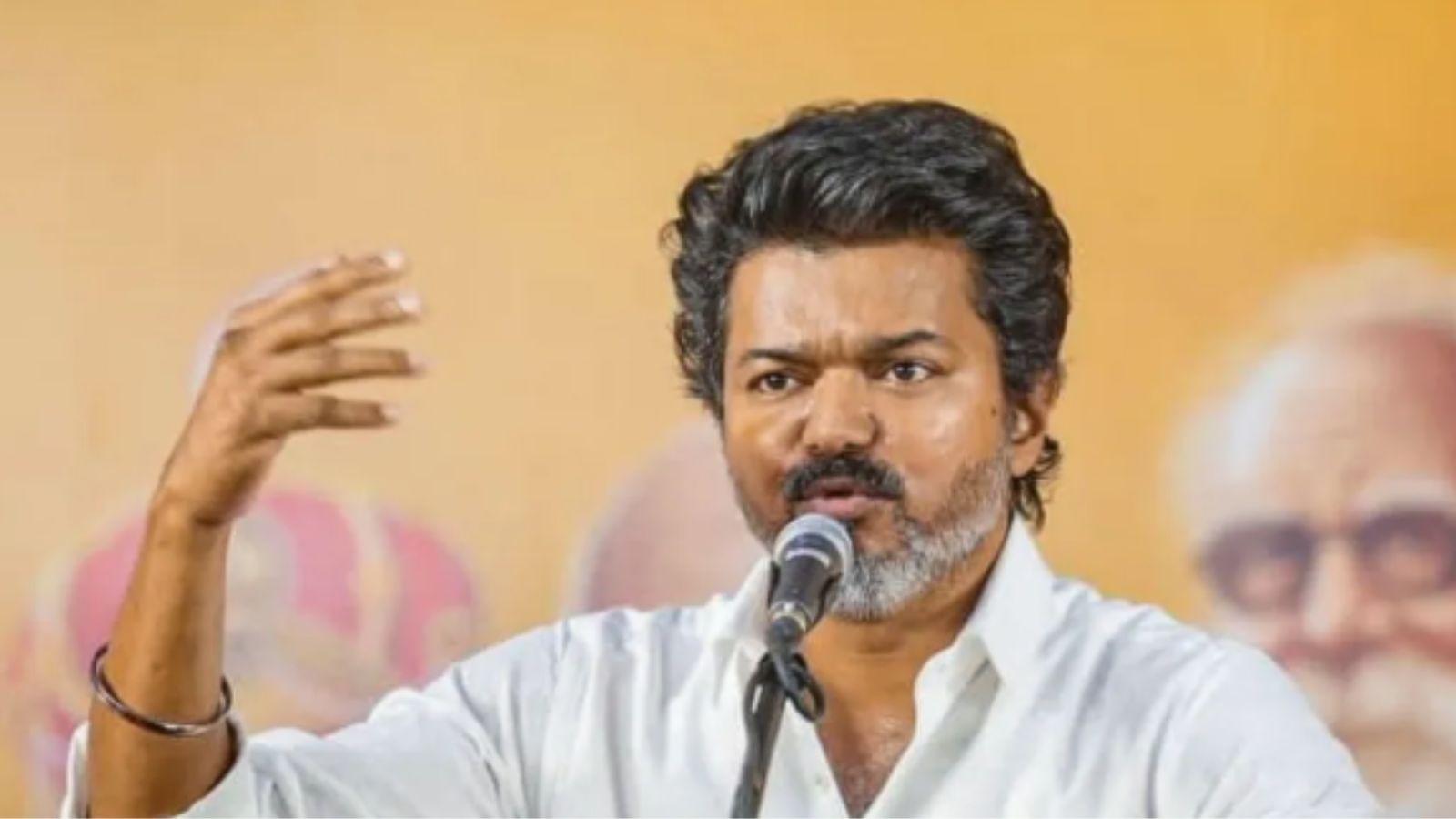
Tamil Nadu Chief Minister C Joseph Vijay has written to Prime Minister Narendra Modi, urging the Union government to withdraw a recent parliamentary reply on the Mekedatu dam project. The letter, sent on Monday, argues that the Ministry of Jal Shakti's response overlooks settled legal principles governing interstate rivers and the rights of downstream states.
Vijay's intervention seeks to separate two distinct disputes that often become politically intertwined. One concerns Tamil Nadu's immediate demand for Cauvery water during a distress monsoon year. The other concerns Karnataka's long-term proposal to construct the Mekedatu balancing reservoir. While the Chief Minister has sought political dialogue with Karnataka on the first issue, his letter to the Prime Minister makes clear that the second must remain anchored in the legal framework created by the Cauvery Water Disputes Tribunal and the Supreme Court.
In the letter, Vijay referred to the Union government's reply in the Rajya Sabha, which stated that the Supreme Court's judgment of February 16, 2018 "does not expressly stipulate that Karnataka should obtain the consent of the lower riparian States before constructing a structure across the River Cauvery." Calling this response "disappointing," Vijay argued that it was issued without considering the prevailing legal position regarding consent of lower riparian states.
To support his argument, Vijay cited the Constitution Bench judgment in State of Karnataka vs State of Andhra Pradesh relating to the Alamatti dam dispute. He quoted paragraph 100 of the judgment, which held: "Nor can Karnataka State be permitted to construct up to that height without the consent of all other riparian States as well as without the approval of the Central Government."
The Chief Minister argued that the Cauvery Water Disputes Tribunal's final award, affirmed with modifications by the Supreme Court in 2018, similarly limits the powers of basin states. He pointed out that Clause XVIII of the Tribunal Award permits each state to regulate waters within its territory only "in a manner not inconsistent with the order of the Tribunal." According to Vijay, any new project capable of affecting the regulated flow of the river must first be examined for consistency with the Tribunal Award itself.
Vijay also drew a parallel with Kerala's Pambar hydro-electric project, where the Tribunal required Kerala and Tamil Nadu to jointly agree upon release schedules despite the project involving only 0.1 thousand million cubic feet of consumptive use. He wrote: "This demonstrates that the Tribunal attached paramount importance not merely to annual quantities but also to coordinated regulation of releases affecting lower riparian interests."
He further referred to Clause XI of the Award, which prohibits any upper riparian state from taking actions affecting scheduled deliveries to downstream states except through mutual agreement and consultation with the regulatory authority. Clause XX recognises that modifications to the Award can be achieved only through agreement among the basin states.
For these reasons, Vijay argued that the proposed Mekedatu project "cannot be evaluated merely as an engineering proposal." Its legal permissibility must first be examined in the context of the Tribunal Award, the Supreme Court's 2018 judgment, and the rights of the lower riparian states.
The letter underscores the constitutional and legal principles governing interstate river disputes, emphasising the necessity of consent from downstream states and adherence to tribunal awards.


