Syria off US terror sponsor list after 47 years; investment barriers lifted
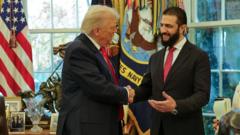
The United States has formally removed Syria from its list of state sponsors of terrorism, ending a designation that stood for 47 years. The decision, announced on Monday by US Secretary of State Marco Rubio, is intended to ease the way for private investment and Syria's reintegration into the global economy.
Rubio said the move recognised the Syrian government's "positive actions" to distance itself from international terrorism. The administration of US President Donald Trump has embraced Syria's new president, Ahmed al-Sharaa, who once led an al-Qaeda offshoot and had a bounty on his head. His group, Hayat Tahrir al-Sham (HTS), was removed from the US list of foreign terrorist organisations last year.
HTS, formerly known as the al-Nusra Front, was al-Qaeda's affiliate in Syria until Sharaa severed ties with the network in 2016. The group led the rebel offensive that overthrew former president Bashar al-Assad in late 2024 and now dominates the transitional administration in Damascus.
The US hopes that its engagement with Syria's new leadership will keep the country out of the orbit of Russia and China. However, significant risks remain. Syria is still far from secure, lacks a representative government, and is at the centre of tensions between neighbouring Israel and Turkey.
Rubio said Monday's move, initially flagged in July, would give Syria "a path to prosperity". US Treasury Secretary Scott Bessent said the action would help foster additional investment in Syria to promote political and economic stability.
Syrian Foreign Minister Asaad Hassan al-Shaibani welcomed the news as a "historic step", according to state-run news agency SANA. He said his government would continue efforts to remove the effects of isolation and create an environment based on transparency, mutual interests and respect.
Syria had been on the US list of state sponsors of terrorism since 1979. The listing carries financial sanctions, restrictions on US foreign aid and defence exports, and can also penalise individuals and countries that trade with the sanctioned state. With Syria's removal, only Cuba, North Korea and Iran remain on the list.
The designation was first imposed under the Carter administration, and its removal reflects a major shift in US policy towards Syria. While the transitional government has taken steps to distance itself from its militant past, questions remain about its commitment to inclusive governance and human rights.
The US action has been welcomed by investment groups and some Syrian business leaders, but it also draws criticism from those who argue that the Assad-era regime's allies may still hold influence. The coming months will test whether the removal of the designation translates into tangible benefits for the Syrian people.







