Supreme Court steps in as Assam’s NRC process remains unfinished after 7 years
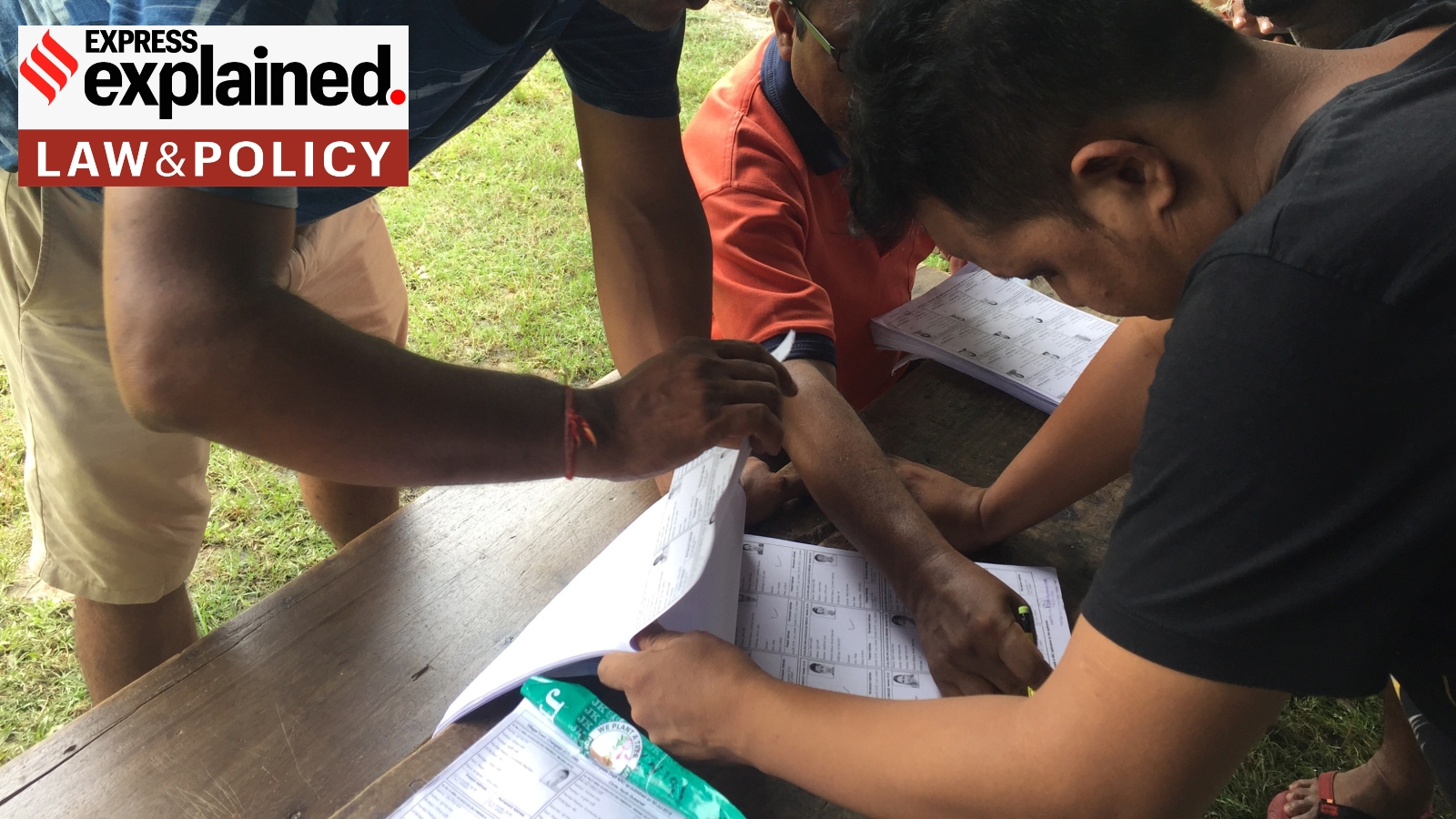
Nearly seven years after the final National Register of Citizens (NRC) for Assam was published, the exercise remains incomplete. No identity cards have been issued to the 3.11 crore people whose names appear in the list, and the appeal process for the 19 lakh excluded individuals has not begun.
A Supreme Court bench led by Chief Justice Surya Kant, along with Justices Joymalya Bagchi and Vipul Pancholi, has issued a notice on a writ petition filed by the Assam State Jamiat Ulama. The petition seeks directions to the central government to complete the statutory steps that remain pending.
The petition argues that the lack of identity cards for those included and rejection slips for those excluded has turned the NRC exercise into a “discriminatory regime” that singles out the people of Assam for “perpetual suspicion and denial of closure”. It claims this violates the federal principle and the guarantee of equal citizenship under the Constitution.
The NRC update was mandated by the Assam Accord of 1985, which fixed March 24, 1971 as the cut-off date for identifying illegal migrants from Bangladesh. Parliament enacted Section 6A of the Citizenship Act, applicable only to Assam, to provide the legal framework. Applicants had to prove citizenship using “legacy data” such as the 1951 NRC and electoral rolls up to 1971. The final list was published on August 31, 2019.
The petition contends that publishing the list was only half the process. Two legal requirements were supposed to follow: first, the issuance of identity cards under Section 14A of the Citizenship Act and Rule 13 of the 2003 Rules; second, the provision of rejection slips to excluded persons so they can appeal to Foreigners Tribunals, as per Paragraph 8 of the Schedule to Rule 4A. Neither has been carried out.
The petition frames this gap as unconstitutional, violating Articles 14 (right to equality) and 21 (right to life) of the Constitution. It also invokes Article 355, which mandates the Union to protect states from internal disturbance and ensure constitutional governance. The petition argues that the uncertainty surrounding inclusion and exclusion has become a source of social friction in Assam, rather than resolving it.
Furthermore, the petition states that the delay undermines the binding nature of the Supreme Court’s own orders, given that the NRC was prepared under continuous court supervision from 2013 to 2019. It argues that selective compliance with stages of the NRC process “erodes public confidence in the judicial process”.
Being excluded from the NRC does not automatically mean a person is declared a foreigner; the law provides a right to contest the exclusion before a Foreigners Tribunal. However, without rejection slips, those excluded cannot initiate the appeals process.