Supreme Court: Speedy Trial is a Victim's Right Too, Not Just Accused's
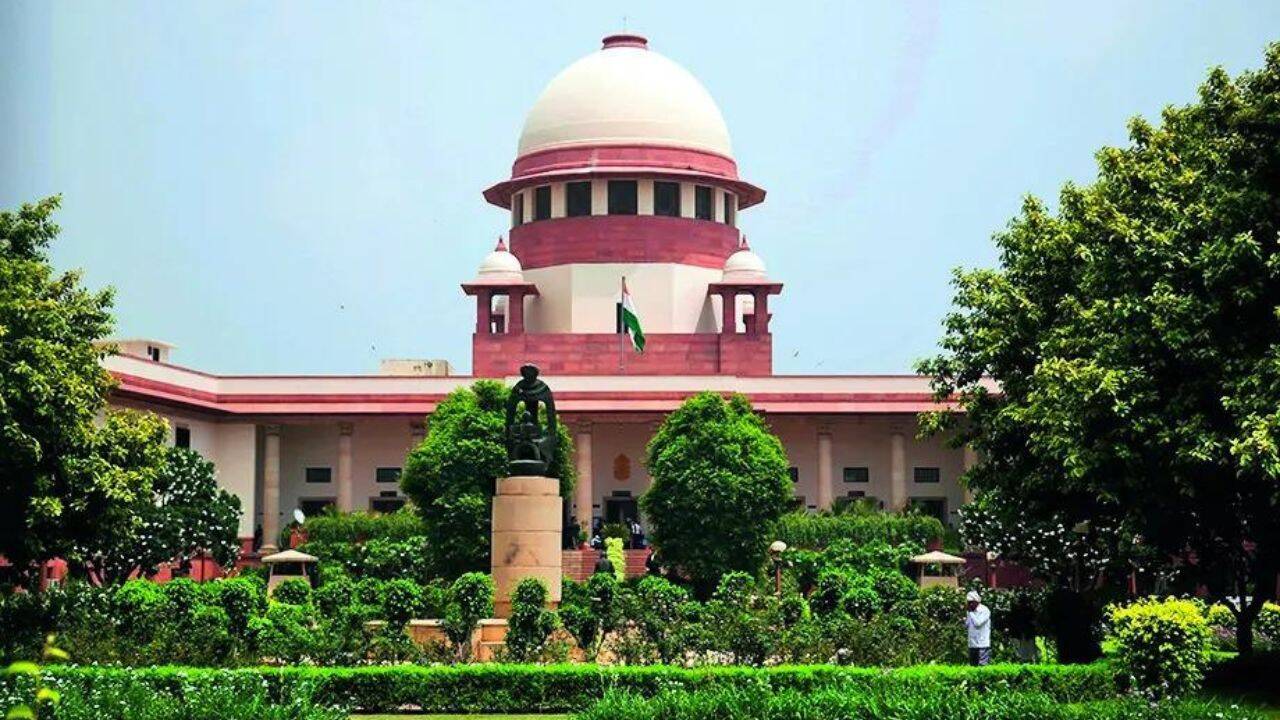
NEW DELHI: In a significant ruling, the Supreme Court has held that the right to a speedy trial under Article 21 of the Constitution is not limited to the accused alone. It is also a valuable right of the victim, and inordinate delays in criminal proceedings can have a "deleterious effect on society in general."
A bench of Justices K V Viswanathan and Arun Palli made the observation while quashing an order of the Allahabad High Court that had directed that when a person faces prosecution under both the Bharatiya Nagarik Suraksha Sanhita (BNSS) and the Uttar Pradesh Gangsters and Anti-Social Activities (Prevention) Act, the trial under the Gangsters Act would take precedence and other cases would be kept in abeyance.
The Allahabad High Court's directive was based on Section 12 of the Gangsters Act, which states that its trial "shall have precedence" over any other case against the accused. The Supreme Court, however, clarified that this provision only means that in the event of a clash of hearing dates, proceedings under the Gangsters Act would be given preference. It does not mean that other trials must be indefinitely suspended.
Writing for the bench, the Court emphasised that the right to a speedy trial is a fundamental right under Article 21, which guarantees protection of life and personal liberty. This right, the Court said, is not a one-sided privilege. It belongs equally to the victim, who seeks justice and closure. Any unreasonable delay in the trial can cause tremendous injustice, as the preservation of evidence becomes increasingly challenging with every passing day.
The Court also noted that justice delayed is justice denied, a principle that applies to all parties in a criminal case. When trials are postponed indefinitely, it not only affects the accused but also undermines public confidence in the legal system. Victims and witnesses may lose faith, and the evidentiary value of testimony may weaken over time.
The ruling clarifies the scope of the Gangsters Act's precedence clause, preventing its misuse to stall other criminal proceedings. The bench stressed that procedural laws must be interpreted in a manner that serves the interests of justice, rather than creating unnecessary hurdles.
Legal experts view this decision as a step forward in strengthening the rights of victims in the criminal justice system. It aligns with broader judicial trends that recognise the victim as a central stakeholder in the pursuit of justice, not merely a spectator.
The judgment also reinforces the constitutional guarantee of a speedy trial, which has been repeatedly upheld by the Supreme Court in previous rulings. By linking the victim's right to Article 21, the Court has expanded the protective umbrella of fundamental rights to include those who have suffered harm.
This case arose from a situation where an accused was facing multiple charges under different laws. The High Court's blanket direction had effectively stalled the BNSS trial, leaving the victim in a state of uncertainty. The Supreme Court's intervention corrects this by ensuring that all cases proceed in a reasonable timeframe, with priority given to the Gangsters Act only when there is a direct scheduling conflict.
The bench's observation that inordinate delay could have a "deleterious effect on society" serves as a reminder that criminal justice is not just about individual rights but also about maintaining social order and trust in the rule of law. When trials drag on for years, it sends a message that justice is unattainable, which can erode the very foundations of democracy.
The Supreme Court's judgment is a balanced interpretation that respects the legislative intent behind the Gangsters Act while upholding the constitutional mandate for speedy justice. It ensures that the letter of the law is not used to defeat its spirit.







