Supreme Court seeks six-year data on missing children, directs nodal officer
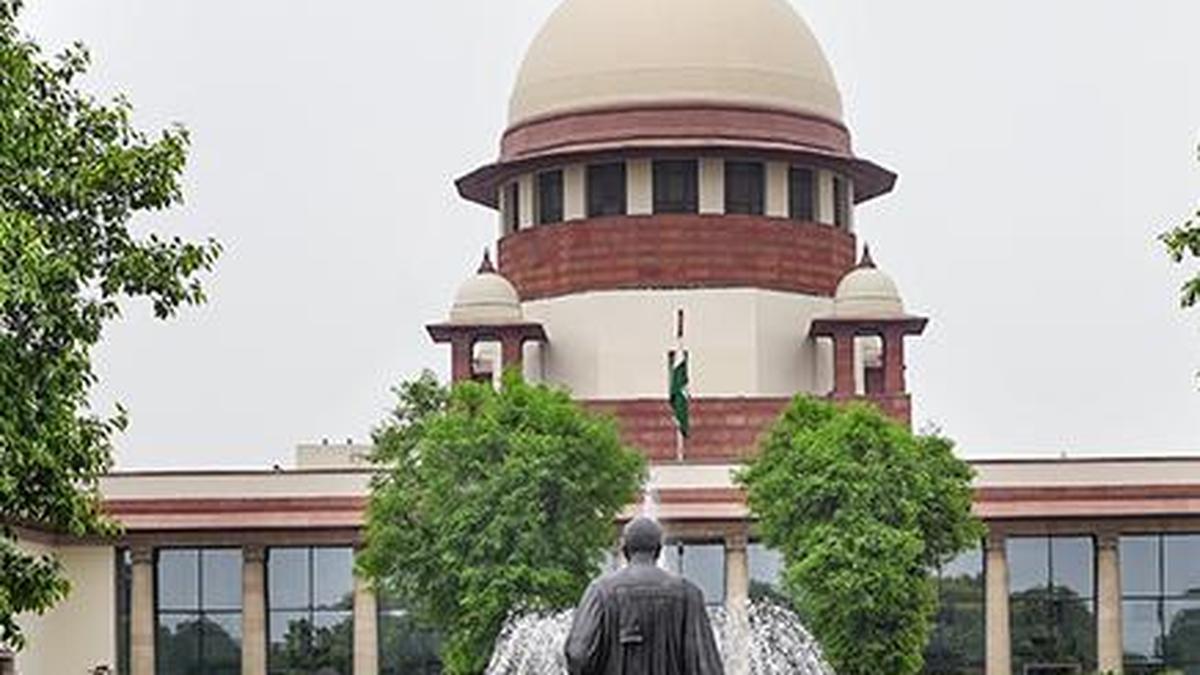
The Supreme Court on Tuesday directed the Union government to provide nationwide data on missing children for the last six years and to appoint a dedicated officer in the Home Ministry to coordinate with States and Union Territories in compiling this information. The directive comes amid growing concern over the number of children reported missing and trafficked in India.
A Bench of Justices B.V. Nagarathna and R. Mahadevan was hearing a public interest litigation filed by the non-profit organisation Guria Swayam Sevi Sansthan, which highlighted the rising number of children who remain untraced across several States.
The court had earlier directed all States and Union Territories to appoint dedicated officers to oversee cases of missing children and to ensure that details are promptly uploaded on the Mission Vatsalya portal, administered by the Ministry of Women and Child Development. The portal is part of the government's child protection scheme and is meant to facilitate tracking and monitoring of missing children.
Additional Solicitor-General Aishwarya Bhati, appearing for the Centre, informed the Bench that all States and Union Territories had appointed such officers and uploaded their particulars. However, she noted that effective dissemination of information and coordinated use of the portal were essential for meaningful outcomes.
“The Home Ministry and the Ministry of Women and Child Development could hold further consultations and frame a standard operating procedure for the dissemination of information. Enabling the portal is one thing, but the portal has to be used effectively by the stakeholders,” she said.
The Bench observed that the Home Ministry itself had not nominated a dedicated officer to oversee cases of missing children, despite being the central coordinating agency. It directed the Ministry to appoint such an officer within two weeks and upload the officer's details on the Mission Vatsalya portal.
“We find that the Ministry of Home Affairs of the Union of India has not appointed a dedicated Nodal Officer for cases of missing children for the purpose of Mission Vatsalya, and hence an officer may be nominated as a dedicated nodal officer, whose details may also be uploaded on the Mission Vatsalya portal,” the Court ordered.
Senior advocate Aparna Bhat, assisting the Court as amicus curiae, apprised the Bench that comprehensive data on the status of investigations into cases of missing children — including how many were traced and restored to their families — was indispensable to curbing the surge in child trafficking.
“There is a rise in inter-State trafficking and kidnapping cases, and one way to address this is to closely examine data on missing children. With respect to trafficking, how many prosecutions have been initiated? What has happened in those cases so far? Those details are not available. The police networks fall under the Home Ministry, and it is the Ministry that must compile this information,” she submitted.
She stressed that such data were critical for ensuring the safe restoration of children to their families and for securing the prosecution of those responsible for trafficking.
Taking these concerns on board, the Bench directed that the Nodal Officer appointed by the Home Ministry should hold consultations with Nodal Officers of all States and Union Territories to collate updated statistics on missing children, including the number traced and restored to parents, guardians, or child-care institutions.
Ms. Bhati informed the Court that such information had been compiled only until 2020, and updated data for subsequent years were required. Accordingly, the Bench directed that the Nodal Officer coordinate with counterparts in every State and Union Territory to compile statistics on missing children from January 1, 2020, to December 31, 2025.
The order aims to address systemic gaps in data collection and coordination that have hindered efforts to tackle child trafficking and ensure the safe restoration of missing children to their families.







