Supreme Court Refuses Blanket Ban on Pellet Guns, Emphasises Graded Police Response
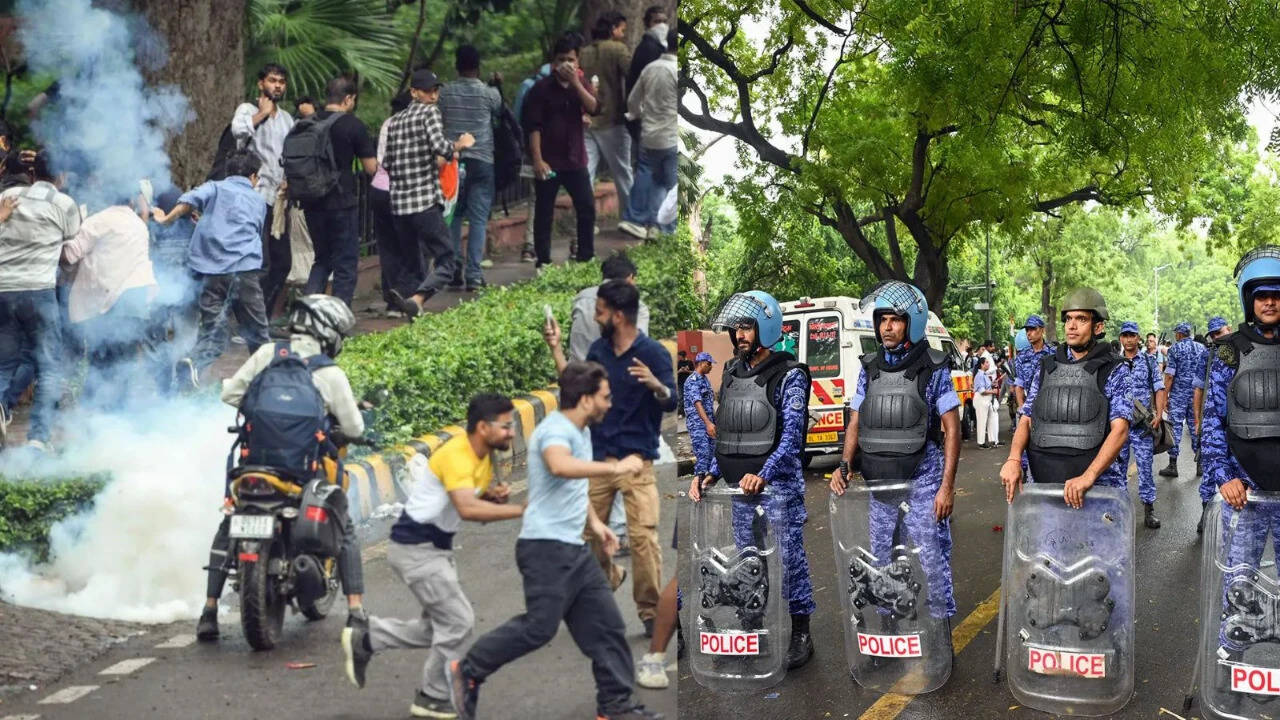
The Supreme Court on Thursday declined to impose a blanket ban on the use of pellet guns for crowd control, stating that police regulations permit their use in exceptional circumstances. The court, however, directed the Delhi government to provide medical treatment to those injured during student protests and asked authorities to preserve all records related to the use of force.
A bench comprising Chief Justice Surya Kant and Justices Joymalya Bagchi and V Mohana was hearing a petition filed by individuals who suffered injuries from pellet guns during a protest at Jantar Mantar on July 20. The petitioners, including former IPS officer Yashovardhan Azad, sought a ban on metallic pellets and demanded compensation for the injured.
Justice Bagchi termed the plea for a complete ban on pellet guns as vague, noting that the law allows the use of bullets in extreme situations. 'If you seek a phasing out of pellet guns, you must challenge the existing regulations, which you have not done,' he told the petitioners' counsel, advocate Vrinda Grover. The court emphasised that police need a graded response system, ranging from rubber bullets to metallic pellets, depending on the level of threat.
The bench also observed that peaceful protests can sometimes be hijacked by miscreants, requiring different levels of force. 'Both protesters and police are human beings and react equally to threats,' the court noted, stressing the importance of equipping police with adequate safety gear.
The court directed the preservation of the ammunition log of the Rapid Action Force (RAF) deployed at the protest site and asked the Delhi government to ensure proper medical care for the injured. Solicitor General Tushar Mehta assured the court that all relevant documents would be preserved for an effective investigation into allegations of police excesses.
The petitioners argued that the RAF used metallic pellets without provocation, causing injuries. While one petitioner received treatment at Lady Hardinge Hospital, the other did not, prompting the court to order the Delhi government to provide adequate medical care.
The court allowed the petitioners to amend their plea to seek guidelines for police crowd dispersal actions, rather than an outright ban on pellet guns. The bench also noted that the Bureau of Police Research and Development (BPRD) should update and upload its guidelines on crowd control, as the last available version was from 2016.