Supreme Court Permits Withdrawal of FIRs Against Student Protesters, Sets Up Probe Panel
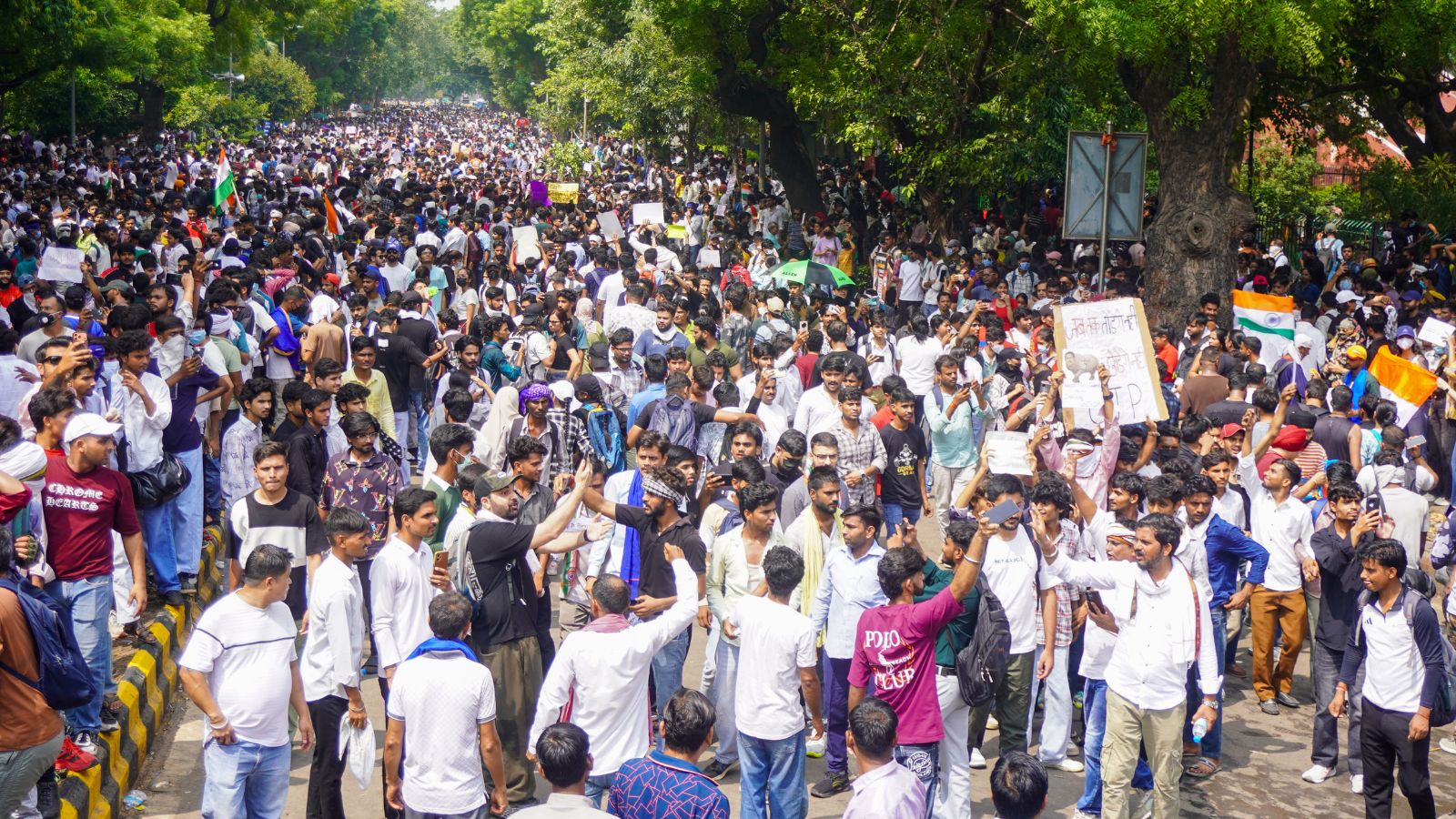
The Supreme Court on Tuesday said Delhi and other states are free to close or withdraw cases against students who participated in a protest march to Parliament on July 20, after the central government expressed its commitment to not pursue any legal action against them.
A bench of Chief Justice of India Surya Kant and Justices Joymalya Bagchi and V. Mohana also announced that it would form a high-powered committee, headed by a former Supreme Court judge, to probe the incidents that occurred during the march.
The case relates to the violent protests on July 20, when demonstrators were teargassed and lathi-charged by police near Parliament. The protests were organised by a student group called the CJP, which had called for accountability and reforms in the examination system.
During the hearing, Solicitor General Tushar Mehta, appearing for the central government, said, "There was some misapprehension or miscommunication about what to do with the FIRs against the protesters. I have instructions to say that the government is serious on that commitment to students."
He further clarified that the government stands by its commitment to not pursue cases against students, and that this could be done through any legally permissible way.
The Chief Justice of India stressed the need to segregate students from those with criminal antecedents. "A police officer involved in excessive force should not be unduly protected. It should not be that a hardened criminal under the garb of student protest is also getting protected," he said.
Advocate Vrinda Grover, representing some of the protesters, asked whether the FIRs filed against the students would be withdrawn or quashed. She highlighted that FIRs have been registered in Bihar, Bengal, Assam, Uttar Pradesh and Delhi. "These are young people who have their lives ahead of them. After this has been worked out with the states, we will come back to this court," she said.
Several states had earlier refused relief to protesters with criminal records while dropping cases against students. Senior advocate Abhishek Singhvi sought a clarification on the scope of 'criminal antecedents', requesting the exclusion of petty offences and charges related to political protest.
When Mehta shared that 2,738 protesters were found to have criminal antecedents, the counsel argued that this indicated the use of facial recognition technology in violation of the right to privacy. Mehta clarified that the identification process involved not just facial recognition but also social media and other tools.
The court then clarified that 'criminal antecedents' would mean only grave and heinous offences.
The matter is scheduled to be taken up again on August 19.


