Supreme Court flags serious flaws in UP Gangsters Act, says law prone to misuse
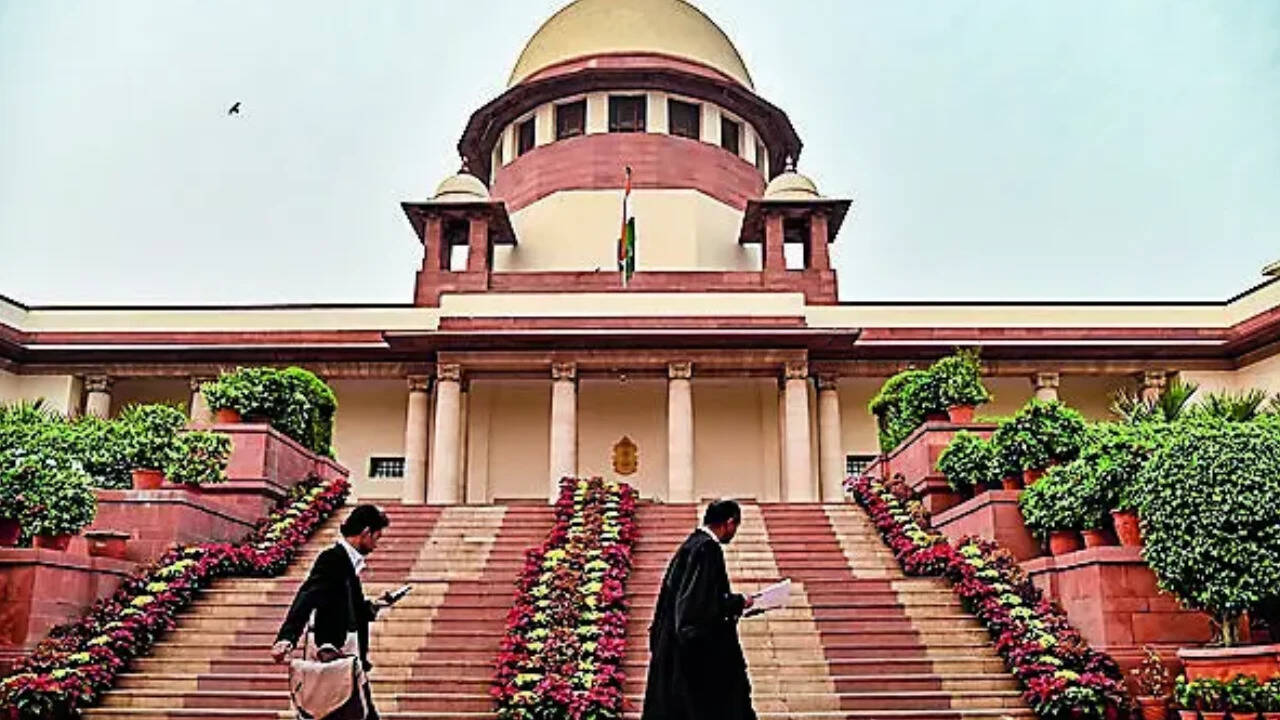
NEW DELHI: The Supreme Court on Thursday pointed out several flaws in the Uttar Pradesh Gangsters and Anti-Social Activities (Prevention) Act, observing that the law is prone to misuse as it lacks safeguards against vindictive and malicious action against innocents.
A bench of Justices J B Pardiwala and K Vinod Chandran noted that the special Act does not create any offence, which is a mandatory requirement of any penal law. “But for the definition clause, defining 'gang' and 'gangster', there is no offence insofar as the membership in the gang or acting in cohort with a gang, either singly or together,” the bench said.
The court observed that the UP Act not only permits detention for a period without anything more than inclusion in a Gang Chart, but also enables a trial and punishment on the basis of the very same Gang Chart, in addition to pre-trial incarceration. “It is akin to the English proverb: Give a dog a bad name and hang him,” the bench remarked.
Observing that the UP law fails to satisfy judicial conscience, the Supreme Court said the menace of criminal gangs is to be curbed, but the end does not justify the means, especially in enacting a penal law that interferes with the liberty of citizens.
The apex court was particularly concerned about two issues: “(1) the total absence of creation of a crime, which is mandatory in a penal statute and (2) the punishment being imposed on a status determined for a person, that too on the whim of the administrative officers and police personnel by preparation of a Gang Chart under the Rules, not specifically provided under the statute.”
The bench also addressed the state's inability to explain these flaws. “We cannot but observe, with respect, that there is always a tendency among the wisest of men to label a question; to which they find no answer or a difficult or unpalatable one, as foolish and the one who raised it, a fool,” the court said. It noted that the same questions were earlier raised before a full bench of the Allahabad High Court by eminent lawyers, and the state counsel in the present case neither provided answers during arguments nor in written submissions.
The Supreme Court highlighted that the provisions of the Act could lead to detention of the accused without trial for long periods, akin to preventive detention, without any safeguard. “However compelling the social menace, any penal enactment cannot lead to arbitrary actions. A mere allegation can trigger a gang chart, arrest and year-long remand. There is no safeguard against vindictive and malicious action against 'the innocent, the righteous, the virtuous, a whistleblower',” the bench said.
The court's remarks come as a significant judicial scrutiny of state laws that are often used to crack down on alleged criminals. The observations underline the need for penal statutes to define offences clearly and ensure that the process does not become a tool for harassment. The judgment is expected to have implications for pending cases under the UP Gangsters Act, which has been criticised by legal experts for its broad and discretionary provisions.







