Supreme Court directs Centre to demarcate, protect pedestrian space on all roads

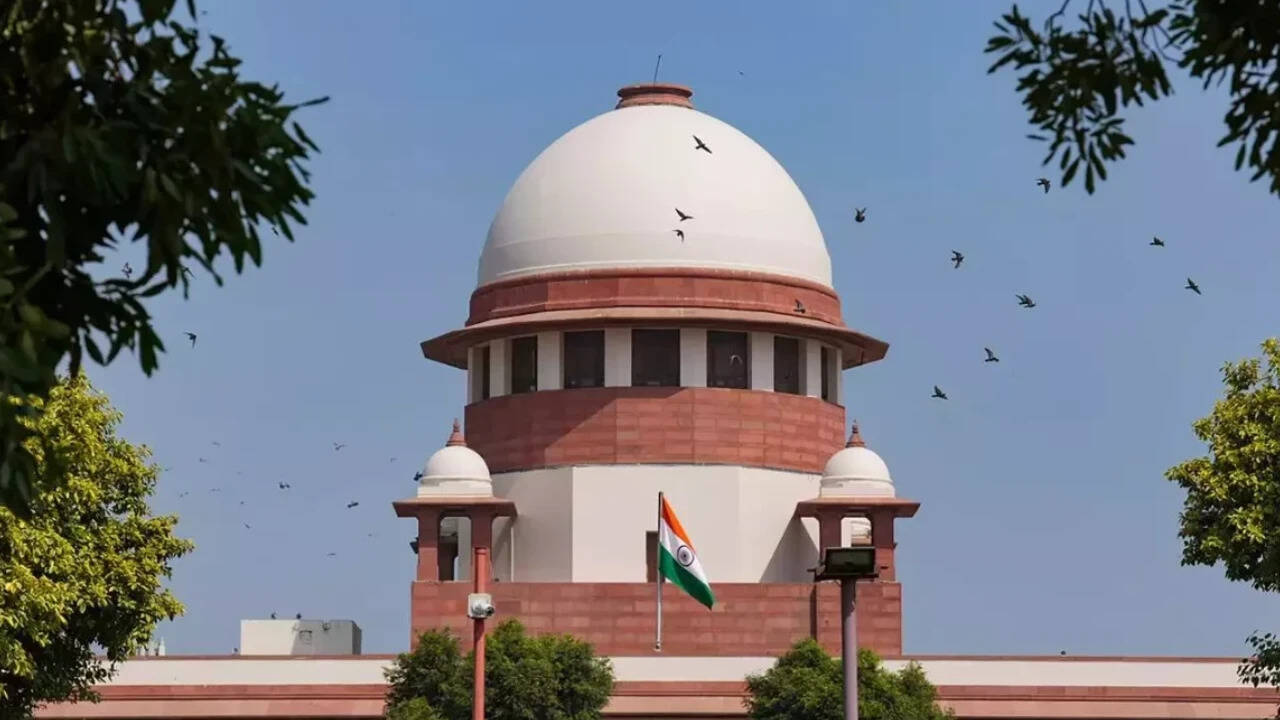
The Supreme Court on Monday directed the Centre to ensure that every road in the country has a clearly demarcated, encroachment-free pedestrian walkway. A Bench of Justices P.S. Narasimha and Alok Aradhe issued the directive while hearing a matter related to the safety and rights of pedestrians, emphasising that the space meant for walking must be properly separated from motor vehicle lanes.
Additional Solicitor General K.M. Nataraj, appearing for the Centre, was asked to instruct the concerned authorities to take immediate steps in this regard. “Without any big investment and construction, just ensure that proper demarcation is done of walkers’ space. Wherever there is a road, there should be a walkers’ space. Do it with a rope or anything and ensure it is not encroached,” the Bench told Mr. Nataraj.
The court observed that pedestrians should have confidence that the space is meant for them and they can walk freely without any threat from moving vehicles. The Bench granted the Centre two weeks to implement the direction and posted the matter for further hearing after that period.
The directive builds on a significant verdict delivered by the Supreme Court on June 19, in which it held that the right to walk on a demarcated footpath is a fundamental right. The court had ruled that this right shall have priority over motorised vehicles on demarcated paths. It forms part of the right to movement guaranteed under Article 19(1)(d) of the Constitution and other fundamental rights, including Article 21 which protects the right to life and liberty.
The June verdict came in response to a public interest litigation highlighting the hazardous conditions faced by pedestrians across Indian cities, where footpaths are often encroached upon by parked vehicles, hawkers, or construction material, forcing people to walk on roads and risk accidents. The court had noted that walkable spaces are essential for the dignity and safety of citizens, and that the state has a constitutional obligation to ensure their availability and accessibility.
Monday's order operationalises that principle by mandating that demarcation must be done on all roads, not just in major cities or high-traffic areas. The court's suggestion to use simple measures like ropes indicates an intent to ensure swift compliance without waiting for expensive infrastructure projects. This is expected to benefit vulnerable groups, including the elderly, children, and persons with disabilities, who are disproportionately affected when walkways are absent or blocked.
Legal experts view this as a significant step towards reclaiming public space for pedestrians and prioritising non-motorised transport. Urban planners have long advocated for pedestrian-friendly streets as a means to reduce road accidents, improve public health, and promote sustainable mobility. The court's directive aligns with global best practices that place pedestrians at the top of the road user hierarchy.
The two-week timeline given to the Centre underscores the urgency the court attaches to this issue. It remains to be seen how the authorities will execute the order across the vast network of roads under their jurisdiction. While some states may already have demarcated footpaths, many areas still lack basic pedestrian infrastructure. The court's insistence on encroachment-free zones suggests that mere markings will not suffice; enforcement will be key.
This decision is part of a broader judicial trend recognising the rights of non-motorised users of public spaces. By linking the right to walk to fundamental rights, the Supreme Court has elevated the issue from a matter of urban convenience to a constitutional mandate. The next hearing, scheduled in two weeks, will likely assess the progress made and could issue further directions if compliance is found lacking.
For citizens, the practical impact of this order could be visible soon. A clear, unobstructed walking space on every road would not only enhance safety but also encourage more people to walk, reducing congestion and pollution. As the court noted, simple demarcation can go a long way in ensuring that pedestrians feel secure and valued in public spaces.