Supreme Court: Cannot Direct MLA Disqualification, Speaker's Call
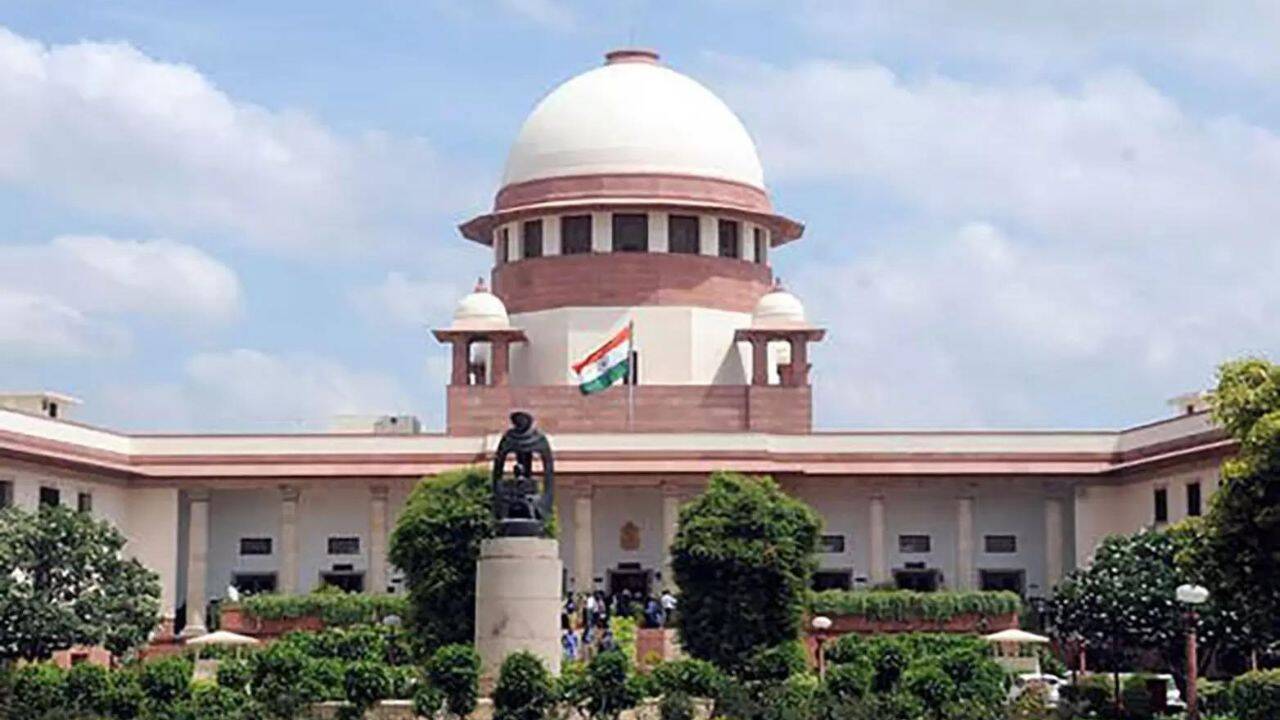
The Supreme Court of India on Tuesday observed that it cannot assume the role of the Speaker to direct the disqualification of Members of Legislative Assembly (MLAs). The observation came while hearing a plea seeking directions to disqualify certain MLAs under the anti-defection law.
A Bench comprising Justices noted that the power to disqualify legislators on grounds of defection rests solely with the Speaker under the Tenth Schedule of the Constitution. The court stated that it would be inappropriate for the judiciary to step into the Speaker's domain and issue directives on disqualification.
The plea had sought the court's intervention to disqualify MLAs who had allegedly defied their party's whip. However, the Bench clarified that the Speaker is the competent authority to decide such matters, and the court cannot substitute its judgment for that of the Speaker.
The Tenth Schedule, commonly known as the anti-defection law, was added to the Constitution in 1985 to curb political defections. Under this law, a legislator can be disqualified if he or she voluntarily gives up membership of the political party on whose ticket they were elected, or votes against the party's whip.
The Supreme Court has historically maintained that the Speaker, as a quasi-judicial authority, has the primary jurisdiction to decide disqualification petitions. The court can only intervene if the Speaker's decision is found to be unconstitutional, malafide, or in violation of natural justice principles.
In this case, the petitioners argued that the Speaker had failed to act on their disqualification complaint within a reasonable time. They sought the court to direct the Speaker to decide the matter expeditiously, or alternatively, to disqualify the MLAs directly.
The Bench rejected the second prayer, emphasising that direct disqualification by the court would amount to usurping the Speaker's constitutional role. However, the court expressed concern over delays in deciding disqualification petitions and observed that Speakers should act within a reasonable timeframe.
Legal experts note that this observation is significant as it reinforces the separation of powers between the judiciary and the legislature. The court's stance protects the constitutional framework, ensuring that the Speaker's authority is not undermined.
The matter has been listed for further hearing after two weeks, with the court likely to consider issuing directions to the Speaker to expedite the proceedings. The final outcome will depend on the specific facts of the case and the court's interpretation of the Tenth Schedule.
This development comes in the backdrop of several political realignments in various states, where disqualification petitions have become a tool to resolve intra-party disputes. The Supreme Court's clarification serves as a reminder that the remedy lies with the Speaker, not the judiciary.







