Supreme Court asks Centre: Why is CJI not on panel to pick CEC?
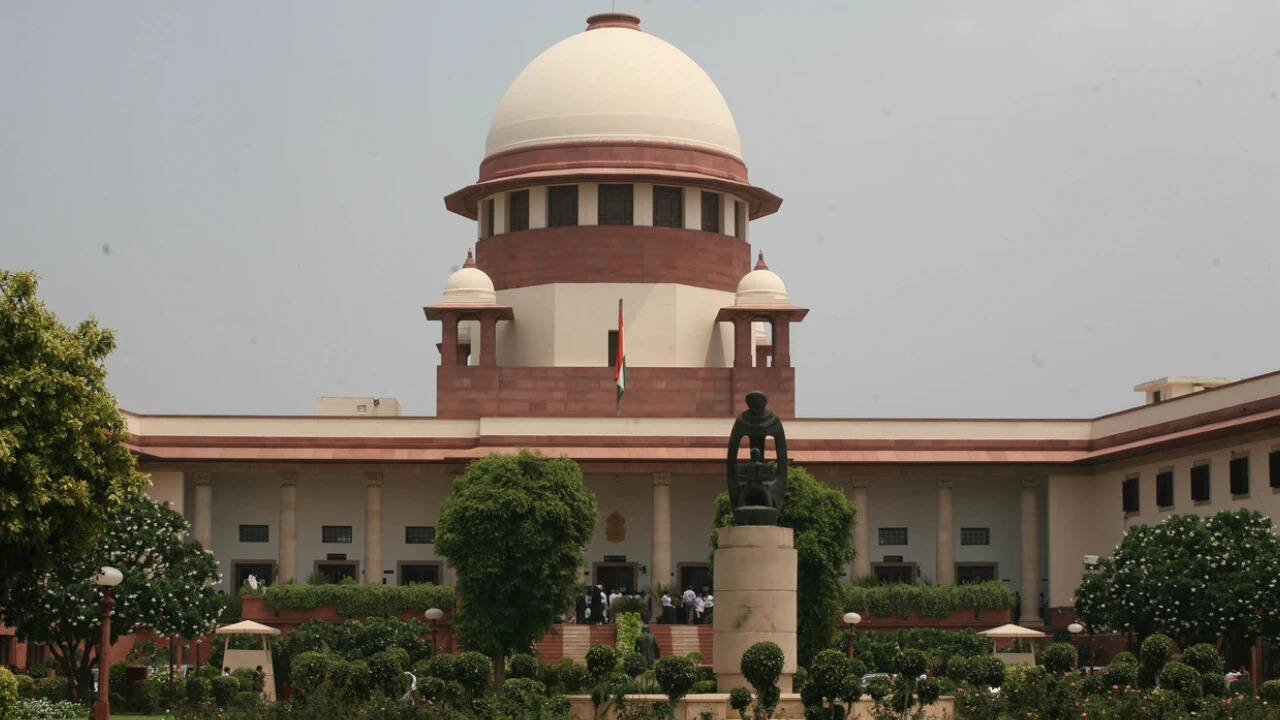
The Supreme Court on Tuesday questioned the Union government over the exclusion of the Chief Justice of India (CJI) from the committee that selects the Chief Election Commissioner (CEC) and Election Commissioners. A bench of Justices observed that the CJI is included in other key appointment committees and sought to understand the rationale behind leaving him out of the election commission selection process.
The matter was heard during arguments on petitions challenging the 2023 Act governing the appointment of the CEC and Election Commissioners. The petitioners contend that the new law, which replaced the CJI with a Union Cabinet Minister in the selection panel, undermines the independence of the Election Commission.
The bench, while questioning the government, noted that the CJI is part of committees for appointments such as the Central Bureau of Investigation (CBI) Director and the National Human Rights Commission (NHRC), among others. It asked why the same principle did not apply to the selection of election commissioners.
Additional Solicitor General, appearing for the Centre, urged the court not to question the wisdom of Parliament in making such a decision. The bench clarified that it was not questioning the trustworthiness of the Prime Minister, who heads the selection committee, but was rather examining the constitutional validity and the broader implications of the law.
The 2023 Act, formally known as the Chief Election Commissioner and Other Election Commissioners (Appointment, Conditions of Service and Term of Office) Act, 2023, was passed by Parliament in December 2023. It provides for a three-member selection committee comprising the Prime Minister, the Leader of the Opposition in the Lok Sabha (or the leader of the largest opposition party), and a Union Cabinet Minister nominated by the Prime Minister.
Prior to the enactment of this law, the Supreme Court, in a landmark judgment in March 2023, had directed that the selection committee should include the CJI, the Prime Minister, and the Leader of the Opposition. The new law removed the CJI from the panel, and petitioners have argued that this dilutes the institutional integrity of the Election Commission.
During the hearing, the bench also stressed the importance of an independent election commission for a functioning democracy. The justices noted that electoral bodies must be perceived as impartial and that the process of appointment plays a critical role in maintaining public confidence.
The government, on the other hand, defended the law, stating that Parliament had the authority to decide the process and that the current provisions were adequate to ensure fair selections. The bench, however, sought specific reasons for the exclusion of the CJI and gave the government time to respond.
The case remains pending, and a final decision by the court will have significant implications for the future of election management in India. Those challenging the law assert that the government cannot unilaterally alter the structure that was designed to safeguard democratic institutions.
Observers note that this is not the first time the government has faced questions over the independence of constitutional bodies. The outcome of this case could set a precedent for how such appointments are made in the future.