Supreme Court Agrees to Early Listing of Plea Challenging ECI's Decision-Making Process
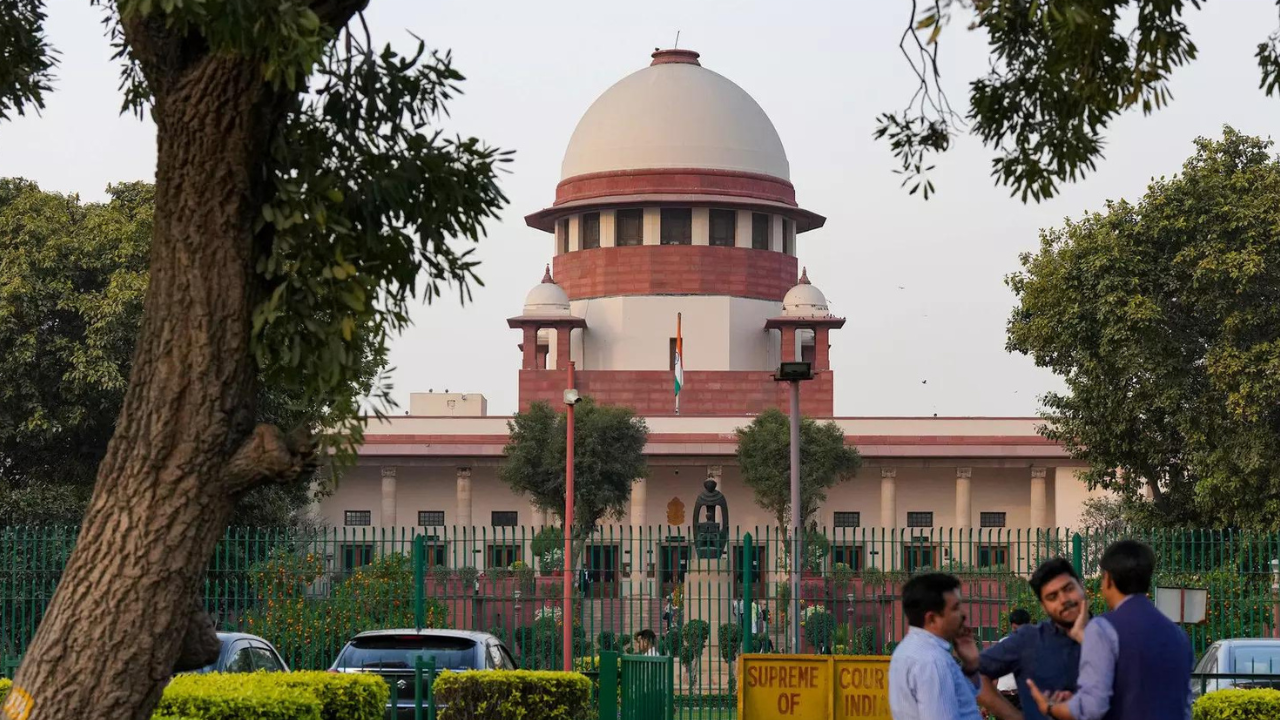
The Supreme Court has agreed to grant an early hearing to a petition that challenges the decision-making process of the Election Commission of India (ECI), placing the matter on the list of cases to be taken up sooner than it otherwise would have been.
The petition questions how the poll body arrives at key decisions. The ECI has defended its functioning, maintaining that ECINet is decentralised and that statutory responsibilities remain with designated election officials, as provided under the law governing the conduct of elections.
The Election Commission is a constitutional body established under Article 324 of the Constitution. It is vested with the superintendence, direction and control of the preparation of electoral rolls and the conduct of elections to Parliament, State Legislatures and the offices of the President and Vice-President. Its decisions — on the model code of conduct, the recognition of political parties, the scheduling of polls and the deployment of security forces — are routinely consequential for the entire country.
ECINet refers to the Commission's information technology network, which links election machinery across States and Union Territories. It is used for communication, monitoring of poll preparedness and the movement of data during elections. Officials have described it as a tool that supports the work of district and State-level election officers rather than one that replaces their authority.
The Commission's stated position is that the network is decentralised: decisions continue to rest with designated officers who are accountable under the Representation of the People Act and related rules.
Petitions concerning the functioning of the ECI are not new. The Supreme Court has heard matters relating to electronic voting machines, the verification of votes through VVPAT slips, the revision of electoral rolls and the enforcement of the model code of conduct. In several of these, the court has observed that it does not seek to run the Commission's day-to-day affairs, but can examine decisions that affect the fairness of the electoral process.
That distinction — between administrative autonomy and judicial review — lies at the heart of the present plea. Courts generally avoid interfering with policy choices made by a constitutional authority, but they can step in where a decision is alleged to violate the law, constitutional provisions or the principles of natural justice.
The specific arguments advanced by the petitioner, the relief sought and the bench that will hear the matter were not immediately known from the available information. The court's agreement to list the case early does not indicate any view on its merits; it only means the petition will be taken up for hearing at an earlier date.
Both the petitioner and the Election Commission will have an opportunity to present their arguments. If the court issues notice, the Commission will be asked to respond formally. Depending on the outcome, the case could influence how the poll body's internal processes are scrutinised in the future.
The credibility of elections rests substantially on public confidence in the institution that conducts them. Transparency in decision-making, and the availability of a clear route for redress, are widely regarded as important to that confidence. At the same time, election authorities have cautioned that judicial intervention in routine administrative matters can slow down the conduct of elections, which must be completed within timelines set by law.
For now, the significance lies in the timing and the subject. With elections a recurring feature of India's democratic calendar, questions about how the Commission takes decisions — and how those decisions are reviewed — are of direct public interest. The court's decision to hear the matter early ensures that the arguments will be tested in open proceedings rather than left unaddressed.







