Sumit Sarkar, Pioneering Historian of Modern India, Dies at 87
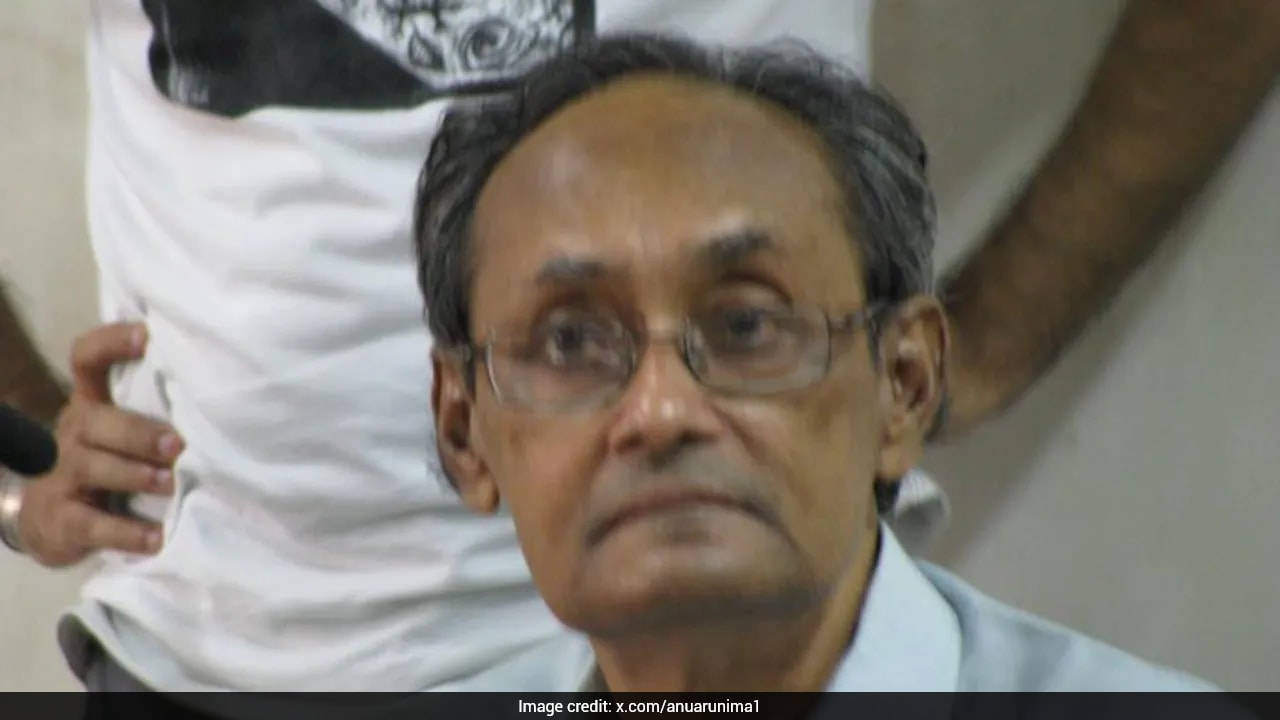
Noted historian Sumit Sarkar passed away on Thursday at his residence in Delhi due to age-related ailments, according to historian and family friend G Arunima. He was 87.
Sarkar is survived by his wife, historian Tanika Sarkar, and their son, Aditya Sarkar, who is an associate professor of South Asian History at the University of Warwick. His last rites are likely to be held on Saturday, with the exact schedule to be announced later.
Born in 1939 to Sushobhan Sarkar, a distinguished historian, Sumit Sarkar grew up in an academic environment. He studied history at Presidency College, Calcutta, and the University of Calcutta, where his intellectual foundations were shaped. He began his teaching career as a lecturer at the University of Calcutta and later served as a reader at the University of Burdwan. He spent the longest phase of his academic life as a professor of history at the University of Delhi.
Sarkar's seminal works, including 'The Swadeshi Movement in Bengal', 'Modern India: 1885–1947', and 'Writing Social History', established him as a leading authority on colonialism, nationalism, and the freedom movement. His scholarship stood out for its focus on the experiences of diverse social groups, classes, and popular movements, moving beyond conventional narratives centred on elite leaders.
A Marxist historian, Sarkar is best remembered for his deep study of the Swadeshi movement and his efforts to challenge leader-centric accounts of Indian nationalism. He was among the founding members of the influential Subaltern Studies Collective, which sought to recover the voices of marginalized groups in history. Over time, he also became a thoughtful critic of the collective's methods, reflecting his intellectual independence and commitment to rigorous analysis.
In recognition of his contributions, Sarkar received the Sarit Chatterjee Memorial Award from the Indian History and Culture Society in 2003 for his work on the freedom movement. The following year, he was conferred the Rabindra Puraskar for 'Writing Social History'. In 2007, he returned the award in protest against the treatment of farmers by the then CPI(M)-led Left Front government in West Bengal, a decision that underscored his ethical conviction and solidarity with rural communities.
Tributes poured in on social media, with readers and fellow historians remembering his warmth, humility, and intellectual generosity. G Arunima, who posted on X, called him 'the doyen amongst historians and the kindest of human beings', adding that his contribution to modern Indian history is immeasurable.
Rajya Sabha MP Manoj Kumar Jha recalled Sarkar's understanding of Mahatma Gandhi. He noted, 'How can one forget your understanding of Gandhi as someone who did not seek to make everyone think alike, but created an umbrella under which people who did not think alike could struggle together. That idea, like so much of your work, continues to speak to our present.'
Author Nilanjana Roy described Sarkar as a 'great believer in pluralism, staunchly anti-fascist' who approached history 'as a democratic project'. She highlighted his emphasis on the small happenings, rebellions, and struggles of ordinary Indians as being as important as the thoughts of intellectuals and leaders.
Publisher Arpita Das shared a personal memory of Sarkar as a teacher who encouraged curiosity and reasoned understanding. She recalled how he would ask his MA students to read Umberto Eco's 'The Name of the Rose' as background for his class on the Reformation, and how he steered their questions gently yet firmly while urging them to keep their imagination alive. She also noted the extraordinary intellectual partnership he shared with Tanika Sarkar.
Sumit Sarkar's passing marks the end of an era in Indian historiography. His work not only illuminated the complexities of India's modern past but also exemplified how history can be a tool for democratic and inclusive understanding. His legacy will continue to inspire scholars, students, and all those who seek a more nuanced view of the nation's journey.







