Sensex Slips 200 Points on Mixed Global Cues; Bitcoin Steadies Near $83,000
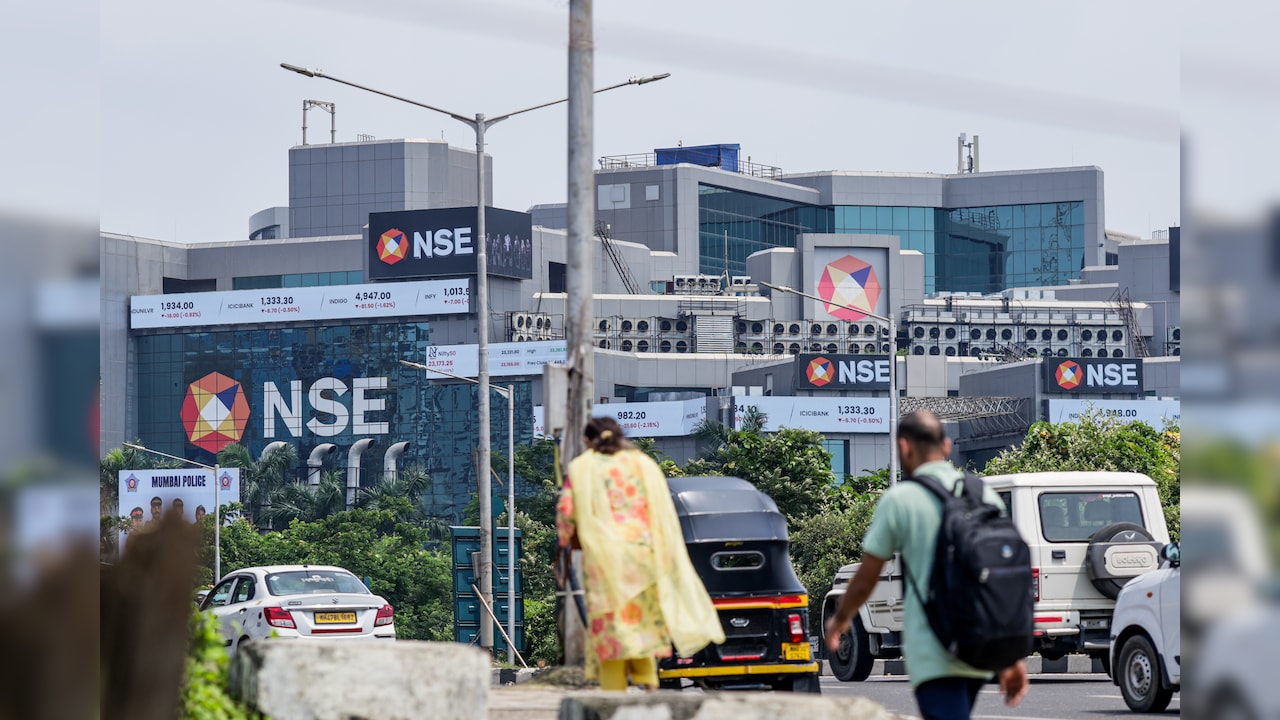
The Sensex declined by about 200 points in a session marked by mixed global signals, with crude oil prices holding broadly steady and investors continuing to pick their positions selectively across markets. The fall was modest and in line with weakness in a handful of Asian indices, even as most regional markets ended higher.
Across Asia, Japan's Nikkei gained 1.93 per cent, while the Hang Seng and the Shanghai Composite also advanced. South Korea's KOSPI slipped marginally, as did the Sensex. In the United States, sentiment was divided: the Nasdaq rose 0.24 per cent, but the Dow Jones fell 0.86 per cent, and the CBOE Volatility Index (VIX), a gauge of expected market turbulence, rose 1.87 per cent. Gold traded nearly flat, while crude oil eased 0.24 per cent — a marginal relief on the inflation front, since energy prices feed into transport and input costs.
On the macroeconomic side, Nischal Shetty, founder of the crypto exchange WazirX, said in a market note that China's manufacturing PMI had returned to expansion, US inflation had eased, and private employment remained firm, together supporting broader economic confidence. He cautioned, however, that a US 10-year Treasury yield above 5.3 per cent keeps funding expensive and could restrict institutional flows into Bitcoin and other digital assets.
Slower US inflation has reduced expectations of another Federal Reserve rate hike, which Shetty said improves the liquidity outlook. In contrast, higher inflation in Australia has raised the prospect of further tightening there. His overall assessment: improving global growth and lower US rate pressure support crypto markets, but elevated bond yields are keeping participation selective.
In crypto markets, Bitcoin traded near $83,461 in what was described as a constructive daily consolidation, supported by bullish moving averages despite weaker momentum signals. Immediate support was placed at $83,300–$83,400, with resistance at $84,200–$84,500. Holding support could keep buyers in control; losing it may expose the $82,000–$82,100 zone. Futures traders were advised to confirm moves through volume, open interest and funding data.
Ethereum traded near $2,689 within a constructive but cooling daily structure. Immediate support sat around $2,670–$2,680, while $2,695–$2,710 formed resistance around the psychological $2,700 mark. Sustained participation above that level would strengthen the setup, whereas a rejection could shift attention to $2,620–$2,630 as nearby secondary support.
Worldcoin (WLD) traded near $0.538 with a bullish daily structure and a Relative Strength Index of about 63. Support was seen at $0.525, followed by $0.495–$0.500, while $0.540–$0.550 remained resistance. A rejection there may lead to consolidation after the recent advance.
On flows, US spot Bitcoin exchange-traded funds recorded $125.6 million in daily net outflows, while Ethereum ETFs lost 22,260 ETH, worth about $59.9 million at prevailing prices. Despite the withdrawals, Bitcoin held near $83,461 and Ether gained 0.17 per cent to around $2,689 — an indication that institutional flows do not by themselves determine price direction. Spot buying, short-covering and derivatives positioning can absorb ETF selling, just as inflows can be offset by profit-taking, exchange supply, macro conditions and technical resistance.
Readers should note that the price levels cited are technical observations attributed to the analyst, not investment advice or a forecast. Crypto assets remain highly volatile. In India, gains from virtual digital assets are taxed at 30 per cent, with a 1 per cent tax deducted at source on transfers, and losses cannot be set off against gains — a structure that shapes how retail investors participate.
Taken together, the session pointed to a market that is neither uniformly optimistic nor pessimistic. Technology strength in the US and softer oil prices offer some support to risk assets, while expensive government borrowing costs continue to cap enthusiasm.







