SC rejects plea to replace hanging with lethal injection, cites lack of evidence
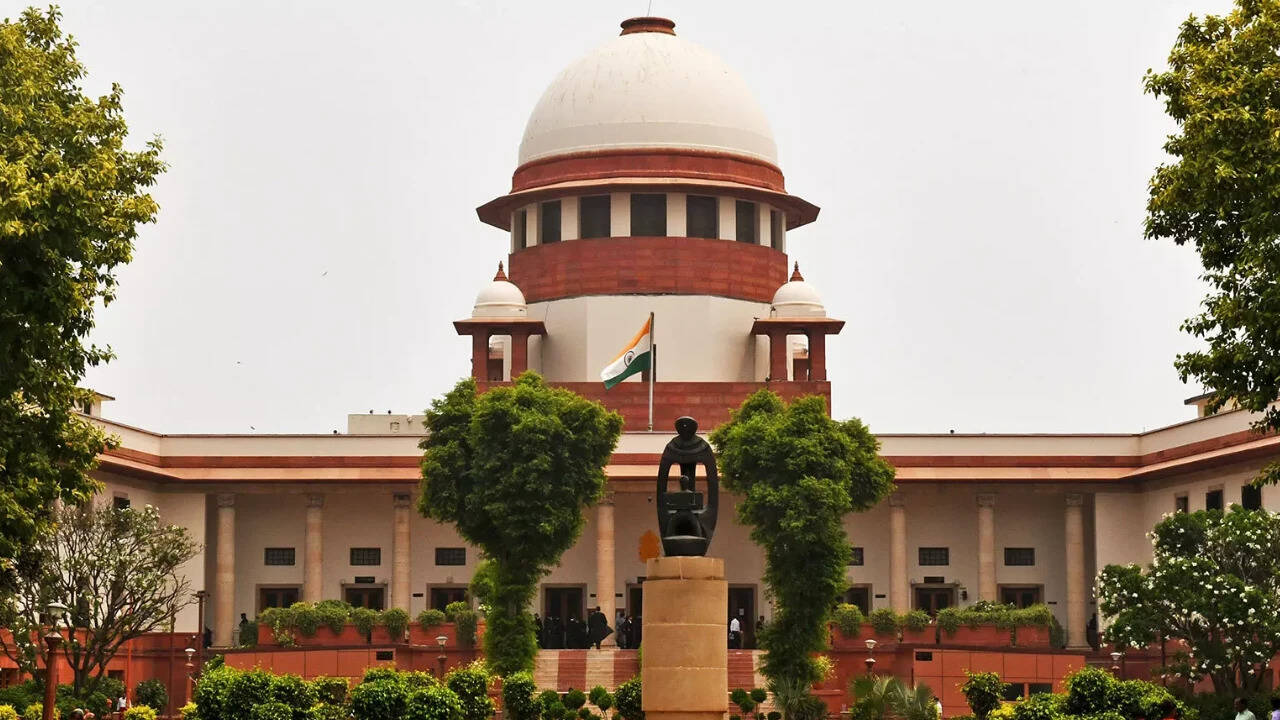
The Supreme Court of India on Wednesday dismissed a writ petition seeking to replace hanging with lethal injection as the mode of execution, observing that there is no evidence to suggest that lethal injection is less painful than hanging.
A Bench comprising Justices [Names not specified in original report] noted, "The dismissal of the present writ petition must not be understood as foreclosing future scrutiny. Constitutional interpretation is organic and must remain responsive, both to the evolution of constitutional doctrine and to advances in scientific knowledge."
The petition had contended that hanging is a brutal and outdated method of execution and sought directions to adopt lethal injection as a more humane alternative. However, the court found no scientific or empirical basis to support this claim, stating that no conclusive evidence has been presented to demonstrate that lethal injection causes less pain or suffering.
The court's observation underscores a cautious approach, leaving the door open for future challenges if new evidence emerges. This is significant because questions surrounding the constitutionality of execution methods are not new in India. Over the years, courts have examined whether certain modes of execution violate Article 21 of the Constitution, which guarantees the right to life and personal liberty.
In its 1983 judgment in Deena alias Deena Dayal v. Union of India, a constitution bench of the Supreme Court upheld the constitutionality of hanging as a mode of execution, ruling that it is not barbarous, inhuman, or degrading. The court had then noted that the legislature has the competence to decide the mode of execution, and unless a method is clearly cruel or unusual, it would not be struck down.
The recent plea attempted to revisit this position, arguing that societal and scientific developments since 1983 warrant a change. The petitioner likely cited international practices, where many countries have adopted lethal injection as the primary method. However, the Supreme Court was not persuaded by these submissions, emphasizing the lack of concrete evidence that lethal injection is superior in terms of painlessness.
Legal experts point out that the judgment does not completely shut the debate. The court's explicit statement that the dismissal does not "foreclose future scrutiny" suggests that if credible scientific studies emerge, a fresh challenge could be considered. This reflects the evolving nature of constitutional interpretation, as the court itself acknowledged.
The ruling also aligns with the principle that courts should not interfere in policy decisions of the legislature unless there is a clear constitutional violation. The mode of execution is a matter of legislative policy, and the judiciary has traditionally been reluctant to substitute its own views unless the existing method is found to be unconstitutional.
At present, hanging remains the prescribed mode of execution under the Code of Criminal Procedure, 1973. The President of India has the power to commute a death sentence to life imprisonment under Article 72, and governors have similar powers under Article 161. Legal remedies such as mercy petitions and judicial review also provide safeguards.
The Supreme Court's decision to dismiss the plea without detailed reasoning suggests that the petitioner failed to present compelling evidence. It serves as a reminder that social reform through the judiciary requires more than just moral arguments; it demands empirical proof and a clear constitutional basis.
This development has been closely watched by human rights organisations and legal scholars who have long debated the humanity of execution methods. While some have expressed disappointment over the dismissal, others interpret the court's remarks as an invitation for future deliberation on the issue.







