SC Eases Judge Eligibility: 1-Year Practice, but 2-Year Training Before Presiding
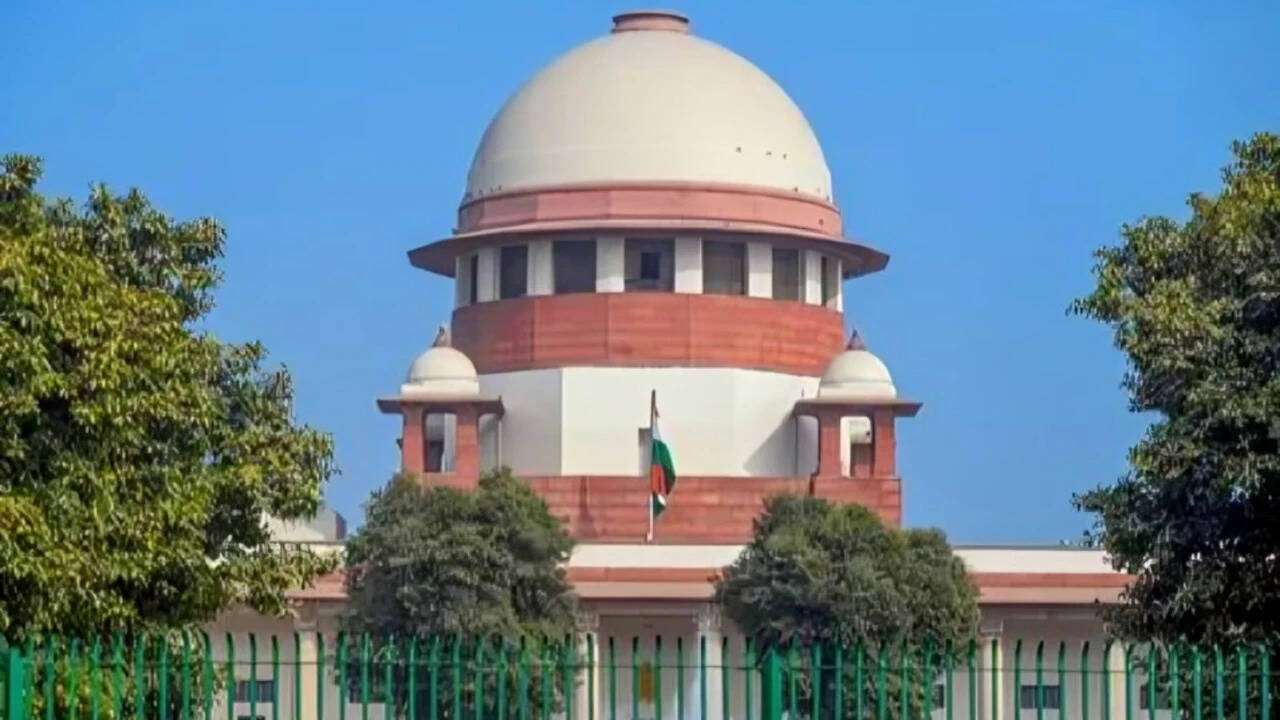
NEW DELHI: In a significant move that reshapes the recruitment process for entry-level judicial officers, the Supreme Court on Friday relaxed the mandatory practice requirement for advocates from three years to one year. However, the court also introduced a compulsory two-year training period before selected candidates can preside over courts and decide cases.
The decision, delivered by a three-judge bench led by Chief Justice Surya Kant, with Justices A G Masih and Vinod Chandran, represents a mix of recommendations spanning nearly four decades. The majority judgment, from which Justice Chandran dissented, allows law graduates with just one year of practice to appear for the three-stage examination conducted for recruitment of civil judges and magistrates.
The new eligibility criteria comes with a structured training regime. Candidates who clear the selection process will be designated as 'Trainee Judicial Officers' and must undergo one year of intensive training at the respective State Judicial Academy. During this period, they will receive a fixed emolument equivalent to half the salary of a magistrate.
Following this, trainees will spend another year as law clerks—six months with the Principal District Judge and six months with a sitting High Court judge. The High Court judge will provide a report assessing the trainee's performance and suitability for the judicial role. Only after successfully completing this two-year process will the trainee be allowed to function as a full-fledged judge.
The judgment references earlier attempts to refine judicial recruitment. In 1986, the Law Commission had suggested that fresh law graduates could take the judicial services examination but should undergo two years of intensive on-the-job training. The Supreme Court, in 1993, mandated that only advocates with three years of practice could apply. That decision was reversed in 2002, allowing fresh graduates to compete for entry-level judicial posts.
Friday's ruling appears to balance these conflicting approaches by combining a reduced practice requirement with a mandatory training period. The majority held that law graduates with one year of practice are competent to sit for the exam, while the comprehensive training will equip them with the necessary skills to handle courtroom proceedings and sensitive cases.
Most High Courts had favoured retaining the three-year practice rule, citing that fresh law graduates often lack exposure to judicial procedures and exhibit deficiencies in handling courtroom behaviour and sensitive matters. The Supreme Court's new framework, however, seeks to address these concerns through structured mentorship and training rather than requiring longer legal practice before application.
Justice Chandran, in his dissenting opinion, disagreed with the majority's decision, though the specific reasons were not detailed in the official communication. The change is expected to have far-reaching implications for the judiciary, potentially widening the pool of candidates for judicial positions while ensuring that those selected are adequately trained.
Legal experts note that the ruling addresses the long-standing debate on the ideal entry criteria for trial court judges. By lowering the practice requirement, the court opens the door to younger legal professionals. Simultaneously, the mandatory training aims to uphold judicial competence and integrity, ensuring that new judges are well-prepared to dispense justice effectively.
The recruitment process for judicial officers is critical to the functioning of the lower judiciary, which handles a vast majority of cases in India. The new eligibility norms will apply to future recruitment cycles, and state governments and High Courts are expected to adapt their selection procedures accordingly.







