Sarnath Inscribed as UNESCO World Heritage Site, India's 45th
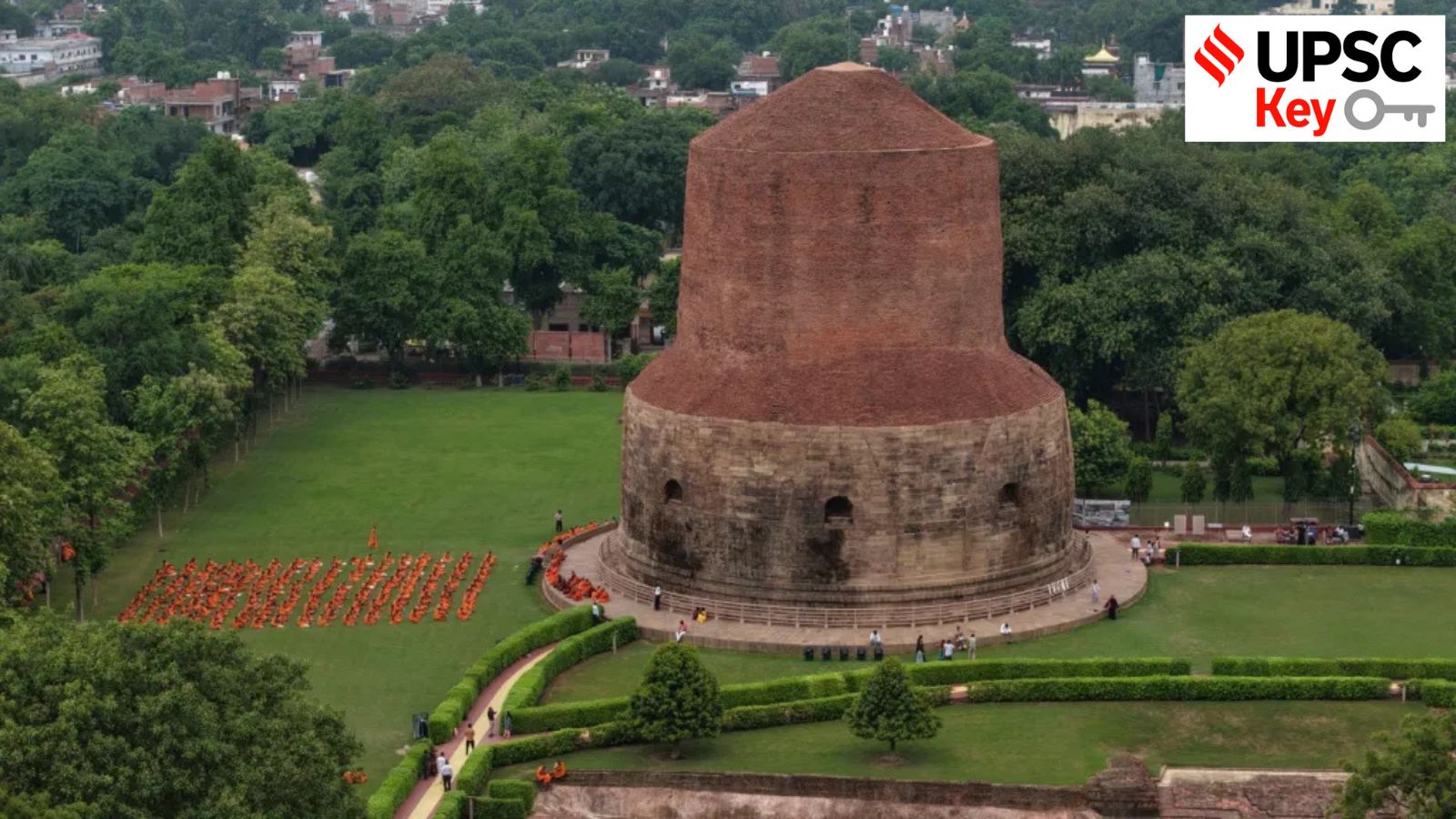
Sarnath, the ancient site where Lord Buddha delivered his first sermon after attaining enlightenment, has been inscribed on UNESCO's World Heritage List. The announcement was made on Saturday during the 48th session of the UNESCO World Heritage Committee held in Busan, South Korea. With this, Sarnath becomes India's 45th World Heritage Site and Uttar Pradesh's fourth.
Sarnath is one of the holiest sites of Buddhism, revered as the place where Buddha set in motion the 'Dharmachakra Pravartan' (the wheel of Dharma). The site has been on UNESCO's tentative list since July 3, 1998, and after 28 years, it has received official recognition. The state government said this designation would strengthen Uttar Pradesh's Buddhist Circuit on the international tourism and cultural heritage map.
Uttar Pradesh's three existing World Heritage Sites are the Taj Mahal, Agra Fort, and Fatehpur Sikri, all located in the Agra region. Sarnath's inclusion adds a significant Buddhist heritage site to the state's list.
In preparation for the nomination, the Archaeological Survey of India (ASI) had earlier replaced the existing plaque at the site to correct its recorded history, crediting the local royal family rather than colonial rulers with the discovery. According to a statement by a descendant of Babu Jagat Singh, the ASI acknowledged that the site first came to light during digging ordered by Jagat Singh, based on authentic documents and primary historical evidence.
A UNESCO World Heritage Site is a location recognized for its 'outstanding universal value,' meaning cultural or natural significance that transcends national boundaries and is of common importance for all humanity. Sites fall into three categories: cultural heritage, natural heritage, and mixed heritage.
The recognition of Sarnath underscores India's rich Buddhist heritage and its efforts to preserve and promote sites of global importance.