Rural Demand Outpaces Urban as Consumer Brands Shift Focus to Hinterlands
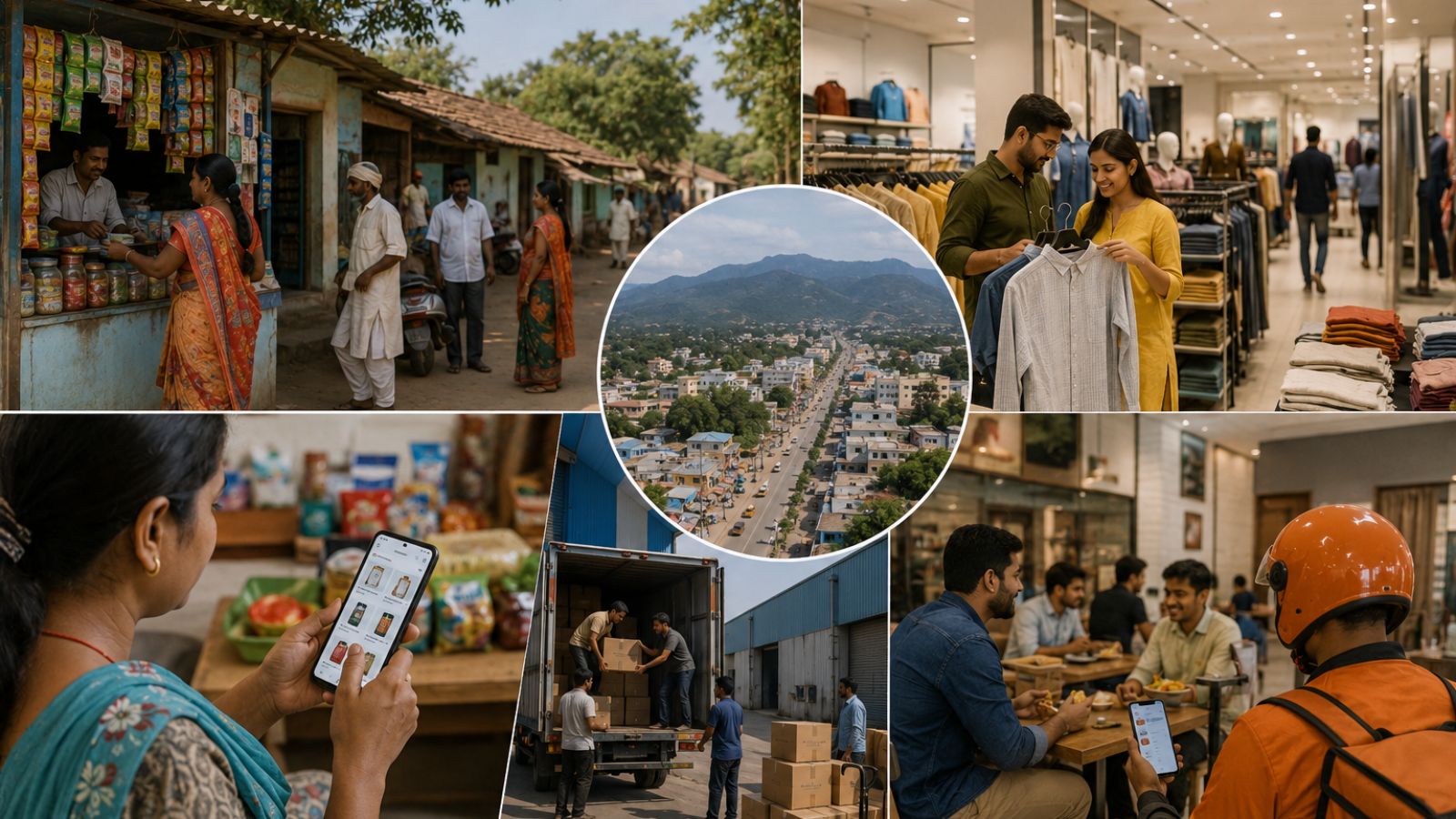
As consumer companies look beyond crowded urban markets for growth, 'micro-markets' have emerged as a key strategy. Tata Group-backed Trent, which operates the Zudio brand, highlighted this approach in its annual report for 2025-26, pointing to its focus on expanding across micro-markets rather than focusing only on comparative store performance.
These micro-markets, which vary across companies, refer to highly segmented, untapped regions that make it easier for companies to focus their efforts. Tier-1 and tier-2 cities, which have a population with increasing wage growth and aspirational demand, form a large part of the micro-markets for most consumer companies.
Like Trent, many other consumer brands have started shifting their focus towards the hinterlands for growth, as rural demand continues to outpace urban demand, while digitalisation has led to the rapid growth of new-age platforms in bigger cities, saturating the space for traditional players.
Rural demand growth has continued to outpace urban demand, led by higher agricultural wages, favourable monsoons over the past couple of years that boosted crops, and growth in the rural non-farm economy. This has shifted consumption patterns in these regions, with rural consumers becoming increasingly aspirational. While the El Niño forecast later in the year could affect rainfall and temporarily hamper the momentum, analysts expect rural demand to remain strong going forward.
Many consumer brands have acknowledged this shift and made efforts to expand into tier-2 and tier-3 cities, a trend also reflected in their earnings. In their earnings announcement on July 11, Avenue Supermarts, which operates the retail chain D-Mart, noted that its stores in non-metro cities performed much better than the older stores in bigger cities in the April-June quarter. 'In large metros, growth in older stores, which have significantly higher revenue per square foot, was flat this quarter. While stores in non-metros continue to grow well,' said Managing Director and Chief Executive Officer Anshul Asawa. These stores played a major part in the company's 15% revenue growth during the quarter, the management said.
Other retail conglomerates such as Tata Group's Titan and Reliance Group's retail ventures have also expanded to the hinterlands, with a large chunk of the new stores added every quarter placed in regional hubs and smaller locations. The same is true for quick-service restaurant companies like Jubilant Foodworks and Devyani International, which run the Indian outlets for international brands such as Domino's, KFC, and Pizza Hut. These companies had earlier focused on increasing their store density across urban hubs so that a Domino's or a Pizza Hut is present in every locality in a big city.
Traditional FMCG players, which earlier focused on specific rural hubs with dense populations, have expanded further into the hinterlands on the back of digitalisation and improving trade channels. After the Covid-19 pandemic, companies such as Hindustan Unilever (HUL) and Nestle India have launched and optimised specialised programmes to aid this. 'If we look at any FMCG company pre-Covid, a large part of the focus was on the urban markets. A lot of the big names such as HUL and Nestle already have almost 100% coverage in the urban market. Thus, penetration into tier-2, tier-3, and rural markets becomes important from an incremental growth perspective,' said Ronak Shah, an analyst tracking the consumer sector at Equirus Securities.
HUL has optimised Project Shakti — a programme running since the 2000s incentivising rural women to sell its products in their villages through the Shikhar app — with AI to optimise sales and restocking. Nestle's 'RUrban' strategy, launched in 2019 with a focus on specific semi-urban and rural areas, has been expanded to cover more locations. These initiatives reflect the broader industry trend of betting on non-urban India as the next growth frontier.