Rijiju, Rahul spar over women's quota law rollout timeline
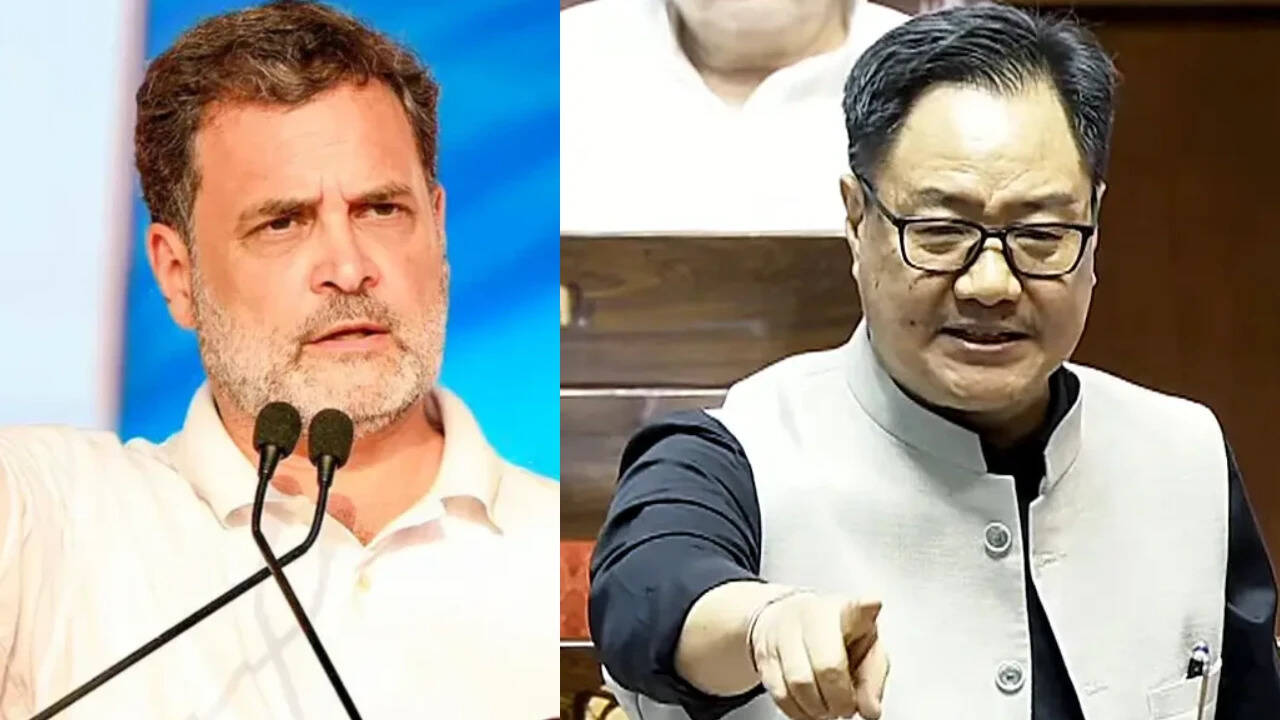
Union Parliamentary Affairs Minister Kiren Rijiju and Leader of Opposition in the Lok Sabha Rahul Gandhi on Monday traded sharp remarks over the implementation of the women's reservation law, with Rijiju urging Gandhi to back the rollout and Gandhi countering that the measure was already passed by Parliament but has yet to be enforced.
The exchange took place during a discussion in the Lok Sabha, where Rijiju emphasised the government's commitment to ensuring greater representation for women in legislative bodies. He called upon all parties, including the Congress-led opposition, to extend constructive support for the effective implementation of the Nari Shakti Vandan Adhiniyam, which reserves one-third of seats in the Lok Sabha and state legislative assemblies for women.
Responding to Rijiju's appeal, Rahul Gandhi noted that the Bill had been passed in September 2023 with near-unanimous approval and that the responsibility now lies with the government to enact the necessary procedural steps for its implementation. 'The Bill was passed by this Parliament. Instead of asking us to support it again, the government should tell us when it will be brought into force,' Gandhi said.
The women's reservation law, officially the Constitution (106th Amendment) Act, 2023, received assent from the President of India and was gazetted in September 2023. However, its implementation is tied to two key exercises: a fresh census and subsequent delimitation of electoral constituencies. These steps are constitutionally mandated before the reservation can be operationalised.
According to the Act, the reservation will come into effect after the President notifies a date, which can only follow the publication of census figures and the delimitation process. The government has maintained that these procedural requirements are being undertaken and that no policy delay is intended. Opposition leaders, including Gandhi, have repeatedly pressed for a clear timeline, arguing that the government has failed to indicate when the census will be conducted or the delimitation completed.
The law has been widely welcomed across the political spectrum as a historic step toward gender parity in representative institutions. While most parties supported the legislation in 2023, several also sought immediate implementation or the inclusion of quotas sub-categories such as for women from Scheduled Castes, Scheduled Tribes, and Other Backward Classes. Those demands were not incorporated in the final Act.
During Monday's exchange, Rijiju said the government is 'fully committed' to the law and will take steps in accordance with constitutional provisions. He reminded members that the process involves multiple stages and cannot be rushed without following due legal procedure. 'We are working on it. The census will be held, and delimitation will follow. Everyone should cooperate,' he said.
Gandhi, however, insisted that a concrete date should be announced. 'The country wants to see women occupying one-third of the seats in this House and in every legislative assembly. There is no reason for further delay after the census. The government must clarify its intent,' he added.
The exchange drew attention on social media, with many users highlighting the need for a timeline. Political analysts note that the implementation of the law will substantially change the composition of legislatures and is a sensitive issue that requires careful handling of data and legal norms. The Constitution mandates that reservation will remain in force for 15 years from the date of commencement, subject to extension.
As of now, no official date has been announced for the census, which was postponed due to the COVID-19 pandemic and subsequent administrative reasons. The government has not confirmed a revised schedule, leaving the implementation timeline uncertain. This uncertainty has become a recurring point of debate between the ruling party and the opposition.
Both Rijiju and Gandhi are expected to continue the discussion as the legislative agenda progresses. The ultimate rollout of the women's quota will depend on a combination of administrative decisions and political consensus, as required by the Constitution.