Right to protest vs commuters' right: SC to consider national policy on protest sites
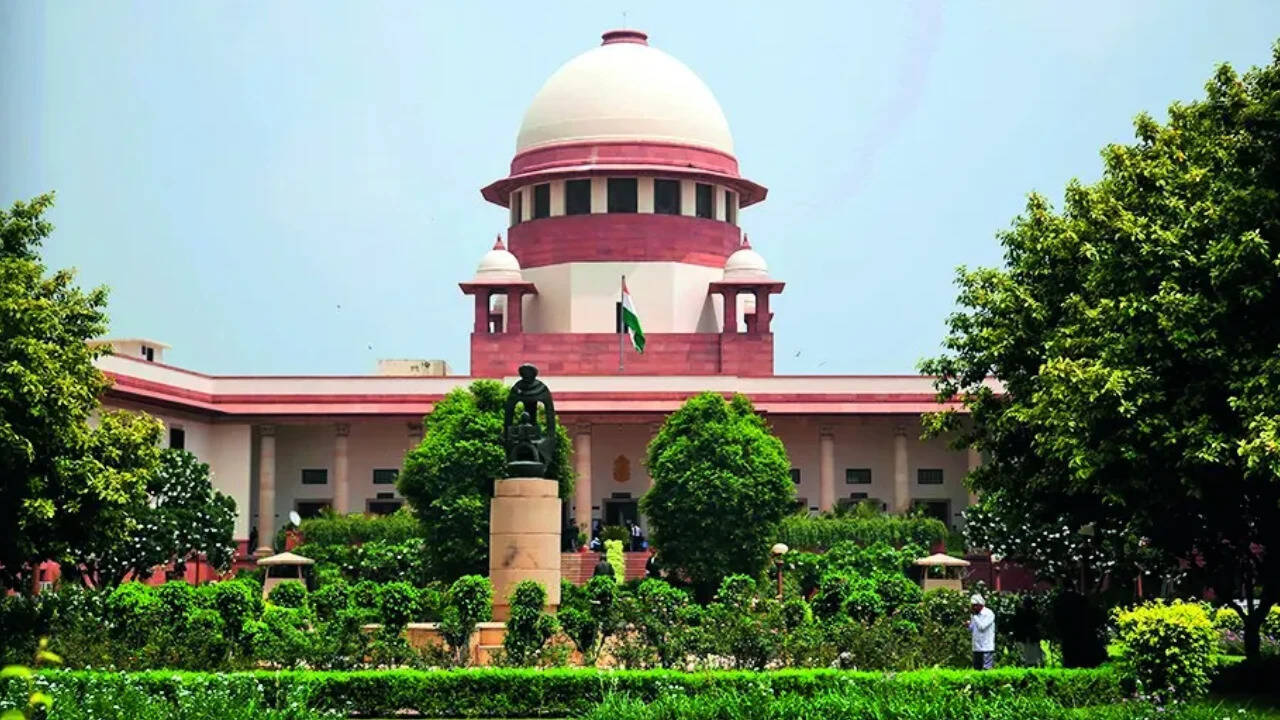
The Supreme Court has agreed to consider a public interest litigation (PIL) seeking a national policy to regulate public protests and identify designated protest sites, so that demonstrations do not disrupt the daily commute and lawful activities of ordinary citizens.
Advocate V Elanchezian, appearing for petitioner Aalok Mohan, highlighted the conflict between the fundamental right to peacefully assemble and the rights of commuters, patients, school children, and emergency services. He argued that rapid urbanisation and population growth have not been matched by a comprehensive national framework setting minimum planning standards for infrastructure related to peaceful assemblies.
“Despite these developments, there exists no comprehensive national framework prescribing minimum planning standards for infrastructure relating to peaceful public assemblies. Consequently, public authorities across the country adopt differing administrative practices, often leading to avoidable conflict between the constitutional rights of demonstrators and those of commuters, patients, school children, emergency services and the public,” the petition said.
The plea clarified that it is not questioning the existence of the right to peaceful assembly, which is protected under Article 19(1)(b) of the Constitution. Instead, it asks whether constitutional governance now requires the government to formulate a comprehensive national policy providing minimum standards for planning civic infrastructure that supports peaceful assemblies while ensuring the harmonious protection of all fundamental rights.
Public interest litigations are filed in the Supreme Court to address issues affecting the general public. In this case, the petitioner argued that without a uniform policy, the rights of protesters and non-protesters are left to the discretion of local authorities, leading to ad-hoc arrangements. This often results in protests being held at busy intersections, causing inconvenience to daily commuters and even blocking emergency vehicles.
The bench, which was hearing the matter, said it would consider the issues raised by the petitioner along with other pending petitions that seek identification of suitable protest sites equipped with basic amenities such as water, sanitation, food, and medical assistance. The objective, the court indicated, is to ensure that protests do not cause inconvenience to commuters or impede them from reaching their workplaces on time.
The Constitution guarantees the right to freedom of speech and expression, the right to assemble peaceably without arms, and the right to move freely throughout the territory of India under Article 19. However, these rights are not absolute and are subject to reasonable restrictions. In a democracy, the right to protest is essential, but so is the right of every citizen to carry on their livelihood without undue obstruction. The Supreme Court has on several occasions laid down guidelines to regulate protests, but a pan-India framework has been absent.
In recent years, protests at high-traffic locations have drawn criticism from commuters. Balancing these competing rights is a delicate task for the judiciary. The petitioner's plea seeks to institutionalise a system where protests can take place without paralysing city life. This could include pre-notified sites, time restrictions, and basic facilities to ensure that the right to dissent does not become a source of harassment for other citizens.
The court has not yet passed any final order on the PIL but has indicated that it will examine the matter alongside pending petitions. The next hearing will be scheduled in due course, and the government's response may be sought before a final view is taken.







