Punjab political clash: Congress predicts AAP govt collapse, says Mann won't finish term
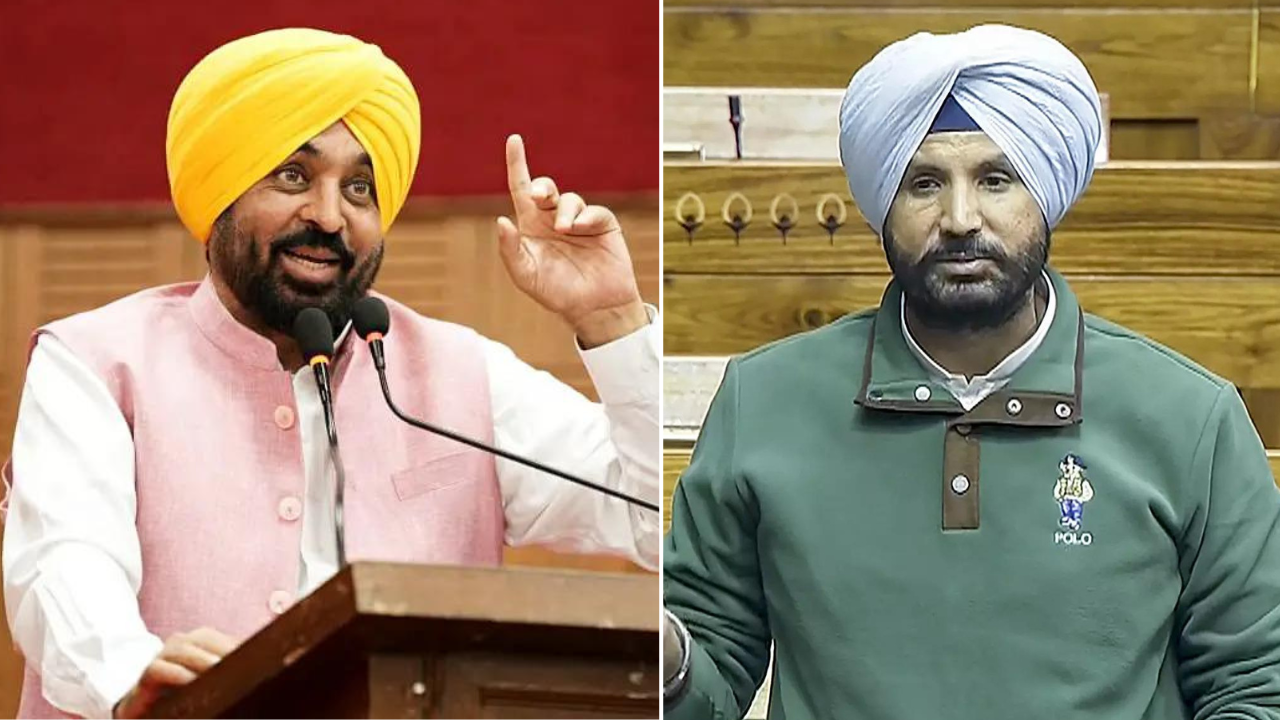
The Congress party in Punjab has escalated its political offensive against the Aam Aadmi Party (AAP) government, with senior leader Partap Singh Bajwa, Leader of Opposition in the Punjab Assembly, and other party leaders predicting that Chief Minister Bhagwant Mann will not complete his full five-year tenure. Speaking to reporters, Congress general secretary for Punjab, Harish Chaudhary, and other leaders echoed similar sentiments, asserting that the AAP government would collapse under its own contradictions and failures.
The statement comes amid a heated political climate in Punjab, where the AAP government has been in power since March 2022. The Congress, which was ousted from power in the state, has repeatedly accused the AAP administration of failing on key issues such as law and order, unemployment, and drug control. The latest prediction of an early end to the Mann government is seen as part of the Congress' strategy to position itself as the primary opposition ahead of the next assembly elections, due in 2027.
Political analysts note that such predictions are common in Indian politics, especially from opposition parties seeking to rally their cadre. However, the Congress' remarks carry particular weight given the factional tensions within the AAP in Punjab. Reports of internal dissent and dissatisfaction among AAP legislators have surfaced intermittently, though the party leadership has denied any rift.
The AAP, in response, dismissed the Congress' claims as wishful thinking. Punjab minister and AAP spokesperson, Aman Arora, stated that the Congress is unable to digest the public mandate given to the AAP and is resorting to baseless speculation. He asserted that the Mann government is stable and working decisively on its poll promises, including free electricity, improved healthcare, and educational reforms.
The political war of words has intensified in recent weeks, with both parties organising rallies and press conferences to highlight each other's shortcomings. The Congress has centred its attacks on the AAP government's handling of the power sector, alleging widespread corruption in the recruitment of employees. The AAP has countered by pointing to the previous Congress regime's alleged scams and mismanagement.
Observers say that while the Congress' prediction may be part of political posturing, it reflects the deep polarisation in Punjab politics. The state has historically witnessed strong anti-incumbency, and no party has retained power in consecutive elections for over two decades. The AAP's performance and internal cohesion will be critical in determining whether the Congress' prophecy comes true.
For now, the political discourse in Punjab remains charged, with both parties trading accusations. Voters, who had overwhelmingly supported the AAP in the last election, are watching developments closely. The Congress' assertion that the Mann government will not survive its full term has added a new dimension to the political narrative, even as the AAP leadership remains confident of steering through challenges.
This report is based on statements made by political leaders and does not reflect an independent assessment of the stability of the Punjab government. The Times of India will continue to provide balanced coverage of the evolving political situation.