Positive IOD predicted to counter El Niño's monsoon impact: WMO
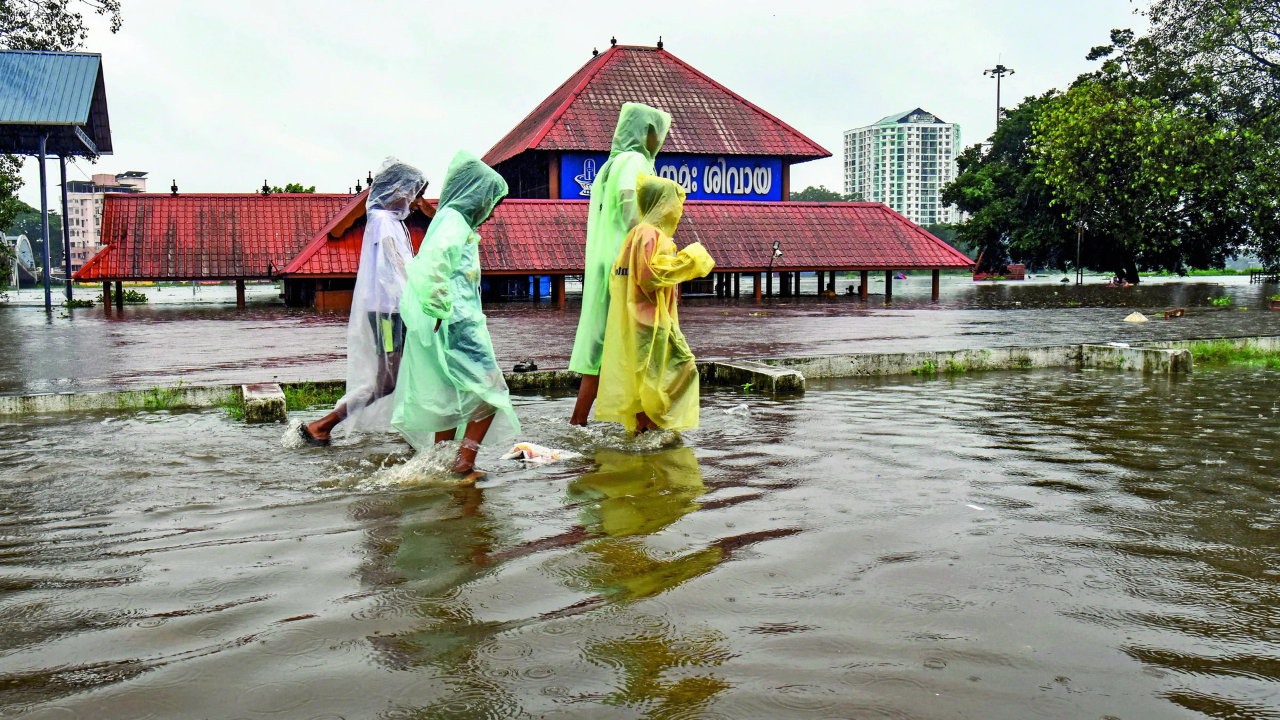
The India Meteorological Department (IMD) has flagged the risk of the overall monsoon rainfall ending in the 'below normal' category due to a strengthening El Niño. However, the World Meteorological Organisation's (WMO) latest monthly global seasonal climate update, released late Friday night, has offered a glimmer of hope. It predicts the possibility of a 'positive' Indian Ocean Dipole (IOD), which could partially offset the detrimental effects of El Niño on the monsoon.
El Niño is a climatic pattern characterised by the warming of surface waters in the central and eastern tropical Pacific Ocean. It is historically associated with a weaker monsoon and harsher summer conditions in India. In contrast, the Indian Ocean Dipole refers to the difference in sea surface temperatures between the western and eastern parts of the tropical Indian Ocean. A positive IOD is known to strengthen monsoon winds and enhance rainfall over the Indian subcontinent.
The WMO stated, "A positive IOD is expected to develop... Combined with exceptionally warm global oceans and the likelihood of a positive IOD, the developing El Niño is expected to shape weather patterns across many parts of the world in the months ahead." This forecast is significant for India, which relies heavily on the southwest monsoon for its agricultural and water needs.
If the WMO's prediction materialises, there is a possibility of improved rainfall conditions in south peninsular India — a region that has reported a cumulative rainfall deficit of 22% as of August 1 — and over many parts of the country in general. This improvement could prevent India's monsoon from slipping from the 'below normal' phase to a 'deficient' phase at the end of the rainy season.
The El Niño Southern Oscillation (ENSO) and the IOD are two key factors that govern the variation in monsoon rainfall. While the IMD on Friday noted the continuation of 'neutral' IOD conditions through the remaining period of the southwest monsoon, it also referred to climate forecasts from some international forecasting centres suggesting that positive IOD conditions are likely to develop during September.
Monsoon rainfall in India is classified into categories such as normal, below normal, and deficient based on the percentage deviation from the long-period average. A 'below normal' monsoon is typically defined as rainfall between 90% and 96% of the long-period average, while a 'deficient' monsoon is below 90%. The timely development of a positive IOD could help bridge the rainfall deficit in the final month of the monsoon season.
Experts caution that the interaction between El Niño and IOD is complex, and the exact outcome depends on the intensity and timing of both phenomena. Nevertheless, the WMO's forecast provides a basis for cautious optimism. Farmers, policymakers, and the public will be watching the evolving conditions closely as the monsoon season enters its final stretch.