Pinaka Long Range Guided Rocket System Successfully Tested at Minimum Range by DRDO
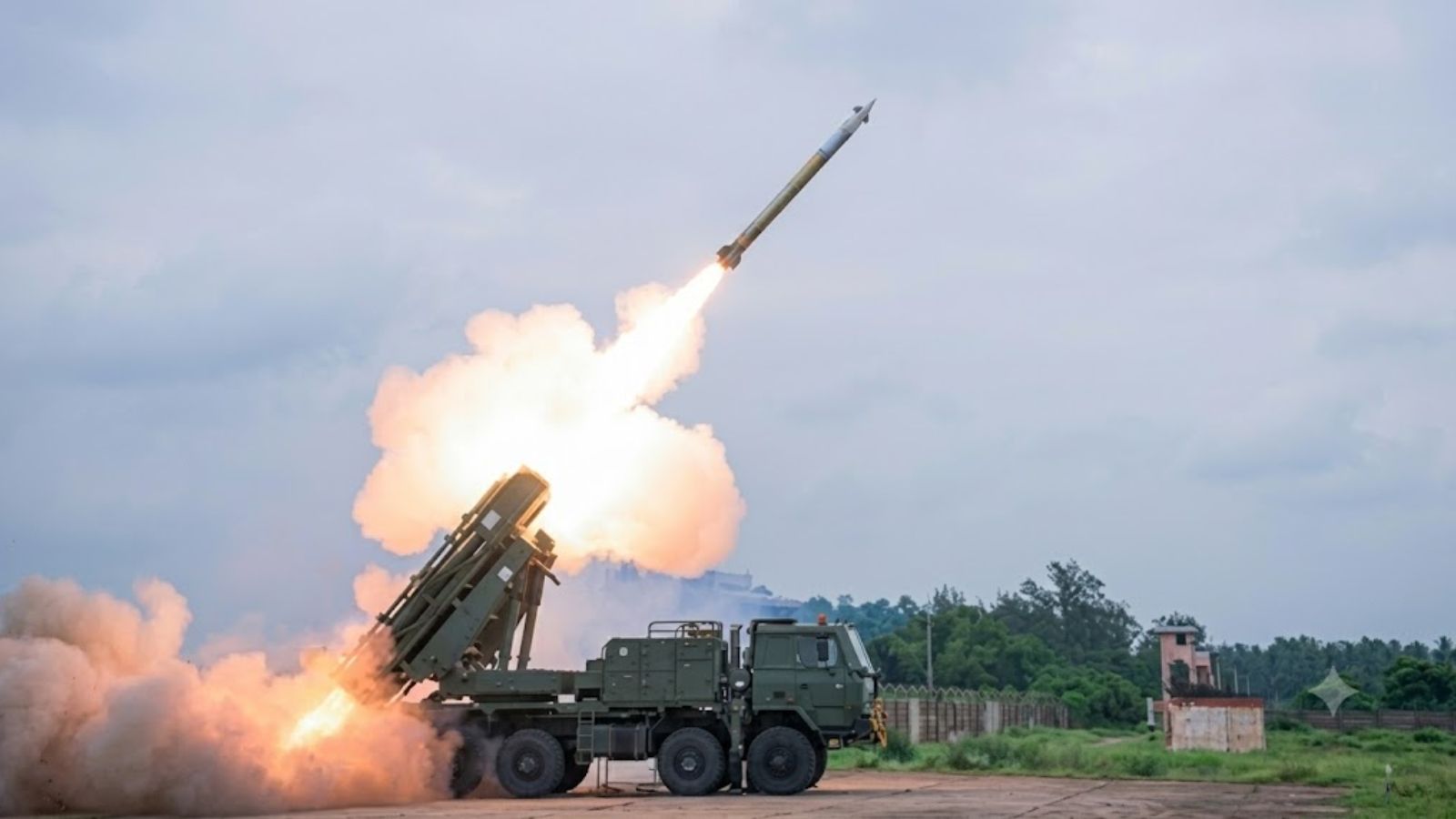
The Defence Research and Development Organisation (DRDO) successfully conducted a flight test of the Pinaka Long Range Guided Rocket (LRGR) at the Integrated Test Range in Chandipur, Odisha, on Wednesday. The test, announced by the Ministry of Defence, validated the rocket's performance at its minimum range of 60 kilometres, with the projectile impacting the target with high precision.
The Pinaka system, a multi-barrel rocket launcher (MBRL) developed by DRDO, is designed to engage enemy positions deep inside hostile territory before frontline forces advance. It enables the armed forces to neutralise key targets from a stand-off distance, reducing risks to ground troops. The system can fire a salvo of 12 rockets in 44 seconds, providing rapid saturation of a target area.
The Pinaka LRGR is named after the mythical bow of Lord Shiva, reflecting its indigenous development. The rocket has been designed by the Armament Research and Development Establishment (ARDE) and the High Energy Materials Research Laboratory (HEMRL), both based in Pune, with technological support from the Defence Research and Development Laboratory (DRDL) and Research Centre Imarat (RCI) in Hyderabad.
This test follows the maiden trial of the Pinaka LRGR in December last year, when it was tested at its maximum range of 120 kilometres. The successful minimum-range test demonstrates the system's reliability across its operational envelope, a key requirement for field deployment. The Pinaka system is expected to enhance the Indian Army's artillery capabilities, offering a longer-range alternative to existing systems.
The test underscores DRDO's continued efforts to develop advanced indigenous defence technologies, aligning with the government's push for self-reliance in defence production. The Pinaka LRGR is poised to become a critical asset for the Indian armed forces, providing flexibility in targeting both near and distant threats.