Peru's ex-President Ollanta Humala freed after top court quashes corruption conviction
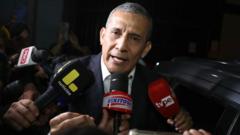
Peru's constitutional court has overturned the 15-year prison sentence imposed on former President Ollanta Humala, who was convicted of corruption charges linked to campaign financing. Humala was released from Barbadillo Prison in Lima on Friday night, where a crowd of supporters had gathered to welcome him.
The court declared the entire criminal proceedings against Humala null and void, ruling that the contributions his campaigns received did not constitute money laundering. His lawyer, Julio Espinoza Goyena, said on social media that the court's decision requires the Criminal Chamber to order a definitive dismissal of the case.
Humala, who served as Peru's president from 2011 to 2016, was found guilty in 2025 of accepting illegal funds from Venezuela's government and the Brazilian construction firm Odebrecht to finance his election campaigns in 2006 and 2011. He had maintained his innocence and said he would appeal the verdict.
Speaking to reporters after his release, Humala described his conviction as the result of "political and judicial persecution." His wife, Nadine Heredia, who was also sentenced to 15 years in prison for money laundering, was granted safe passage to Brazil after seeking asylum at the Brazilian embassy.
Humala is the first of four Peruvian presidents to be investigated in connection with the Odebrecht scandal, a wide-ranging corruption case that has shaken Latin America. The company admitted to paying hundreds of millions of dollars in bribes across the region.
Alejandro Toledo, president from 2001 to 2006, was sentenced last year to more than 20 years in prison for accepting $35 million in bribes from Odebrecht. Alan García, who led the country from 1985 to 1990 and again from 2006 to 2011, died by suicide in 2019 as authorities moved to arrest him over bribery allegations he denied. Pedro Pablo Kuczynski, who served from 2016 to 2018, faced impeachment proceedings after reports that Odebrecht had paid him millions while he held a previous government post. He has consistently maintained those payments were legal.
The investigation into the Odebrecht network remains ongoing. The constitutional court's decision marks a significant legal development, though it does not amount to an acquittal on the merits of the case; rather, it voids the earlier proceedings on procedural and legal grounds.
Legal experts say the ruling could have broader implications for how campaign finance cases are handled in Peru, and it raises questions about the strength of evidence required to secure convictions in corruption cases. The court's order now shifts the case back to the Criminal Chamber, which must formally close the proceedings.
Humala's release comes amid a wider debate in Peru about judicial independence and the treatment of former leaders. Supporters view the court's decision as a vindication, while critics argue it could set a troubling precedent for accountability in corruption cases.