Parliament Ruckus: Nadda Accuses Rahul of Shifting Goalposts, Disrupting House
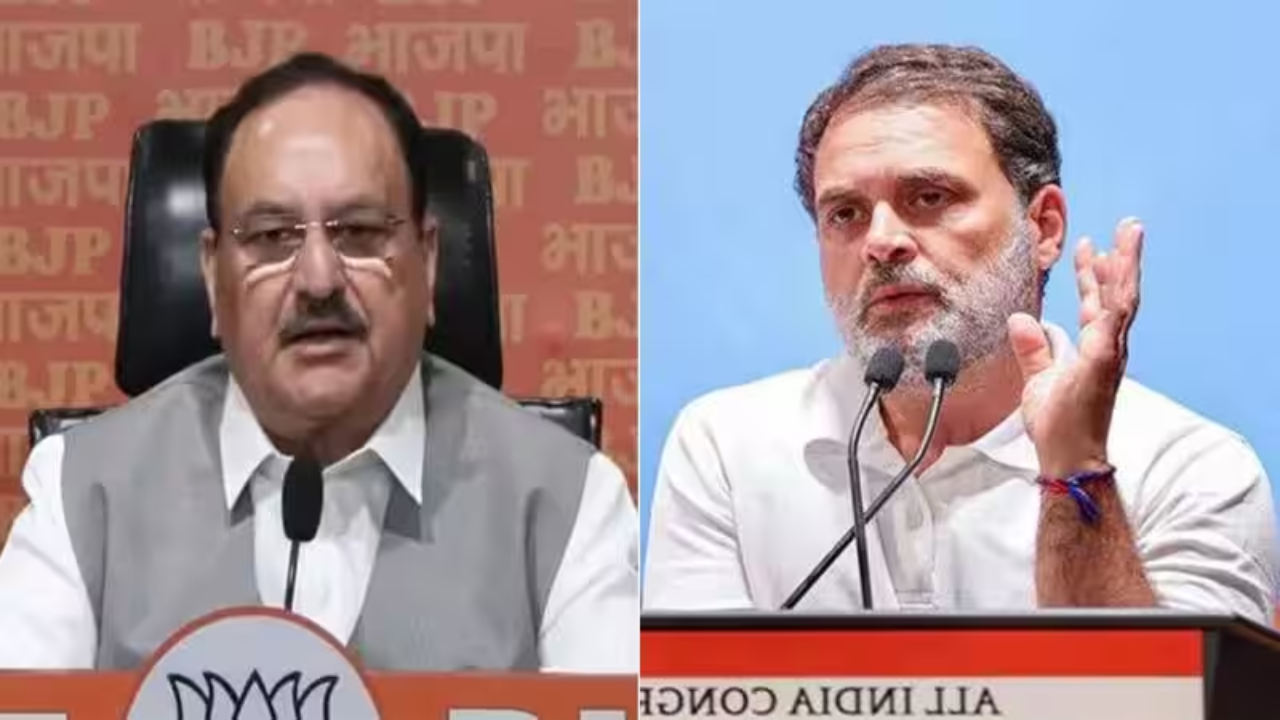
In a sharp exchange during the ongoing parliamentary session, Union Minister and BJP president J.P. Nadda on Thursday countered Congress leader Rahul Gandhi, accusing him of repeatedly shifting his demands and disrupting the functioning of the House. The remarks came amid heightened tensions between the ruling and opposition benches over multiple issues, with parliamentary proceedings being repeatedly adjourned.
Addressing reporters after the day's session was briefly adjourned, Nadda said, “The opposition, particularly Rahul Gandhi, keeps shifting goalposts. Every time a constructive dialogue is initiated, new conditions are set,” he asserted. “The intention appears to be disruption rather than discussion.”
The Congress leader had earlier raised demands for a discussion on the government's handling of various issues, including economic inequalities and alleged misuse of central agencies. Sources said Gandhi insisted on a specific format of debate, which the government found unacceptable. The ruling side maintained that the opposition was avoiding a structured debate by raising non-negotiable conditions.
Parliamentary Affairs Minister Pralhad Joshi also echoed Nadda's remarks, appealing to the opposition to allow the House to function. “We are ready to discuss every issue under the rules. But there cannot be a precondition that only certain topics are discussed in a particular manner,” Joshi told media.
The opposition, however, rejected the allegations. Congress spokesperson Pawan Khera said, “The government is evading accountability. Instead of addressing the concerns raised by the opposition, they are resorting to name-calling. The disruption is because the government refuses to answer questions.”
The ongoing winter session has seen repeated walkouts and adjournments, with both sides accusing each other of obstructing parliamentary work. On several occasions, presiding officers have urged members to maintain decorum and allow the House to transact business.
Political analysts point out that such confrontations are not uncommon when major legislations or sensitive issues are pending. The current session, however, has been particularly acrimonious, with the opposition demanding debates on inflation, unemployment, and border tensions. The government, on its part, has accused the opposition of not allowing proceedings to function smoothly.
According to parliamentary records, the Lok Sabha and Rajya Sabha have lost several hours of productive time this week due to repeated disruptions. Opposition MPs have also staged protests in the well of the House, leading to frequent suspensions of proceedings.
In his remarks, Nadda further credited the Treasury Benches for attempting to engage in dialogue. “We have always been ready to listen. But dialogue requires a constructive partner. If the opposition chooses to walk out every time, that is their choice,” he said.
Rahul Gandhi, responding to Nadda's comments on social media, wrote, “The government is trying to divert attention from its failures. We are not shifting goalposts; we are demanding answers for the people of this country.”
The stalemate is expected to continue as both sides remain firm on their positions. The truncated session is scheduled to conclude later this week, and legislators are under pressure to clear pending bills. Whether a consensus emerges remains to be seen.
Observers note that frequent parliamentary logjams underline the need for greater bipartisanship. With citizens looking for solutions to pressing problems, the blame game between parties often leaves legislative work in limbo.
This latest flare-up highlights the deepening political divide, as the country heads into a busy election year. Both the ruling party and the opposition are keen to score political points, but the cost is a stalled Parliament and unanswered questions on key national issues.