Parliament Passes Anti-Paper Leak Bill with Up to 10 Years Jail and Rs 50 Lakh Fine
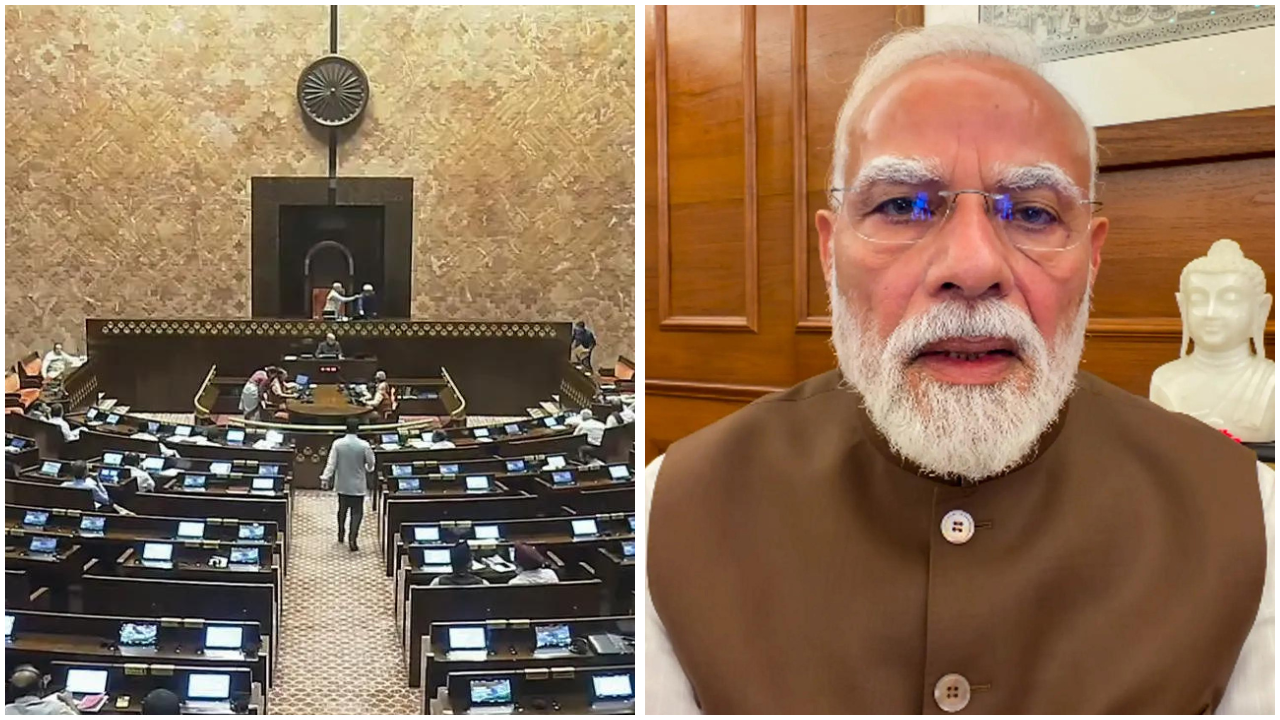
New Delhi: Parliament on Thursday approved the Public Examination (Prevention of Unfair Means) Amendment Bill, 2026, which introduces stricter punishments for those involved in exam paper leaks. The bill was cleared by voice vote in the Rajya Sabha amid a walkout by a large section of the opposition, a day after it was passed by the Lok Sabha. It will become law after receiving the President's assent.
Prime Minister Narendra Modi, in a selfie-video message, described the bill as an important step towards building a credible exam system. He asserted that gangs behind paper leaks, which he said play with the future of students, will not be spared. 'Our work will continue and we will not allow this situation to persist for long,' Modi said.
The Prime Minister noted that paper leaks have been a menace for decades, affecting students across states and at the Centre. He emphasised the need for reforms in the education system and called on the youth to work with the government to fulfil the dream of a developed India. Modi highlighted steps taken by his government, including forming a task force, constituting fast-track courts, and considering states' views, and stressed the optimal use of technology.
According to the bill, individuals found guilty of paper leaks or using unfair means in exams will face a minimum jail term of five years, extendable up to 10 years, and a fine of up to Rs 50 lakh. For organised crimes, the bill proposes a minimum sentence of seven years and a fine of up to Rs 10 crore. It also empowers state governments and Union Territory administrations to designate special fast-track courts to try such offences, and allows the central government to constitute a special task force for investigations if necessary.
Replying to the discussion in the Rajya Sabha, Union Minister Jitendra Singh said the bill demonstrates the government's openness to constructive inputs. He noted that in the wake of recent paper leak incidents, the Prime Minister had declared zero tolerance and that no one would be allowed to jeopardise the future of children. Singh also highlighted other government measures in education, including the National Education Policy 2020 and an increase in the number of universities.
The opposition's walkout during the voice vote signified their protest, though the bill was nevertheless cleared. The legislation now awaits the President's approval to become a full-fledged law aimed at curbing exam malpractices across the country.