'Outstanding achievement': PM Modi hails ISRO's EOS-05 launch, lauds industry role
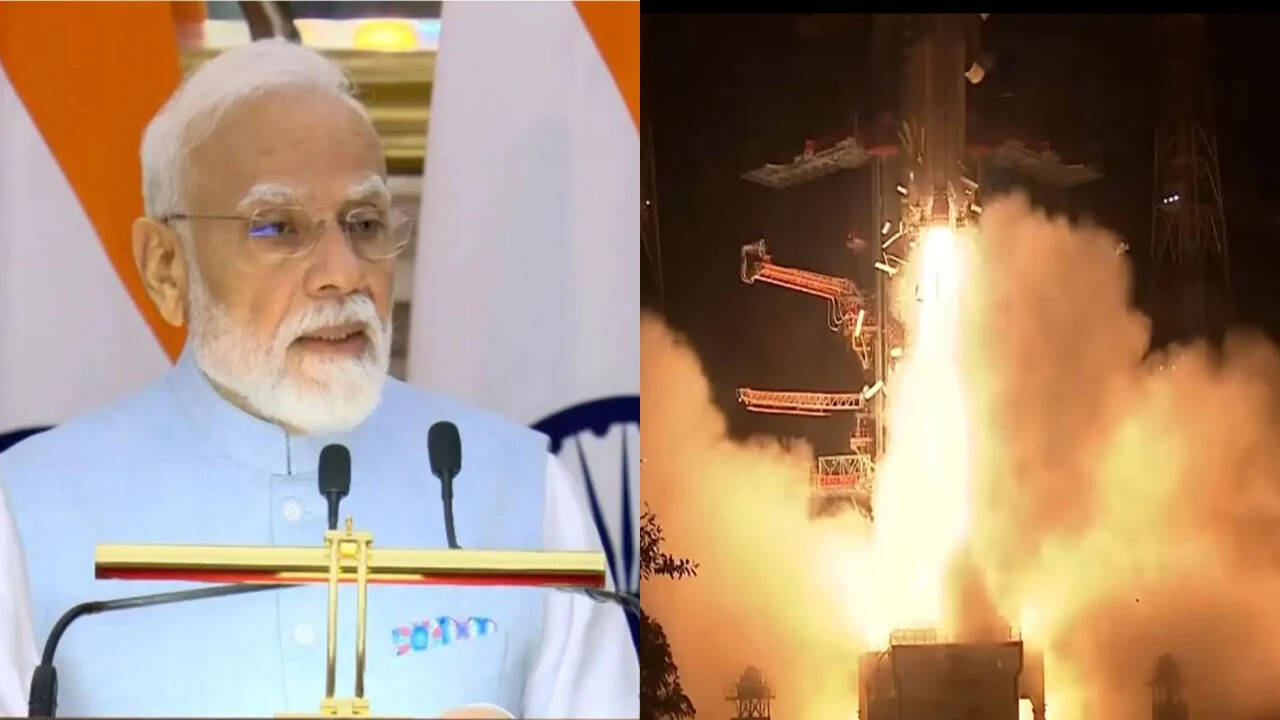
Prime Minister Narendra Modi has congratulated the Indian Space Research Organisation (ISRO) on the successful launch of the EOS-05 satellite, hailing it as an ‘outstanding achievement’. The Prime Minister’s remarks highlight the growing strides India is making in space technology.
In a statement, Mr. Modi also drew attention to the expanding role of Indian industry in the country’s space programme. He said that the growing partnership between ISRO and private industry is helping strengthen the space sector and broaden India’s capabilities. The statement comes at a time when space reforms have opened new doors for private enterprise in what was once an exclusive government domain.
EOS-05 is the latest in ISRO’s renowned series of earth observation satellites. These platforms provide invaluable data for agriculture, forestry, water resources, urban planning, and disaster management. They also support a range of strategic applications. Over the years, ISRO’s remote-sensing constellation has grown into one of the largest in the world, making India a significant player in space-based monitoring.
Earth observation satellites have become indispensable tools for governance and commerce in India. Data from missions such as EOS-05 are used to track crop health, detect forest fires, estimate water availability, and monitor changes in land use. Agencies also use this information to manage natural disasters and plan city infrastructure. In this context, the continuity of such satellite services is critical to the country.
The Indian space programme’s relationship with private industry has evolved substantially since the government initiated structural reforms in 2020. New institutions like the Indian National Space Promotion and Authorisation Centre (IN-SPACe) and NewSpace India Limited (NSIL) were established to regulate and promote private participation. A growing number of startups and established manufacturers now design, build, and test satellites and launch vehicles. These companies contribute to everything from sub-systems and rocket engines to full-fledged mission operations.
Industry participation is not just limited to supply contracts. In recent missions, private companies have taken on responsibilities ranging from satellite integration to launch vehicle manufacturing. This exposure gives Indian firms the confidence and expertise to compete in the global space market, which is projected to expand rapidly in the coming decade.
The Prime Minister’s praise for the ISRO-industry partnership sends a clear signal that the government remains committed to deepening this collaboration. It also encourages more investment in space-related research, innovation, and manufacturing. Analysts believe that with continued policy support, India’s space ecosystem could become a key driver of high-skill jobs and economic growth.
ISRO’s successful launch of EOS-05 to carry forward its established earth-viewing role, even as the agency prepares for more complex missions ahead. The same public-private synergy will be essential for future flagship projects, including the Gaganyaan human spaceflight programme. Thus, the latest success is both a milestone and a reminder of the partnership that will power India’s space ambitions in the years to come.