'Nobody Takes My Work Seriously': Employee Says WFH Blurs Work-Life Boundaries
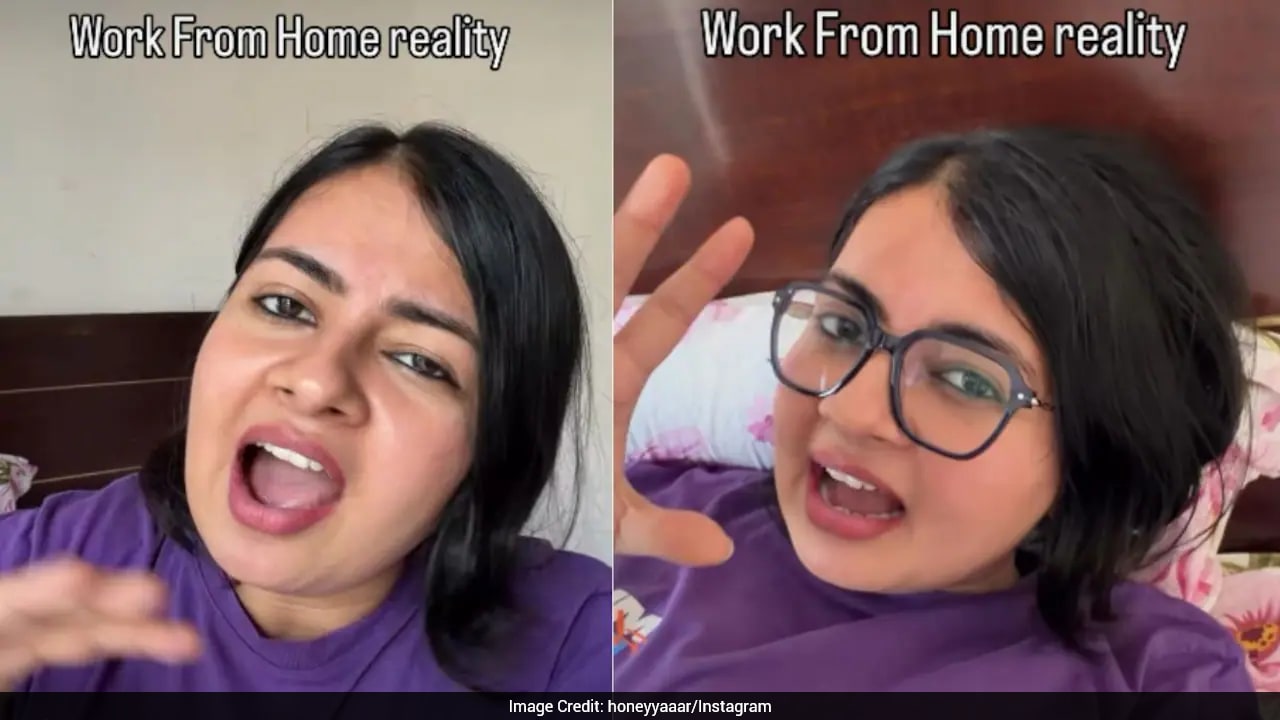
Working from home is often depicted as the ideal arrangement, offering flexibility and no commute. But for Honey Singh, a woman who shared her experience on Instagram, the reality has been drastically different. In a video captioned "work from home reality", she describes a routine that has left her overworked, sleep-deprived, and physically uncomfortable.
Singh's day begins almost as soon as she opens her eyes. "I sit with my laptop immediately," she says, with meetings scheduled back-to-back. There is no fixed time for meals, and even the basic act of bathing is pushed to the evening. She remarks that she is often working from her bed in awkward positions, which has resulted in a persistent backache. The lack of a structured routine, she explains, makes it hard to switch off and even harder to maintain simple daily habits.
Perhaps the most jarring part of her account is the feeling that her work is not valued. "Nobody takes my work seriously," she says, despite the long hours she puts in. This perception may stem from the invisibility of remote work; without a physical presence, the effort behind the work is not always acknowledged. Many remote employees report similar concerns, as their contributions are often judged by visible hours at a desk rather than actual output.
Singh contrasts this with her previous office life. At the office, there are short breaks, a one-hour lunch, and opportunities to chat with colleagues. The structure of the office also ensures a clear end to the workday. "Once the office hours are over, the laptop is shut," she notes. At home, the laptop never closes, and the boundary between work and rest evaporates. The bed, she says, has become an extension of the office, making it difficult to find any true rest.
Her video comes at a time when remote work has become a permanent feature for many industries. The pandemic demonstrated that large-scale remote work is possible, and many companies have adopted hybrid models. However, these arrangements often rely on the assumption that employees can naturally separate work from their personal lives without dedicated support. Singh's experience shows that this is not always the case.
For individuals like Singh, the lack of separation leads to longer hours, higher stress, and health issues. Experts have warned about the "always-on" culture that remote work can create, and the erosion of boundaries between work and personal time is a recurring theme in employee surveys. Employers are increasingly developing guidelines to help remote workers maintain a healthy routine, but such measures are not yet universal.
Singh's preference for office life is not an argument against remote work per se, but rather a call for better structures within it. Her experience highlights the need for policies that promote clear work hours, encourage regular breaks, and provide ergonomic support. It also underscores the importance of recognising remote employees' contributions, regardless of where they work.
In her candid video, Singh has given a voice to those who find remote work isolating and exhausting. Her story serves as a reminder that while working from home can be advantageous, it is not without its challenges. As workplaces evolve, the goal should be to create a model that supports both productivity and well-being, whether at the office, at home, or a mix of both.