No roofs, no toilets, no teachers: Rajasthan govt schools in distress
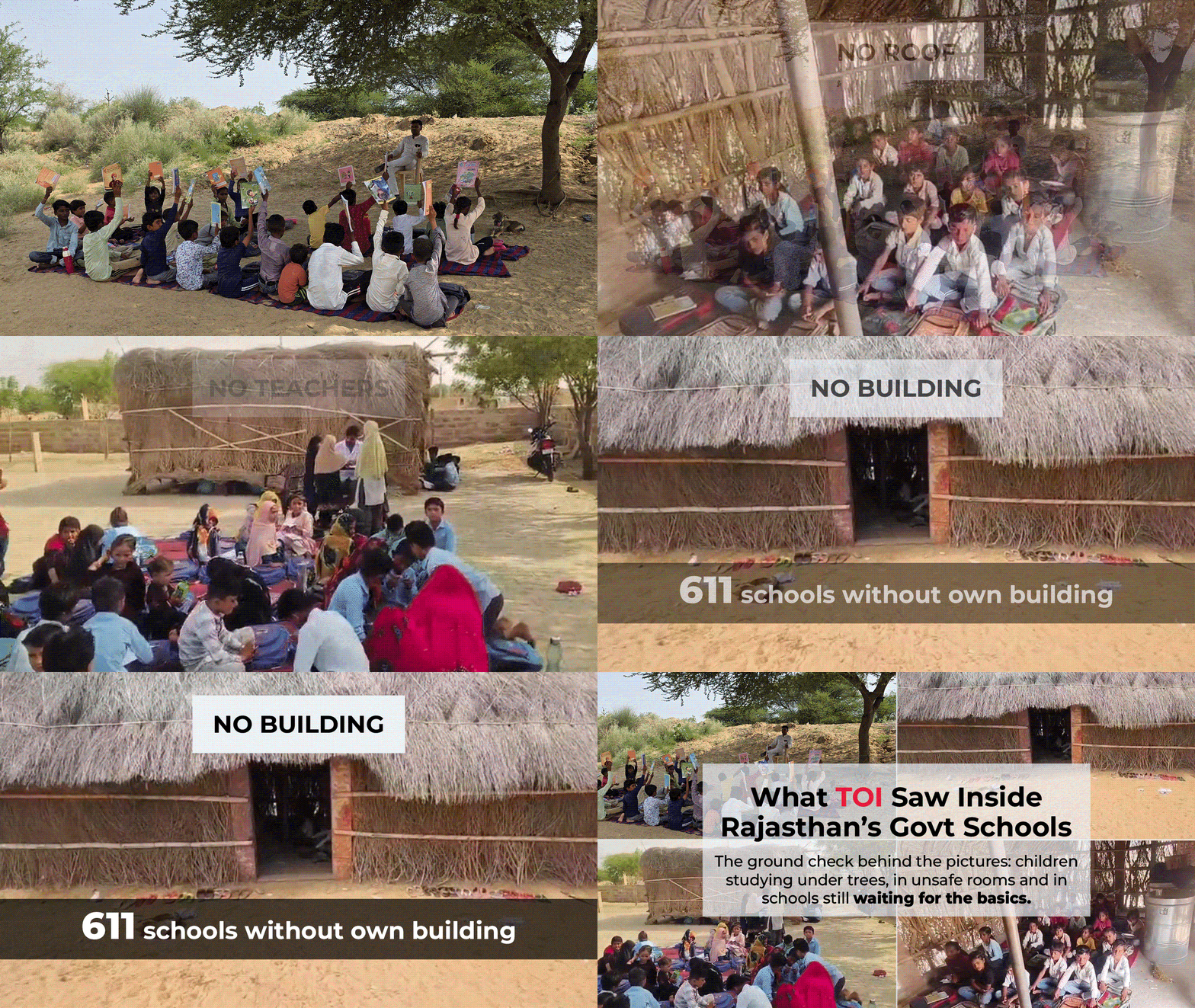
A Times of India ground report across six Rajasthan districts has found that many government schools are functioning without basic infrastructure, leaving students to study under trees, in tin sheds, or in buildings declared unsafe. The investigation comes amid a political row over inspections by the Cockroach Janta Party (CJP), and follows a government announcement of Rs 12,000 crore for school upgrades over three years.
In Kota, a primary school on MBS Road with 78 enrolled students operates from municipal parking kiosks and adjacent tin sheds. Established in 2023, the school has no permanent building and no sanctioned teaching posts. Three teachers manage classes on deputation. Kota, known globally for its private coaching centres that produce top medical and engineering entrants, has not seen similar investment in its own government schools. A PWD survey found 61 school buildings in the district ruined and hundreds of classrooms unsafe.
In Jaisalmer, Barmer, and Balotra, some schools lack buildings altogether, forcing classes under the open sky. Transfers have also left senior-secondary streams without subject teachers. In Piplodi, Jhalawar, where a classroom roof collapse in July 2025 killed seven children, classes still run from a farmer’s two-room home as construction of a new school remains incomplete.
In Sanganer, the assembly constituency of Chief Minister Bhajan Lal Sharma, a school with 404 students has been squeezed into four rooms after its second building was declared unsafe. Despite being represented by the state’s education minister, Madan Dilawar, Kota’s own government schools show little improvement.
Data from the Rajasthan Assembly reveals the scale of the crisis: 611 government schools have no building of their own, 2,047 lack toilets, and 1,049 lack drinking water. Another 3,768 school buildings and 83,783 classrooms are classified as completely dilapidated. The state also has 7,200 single-teacher schools and about 1.5 lakh vacant teacher posts.
Last week, a CJP delegation was chased away by a mob while attempting to inspect a government school in Jaipur. The incident drew renewed attention to school conditions. Shortly after, the state government announced a Rs 12,000 crore spending plan over three years to improve school infrastructure. Officials said the funds would address building repairs, sanitation, and drinking water facilities.
Teachers at the Kota school say they have made do with available resources. “We operate out of six municipal kiosks and under a tin shade,” said Shobana Gupta, the school in-charge. “We have adequate arrangements for drinking water, electricity, and basic toilet facilities onsite. There are no sanctioned permanent teaching posts here yet. Three teachers are currently deployed on deputation.”
The findings underline a systemic gap between policy promises and ground reality. While private coaching centres thrive in Kota, government schools in the same city struggle to provide safe learning spaces. Parents and activists argue that without permanent teachers and buildings, children in these schools will remain far from the educational opportunities that the state champions.







