NIA omits UAPA charges against US national VanDyke; Congress alleges US pressure
The National Investigation Agency (NIA) has filed a chargesheet against American citizen Matthew Aaron VanDyke and six Ukrainian nationals without invoking the stringent Unlawful Activities (Prevention) Act (UAPA), prompting the Congress to allege that the central government yielded to pressure from the United States.
The chargesheet, submitted before Special NIA Judge Prashant Sharma, invokes Sections 21 and 23 of the Foreigners Act, which are compoundable offences handled at the level of the Foreigners Regional Registration Office (FRRO). The court has listed the matter for further consideration on October 1.
The case was initially registered in March under Section 18 of the UAPA, which addresses conspiracy for terrorist acts, along with relevant provisions of the Bharatiya Nyaya Sanhita. However, the UAPA has not been invoked in the chargesheet.
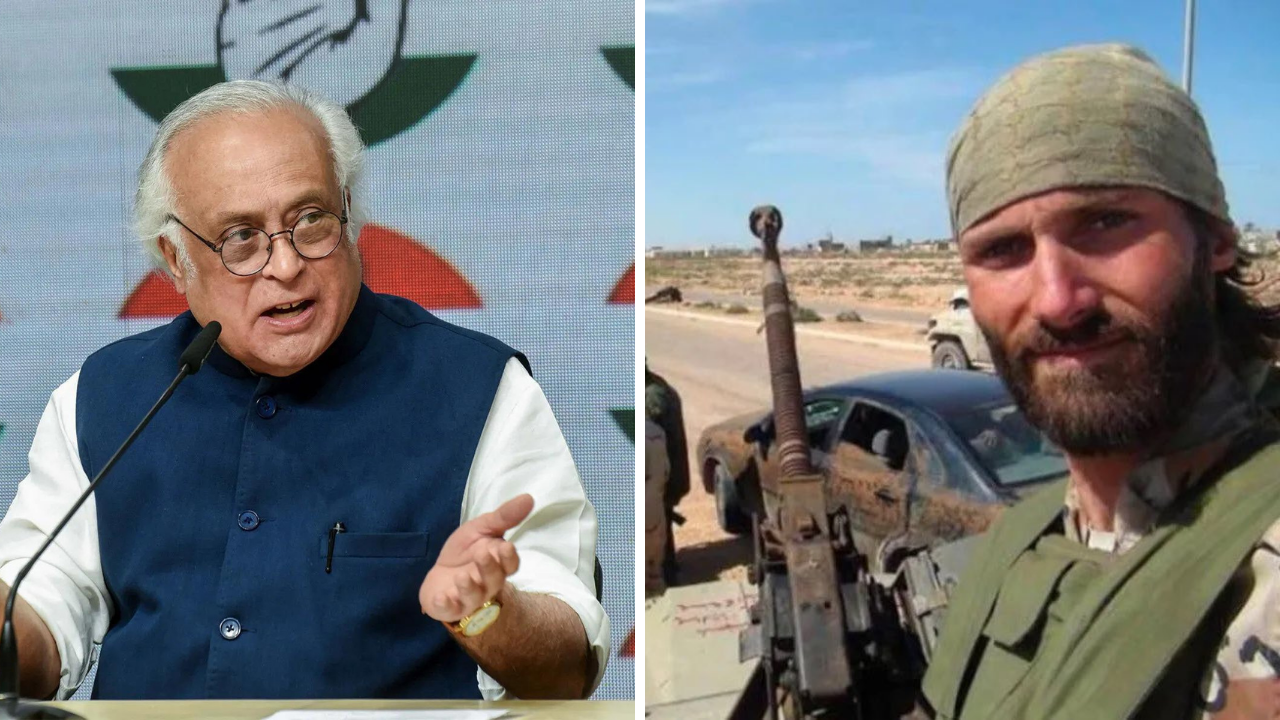
Congress leader Jairam Ramesh, in a post on X, questioned whether the NIA dropped the terror charges after a proper investigation or "was it pressurised to do so right away by the Modi Govt at the instance of the US authorities?" He asked what "quid pro quo" India expects in return, and said the move "appears to be bullying."
The NIA's Special Public Prosecutor has clarified that the investigation is still ongoing, and a supplementary chargesheet may be filed if an offence under the UAPA is established.
VanDyke, a self-described combat specialist and founder of the private security firm Sons of Liberty International, was arrested at Netaji Subhas Chandra Bose International Airport on March 13. Six Ukrainian nationals – identified as Hurba Petro, Slyviak Taras, Ivan Sukmanovskyi, Stefankiv Marian, Honcharuk Maksim and Kaminskyi Viktor – were also arrested in a coordinated crackdown.
The accused are alleged to have supported ethnic armed groups in Myanmar by supplying weapons and terrorist hardware, and by providing training. The NIA stated that these activities were allegedly inimical to India's national security. All seven were remanded to NIA custody for 11 days on March 17.
The omission of UAPA charges has sparked political debate. UAPA is a stringent anti-terror law that allows for prolonged detention without trial and imposes strict bail conditions. In contrast, the Foreigners Act deals with the entry, presence and departure of foreigners and carries lesser penalties. Legal experts note that the agency's decision at this stage does not preclude it from invoking UAPA later if evidence emerges, as the investigation remains open.
The Congress has framed the issue as a matter of national sovereignty, alleging that India's investigative agencies are being influenced by foreign powers. As of now, the central government has not officially responded to the allegations. The development also comes amid broader diplomatic engagements between India and the United States, though there is no evidence beyond the Congress's claims to suggest any direct interference.
The NIA has consistently maintained that the chargesheet is based on available evidence, and that supplementary action will be taken if required. The court's upcoming hearing on October 1 is expected to provide further clarity on the legal course.