Nepal-Tibet Border Floods: Scores Dead or Missing, Rescue Halted by New Lake Threat
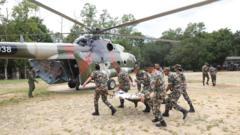
Massive landslides and flash floods along the Nepal-Tibet border have left scores of people dead or missing, with authorities grappling to reach affected areas amid treacherous conditions. The disaster struck on Wednesday, triggering widespread destruction in the mountainous region that separates Nepal from China's Tibet Autonomous Region.
Chinese state media has reported significant casualties, while Nepalese officials have described the scale of loss as 'huge'. The full extent of the damage remains unclear, as communication lines and access routes have been severely disrupted by the landslides and flooding.
Search and rescue operations are continuing on both sides of the border. However, efforts in Tibet have been temporarily suspended due to a new danger: a lake of rising water has formed at a site along the border. Chinese authorities fear that the lake could burst its banks, sending torrents of water and debris downstream into areas already hit by the disaster.
The suspension highlights the volatile nature of the terrain. The region is notorious for sudden geological and weather-related disasters. The collision of the Indian and Eurasian tectonic plates created the Himalayas, leaving steep slopes and fragile rock formations that are highly susceptible to landslides, especially during the monsoon season.
Every year, heavy rains trigger landslides and flash floods in Nepal and neighbouring Indian states. Climate scientists have warned that such events are becoming more frequent and intense as global temperatures rise, leading to heavier rainfall and more unstable mountain slopes. While the exact role of climate change in this particular disaster has not yet been established, the pattern aligns with regional trends.
Rescuers are working under extreme conditions. Helicopters have been deployed to survey the damage and airlift survivors, while ground teams attempt to clear blocked roads. But the risk of further flooding has made the operation perilous. Nepalese officials have urged caution, noting that any sudden release of water from the newly formed lake could endanger both rescuers and civilians in the valleys below.
The Nepal-Tibet border is a remote and sparsely populated region, but it is of strategic importance. Several passes link the two countries, and trade and pilgrimage routes traverse the area. The floods have cut off some communities for days, raising concerns about access to food, water, and medical supplies.
Local authorities in Nepal have begun assessing the impact on villages along the border. Early reports suggest that entire settlements have been swept away or buried under mud and rock. Many residents were caught off guard as the disaster struck without much warning, given the suddenness of the torrential rains.
In Tibet, rescue teams have been placed on standby while engineers monitor the lake's water level. If the danger subsides, operations are expected to resume. Meanwhile, Nepalese forces continue their work on the southern side, but they are also keeping a watchful eye on the water accumulation.
The full human toll may not be known for days. Both Nepal and China have experienced similar disasters in recent years. In 2015, a massive earthquake killed thousands in Nepal and set off avalanches and landslides. Earlier this year, flash floods in Nepal's mountainous districts claimed dozens of lives. Each event underscores the vulnerability of mountain communities and the urgent need for better early warning systems and resilient infrastructure.
Officials from both countries have been in contact to coordinate response efforts. However, the immediate priority is safety. As one Nepalese official put it, 'We must first ensure that rescue teams do not become victims themselves.'







