NEP 2020 at 6: Major School and University Reforms Yet Key Gaps Remain
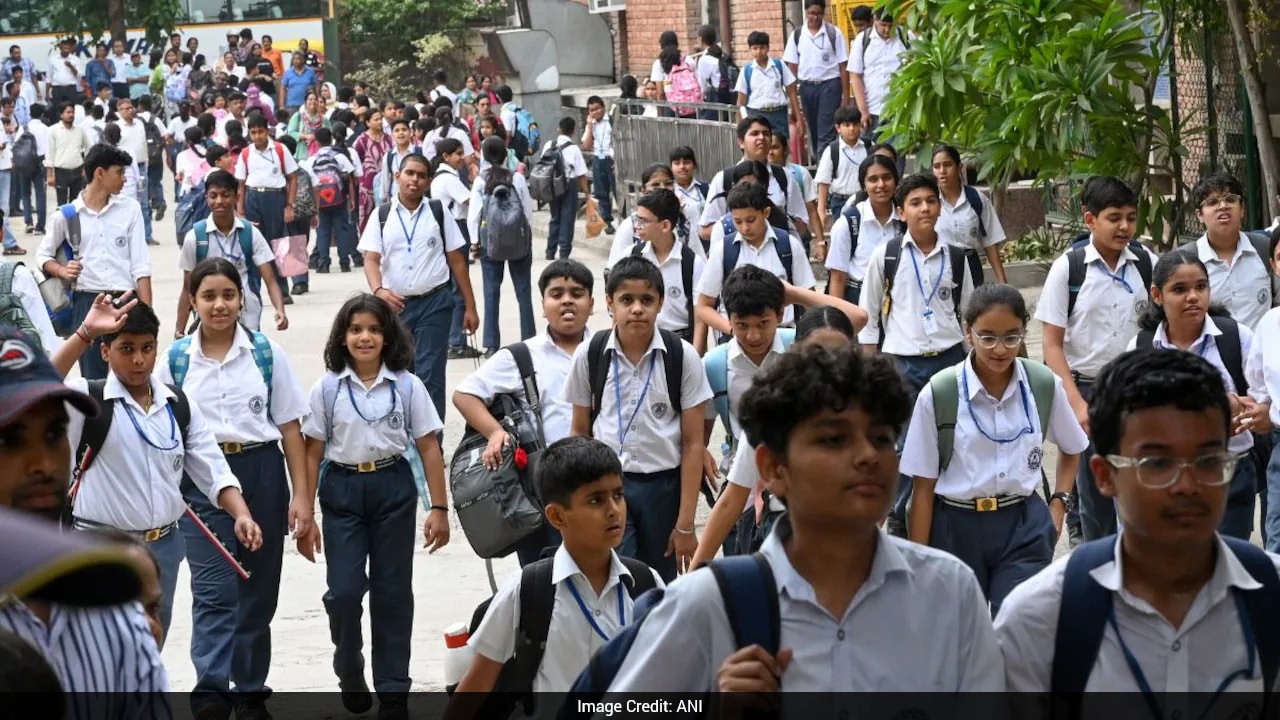
Six years after the National Education Policy (NEP) 2020 was approved by the Union Cabinet, India's education system has seen significant structural changes. Preschool education is now part of formal schooling, students can transfer academic credits between universities, foreign universities have begun opening campuses in India, and Indian institutions have expanded overseas. However, several of the policy's defining reforms remain unfinished.
The NEP, approved on July 29, 2020, replaced the 1986 education policy and promised a comprehensive overhaul of both school and higher education. Implementation over the past six years presents a mixed picture.
Reforms That Have Changed the Education Landscape
The most visible transformation has been in the structure of schooling. The traditional 10+2 system has been replaced with the 5+3+3+4 framework, formally bringing children between the ages of three and eight into the education system. Most states and Union Territories have also shifted the minimum age for admission to Class 1 from five to six years.
To support the new model, the Centre introduced the Jaadui Pitara learning kit for young children and rolled out the National Early Childhood Care and Education framework for anganwadis and pre-schools. It has also encouraged states to integrate anganwadi centres with nearby primary schools, although training frontline workers remains a challenge.
The curriculum has also begun changing. NCERT has released new textbooks for Classes 1 to 9, with revised books for senior secondary classes expected next year.
Tania Joshi, Principal of The Indian School, told NDTV that the NEP has brought a fundamental shift in both teaching and learning. "It moves classrooms towards competency-based, experiential and inquiry-driven learning, where students are encouraged to explore, question, collaborate and apply concepts to real-life situations rather than rely only on rote memorisation. At the same time, it places greater emphasis on foundational literacy and numeracy, multilingualism, inclusive classrooms, and the holistic development of every child," she said.
Beyond schools, higher education has perhaps seen the most significant policy shift. The Academic Bank of Credits and the National Credit Framework now allow students to accumulate credits across institutions and resume their education after breaks without losing academic progress. Multiple entry and exit options in undergraduate programmes have become a reality across most central universities, fundamentally changing the rigid degree structure that existed for decades.
Internationalisation, another major objective of the NEP, has also gathered momentum. IIT Madras has established a campus in Zanzibar, IIT Delhi has expanded to Abu Dhabi, while IIM Ahmedabad has opened a campus in Dubai. IIT Bombay has announced plans to establish a campus in Japan. India has also started allowing foreign universities to establish campuses: five institutions have received approval from the University Grants Commission (UGC), with the University of Southampton already admitting students.
What Remains Incomplete
Despite these achievements, several key reforms are yet to be fully realised. The proposed regulator to replace the UGC has not materialised. Teacher education reforms remain incomplete. Examination reforms have been overshadowed by repeated controversies. Public spending on education is still well below the target set by the NEP itself.
Rajat Moona, Director of IIT Gandhinagar, noted that while reforms such as multidisciplinary education, multiple entry and exit, and the Academic Bank of Credits have been adopted by most institutions, the credit bank is not yet fully operational across the higher education ecosystem. "Seamless transfer of accumulated credits between institutions remains a challenge. Faster progress is also needed in multilingual education," he said.
The NEP's ambitious goal of increasing public investment in education to 6% of GDP remains unmet. Current spending hovers around 3-4% of GDP, a gap that affects the quality and reach of many initiatives.
As the policy enters its seventh year, the path ahead requires focused attention on completing the unfinished agenda to realise the NEP's vision of transforming India into a global knowledge superpower.