NEET Protests: Rahul Gandhi Accuses Government of Forcing Apologies; BJP Denies
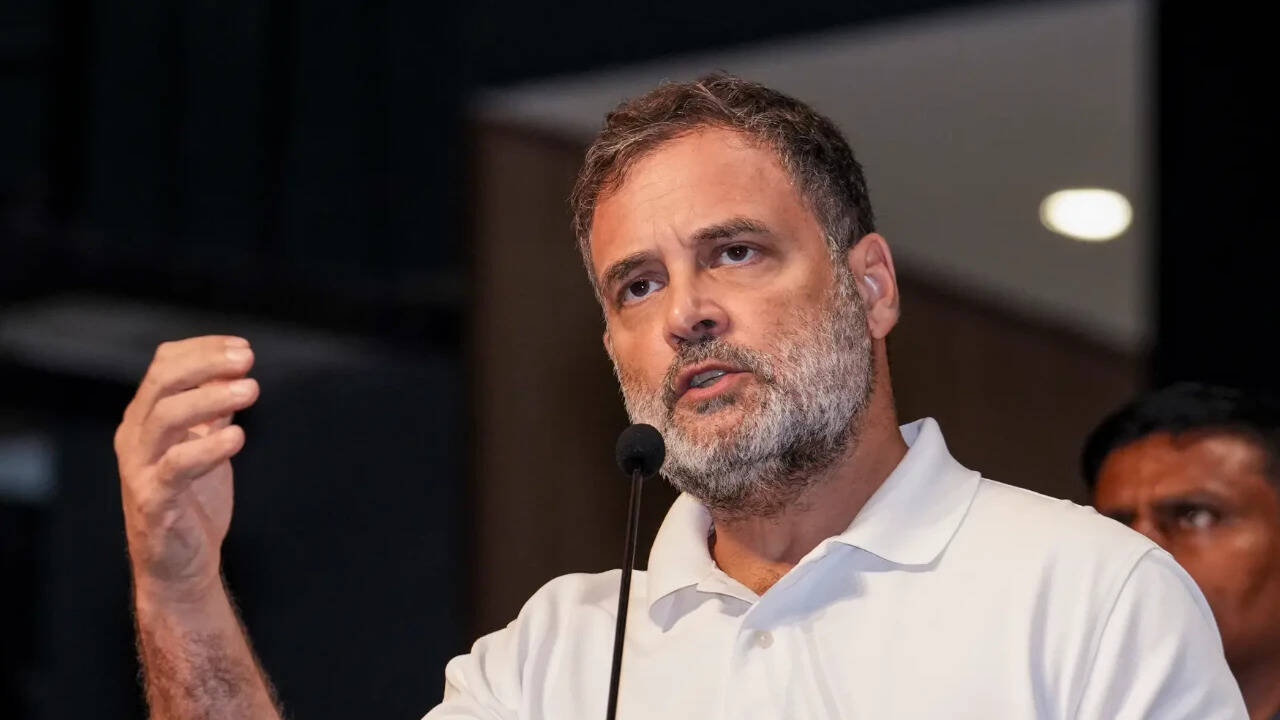
Congress leader Rahul Gandhi on Saturday criticised the Bharatiya Janata Party (BJP)-led government over its handling of student protests related to the National Eligibility cum Entrance Test (NEET), alleging that peaceful demonstrators were coerced into apologising. His remarks come amid ongoing tensions over alleged irregularities in the medical entrance examination.
Speaking to reporters in New Delhi, Gandhi claimed that students who were exercising their constitutional right to protest were met with excessive force and intimidation. “The government is afraid of young people asking questions. Instead of addressing their concerns, it is forcing them to apologise for demanding justice,” he said.
The Congress leader’s statement follows reports of police action against student protesters in several cities, including Delhi and Patna, where demonstrations had been held over paper leaks and cancellation of tests. Videos and images circulating on social media showed students being detained and, in some cases, made to write apologies as a condition for release.
The BJP, however, rejected Gandhi’s allegations, asserting that law enforcement agencies acted within legal bounds to prevent disruption of public order. A party spokesperson said, “The Congress has a history of instigating students for political gain. The administration handled the situation with restraint, and no one was forced to apologise. Such claims are baseless.”
Authorities have maintained that the protests, though initially peaceful, turned violent at certain locations, with reports of vandalism and stone-pelting. Police officials said detentions were carried out to prevent escalation, and that standard procedures were followed.
Legal experts point out that compelling individuals to sign apologies without due process raises constitutional questions. The Supreme Court has previously ruled that the right to protest is a fundamental right under Article 19, subject to reasonable restrictions. Any action that curtails this right must be justified by the state.
The NEET controversy began after allegations of a paper leak emerged earlier this year, prompting the Central Bureau of Investigation to register cases. The National Testing Agency (NTA), which conducts the exam, has denied systemic flaws but announced re-tests for a small number of candidates in certain centres.
Students have been demanding a full investigation, cancellation of the exam, and action against those responsible. Some political parties, including the Congress, have also called for the resignation of the Education Minister.
Meanwhile, the Ministry of Education has issued a statement saying it is committed to ensuring a fair and transparent examination process. It urged students not to resort to protests and to trust the judicial process, as several petitions are pending before the Supreme Court.
The situation highlights the delicate balance between maintaining public order and protecting democratic freedoms. While the state has a duty to prevent violence, it must also ensure that expressions of dissent are not suppressed unfairly. As the matter is sub judice, observers say it is essential for all parties to allow the legal system to function without external pressure.
For now, the political slugfest over NEET continues, with each side accusing the other of exploiting the issue for electoral mileage. The affected students, however, remain in limbo, awaiting clarity on their academic future.