Mumbai Man Booked Over Masood Azhar Clips as Probe Examines Pakistan Link
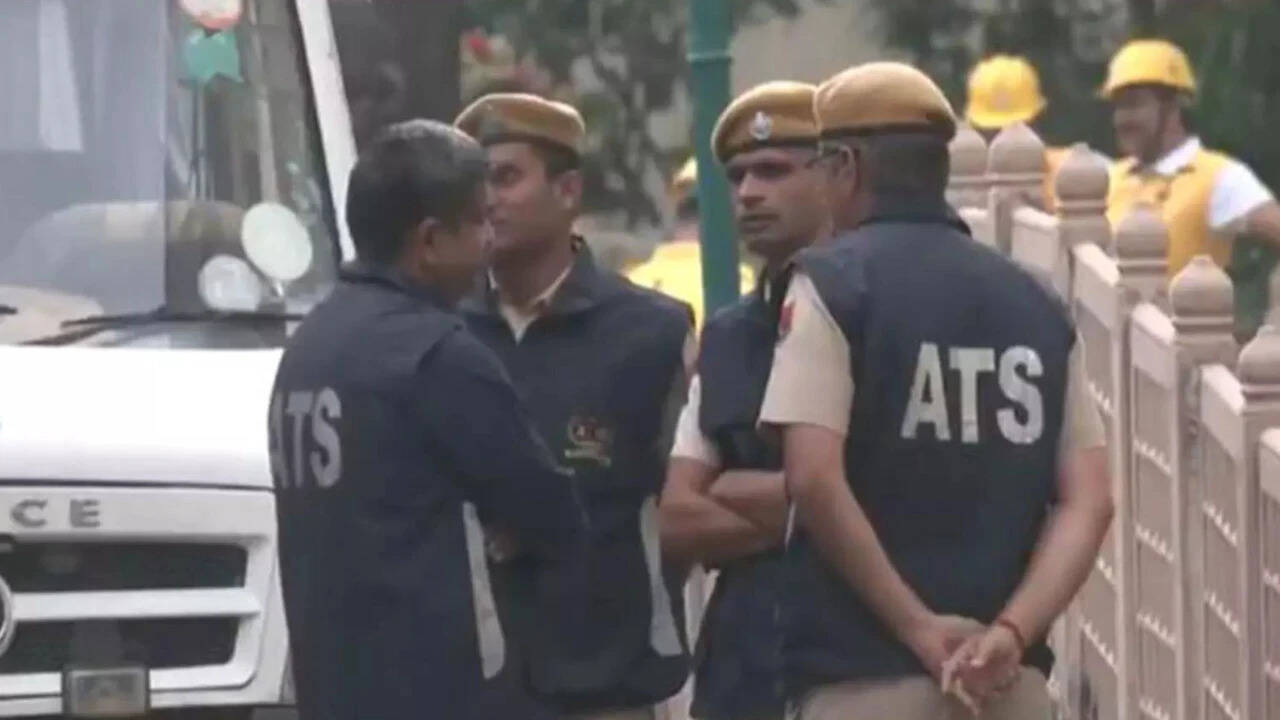
Police in Mumbai have registered a case against a city resident after allegedly inflammatory video clips featuring Masood Azhar, the chief of the banned outfit Jaish-e-Mohammed, were found on his mobile phone, according to reports. Investigators are separately examining whether the man had any contact with individuals or handlers based in Pakistan, a line of inquiry that officials have described as preliminary.
The case is understood to centre on short videos that purportedly glorify Azhar and his organisation. Such material, when circulated, can attract provisions relating to promoting enmity between groups and to acts seen as prejudicial to national security, though the exact sections invoked and the specific allegations against the man have not been publicly detailed.
Several key facts remain unconfirmed. Officials have not released the man's identity, nor have they set out the full sequence of events that led to the case, including whether the clips were merely stored on the device or were shared further. It is also not clear whether he has been arrested, summoned for questioning or is merely named as an accused in a first information report. Readers should treat the allegations as unproven; under Indian law, an accused is presumed innocent until a court holds otherwise.
Masood Azhar is the founder of Jaish-e-Mohammed, an organisation banned in India and listed by the United Nations Security Council's 1267 committee. He was released in 1999 as part of the arrangement that ended the hijacking of Indian Airlines flight IC-814 in Kandahar. Indian agencies have linked his outfit to the 2001 attack on Parliament and to the 2019 Pulwama bombing, in which more than 40 CRPF personnel were killed. Pakistan has consistently denied Indian allegations of official patronage of such groups, and the question of Azhar's status and whereabouts has been a persistent point of friction between the two countries.
The legal question in cases of this kind is often narrower than the political one. Investigating agencies must establish what exactly was on the device, how it got there, and what the accused intended to do with it. Possession of a video and deliberate circulation of it are treated differently in law, and courts have repeatedly held that prosecution must rest on evidence of the accused's own conduct rather than on the nature of the material alone. Where communication with foreign handlers is alleged, investigators typically rely on call records, messaging logs and forensic examination of the device.
The reported Pakistan angle, if substantiated, would place the case within a wider pattern that security agencies have flagged for years: the use of social media and messaging applications by operatives abroad to reach individuals in India, often through small groups and encrypted channels. Maharashtra has seen a number of such investigations in recent years, some handled by the state's Anti-Terrorism Squad and others by the National Investigation Agency, which can take over cases involving alleged cross-border links. Officials caution, however, that an initial suspicion of a foreign connection does not by itself establish one, and that many such leads are closed after forensic scrutiny.
Civil liberties groups have in the past urged that cases resting on online content be handled with care, arguing that speech-related prosecutions can chill legitimate debate unless the material clearly meets the legal threshold for incitement. Police, for their part, maintain that action is taken only where content is found to cross the line from expression into provocation or a threat to public order.
For now, the investigation appears to be at an early stage. What is established is that a case has been registered, that the material is alleged to be inflammatory, and that a possible foreign link is being examined. What remains unproven is nearly everything else: the accused's intentions, the origin of the clips, and whether any contact with Pakistan-based individuals actually took place. Further details are expected as investigators complete the forensic examination of the phone and record statements.