Monsoon Session: 12 Bills Passed, But Lok Sabha Ran Only 19% of Scheduled Time
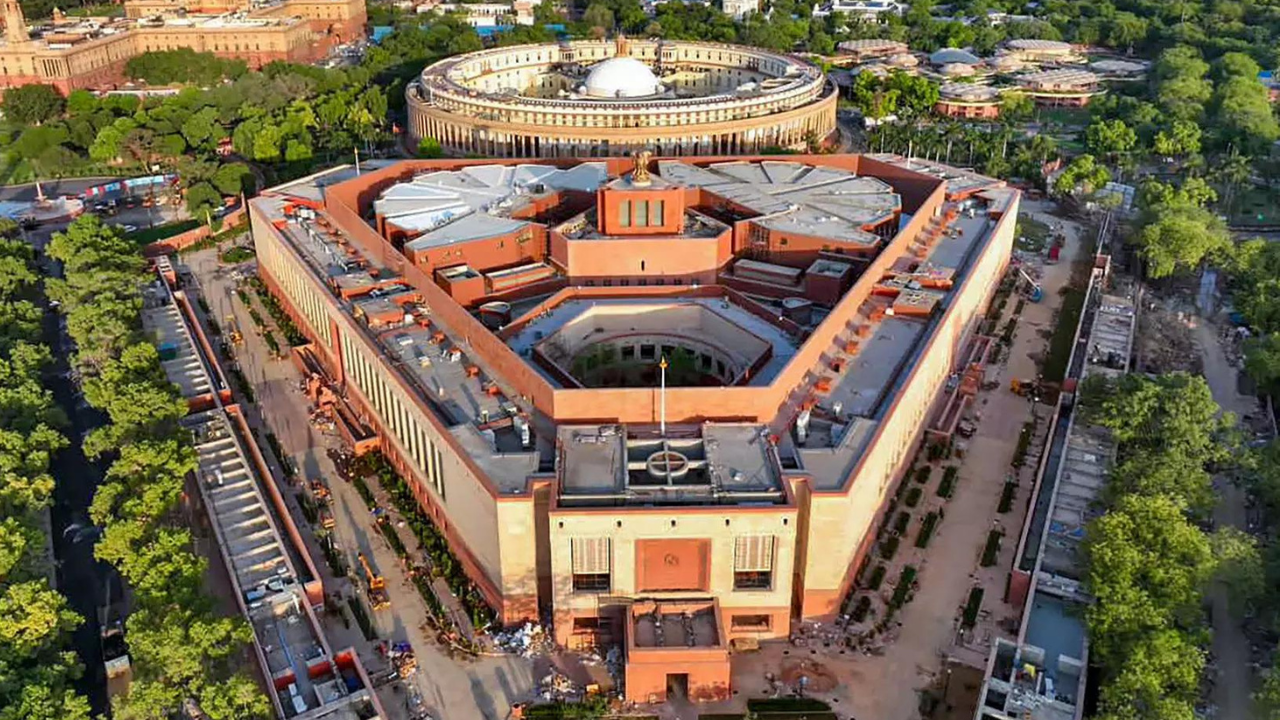
NEW DELHI: For 25 days, Parliament's Monsoon Session unfolded on two different stages. Inside the Houses, disruptions and adjournments were frequent, leaving little room for debate. Outside, political activity was intense—protests, demonstrations, and confrontations between parties played out in full public view.
The numbers reflect the contrast. Lok Sabha functioned for only about 19% of its scheduled time, while Rajya Sabha managed 39%. Question Hour was the worst hit, with less than 1% of its scheduled time utilised. The session, held from July 20 to August 13, had 19 sittings across 25 days.
Parliamentary affairs minister Kiren Rijiju acknowledged the gap between legislative output and discussion. "It was a good session…we have passed 13 bills; but it was not a good session in terms of discussion," he said, while accusing the opposition of avoiding debate despite the government's readiness to discuss issues.
Despite the disruptions, government business moved through voice votes. Twelve Bills were passed by both Houses, with 11 Bills introduced in Lok Sabha and two in Rajya Sabha. Among these were two Bills that replaced ordinances issued before the session: the Supreme Court (Number of Judges) Amendment Ordinance, 2026 and the Income-Tax (Amendment) Ordinance, 2026. The Demands for Excess Grants for 2022-23 were also approved, and the Foreign Contribution (Regulation) Amendment Bill, 2026 was referred to a Joint Committee.
The most politically significant measure was the Public Examinations (Prevention of Unfair Means) Amendment Bill, 2026. Introduced amid concerns over paper leaks, the Bill provides for speedy investigations—completing them within two months—and time-bound trials within three months. It also establishes Special Fast Track Courts and Special Public Prosecutors, and empowers the Centre to form Special Task Forces when necessary. Penalties have been enhanced, and a time-bound appeal mechanism before a Division Bench of the High Court has been created. The Bill received presidential assent after passage in both Houses.
The debate on this Bill highlighted how political parties are trying to connect with younger voters. BJP's younger leaders explained the legislation in Gen Z vocabulary, with phrases like "clock it" and "FOMO," while opposition members responded in kind. This generational flavour was one of the few substantive discussions on the floor.
The political confrontations, however, often moved beyond the chambers. The session began with protests, and continued with accusations flying between ministers and opposition leaders. Union minister Dharmendra Pradhan and Congress leader Rahul Gandhi clashed, with Pradhan calling Gandhi a "habitual liar." The controversy over Jharkhand added another layer of tension. Later, a protest related to the Ram Mandir further disrupted proceedings.
In the end, the Monsoon Session presented a mixed picture: Parliament passed legislation, but the essence of parliamentary democracy—meaningful debate and scrutiny—remained largely absent. The real action, as often happens in times of polarisation, took place on the streets and in the media rather than on the floor of the House.







