Modi's Australia Visit Delivers Concrete Outcomes, Shifting Partnership from Potential to Delivery
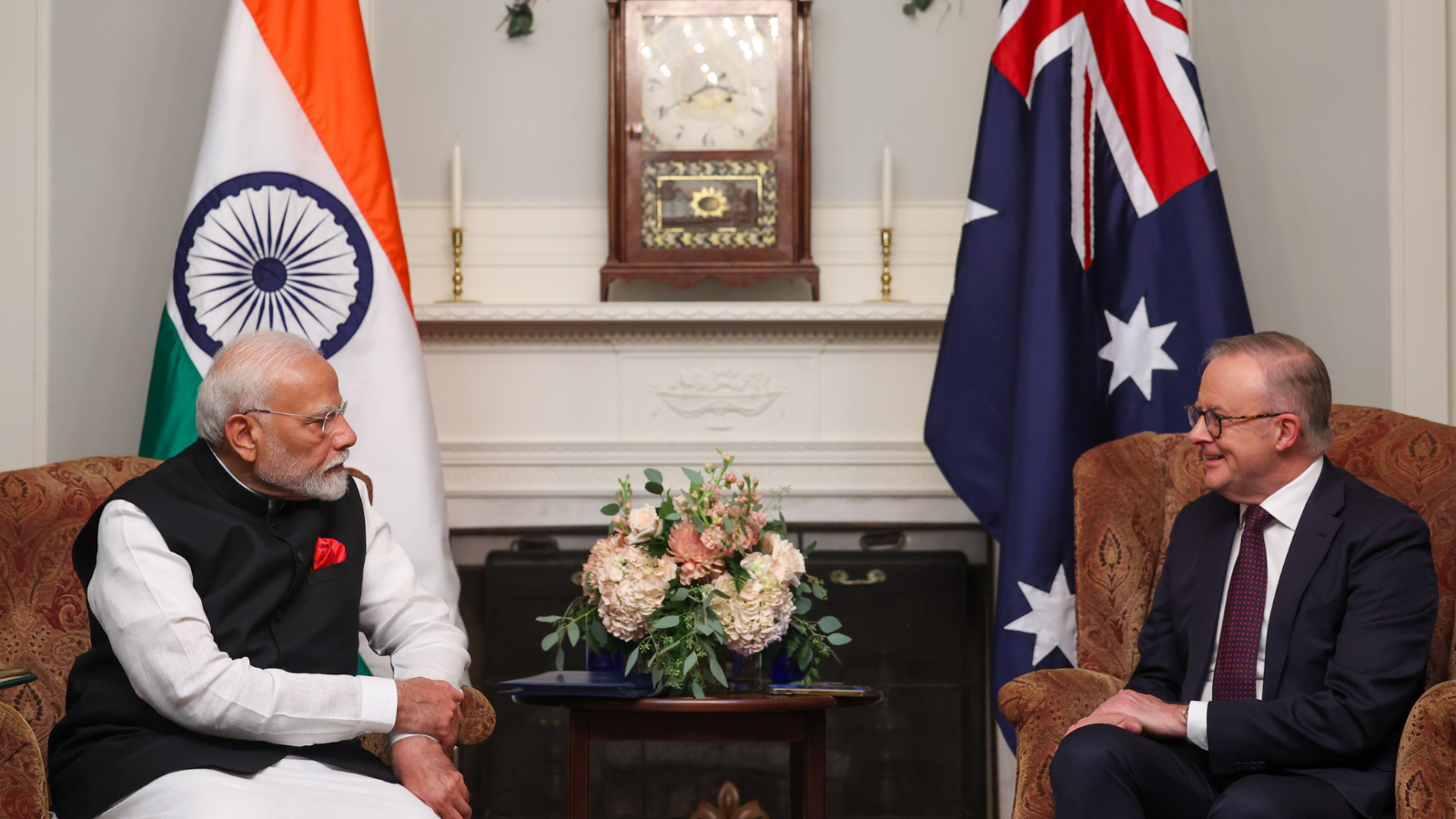
Prime Minister Narendra Modi’s recent visit to Australia resulted in several key agreements and investments, marking a transition in the bilateral relationship from discussions about potential to tangible outcomes. The visit highlighted growing economic, educational, and cultural ties between the two nations.
AustralianSuper, Australia’s largest superannuation fund, announced a A$500 million investment in Mumbai-based National Investment and Infrastructure Fund, bringing its total holdings in India to A$3.3 billion. This investment reflects confidence in India’s infrastructure transformation, particularly in western India.
Two-way trade between Australia and India now exceeds A$50 billion, supported by the Australia-India Economic Cooperation and Trade Agreement (ECTA). Since January, all Indian goods exports to Australia have become tariff-free, enhancing the competitiveness of Indian exporters. ECTA has also driven a 58% increase in Indian service exports to Australia since its implementation.
Energy cooperation was a key focus, with both prime ministers issuing a joint statement on Energy Security. The statement strengthens cooperation on reliable energy supplies and paves the way for Australian uranium exports to India exclusively for peaceful purposes under International Atomic Energy Agency safeguards. Australia holds nearly one-third of the world’s known uranium resources and is a major supplier of critical minerals for the energy transition.
In education, eight Australian universities committed to establishing campuses in India. The University of Western Australia will set up its first Indian campus in Mumbai, while Deakin University and the University of Wollongong will establish campuses in Gujarat’s GIFT City. These moves reflect confidence in India’s educational sector and western India’s role as a hub for commerce and talent.
Sports collaboration also advanced, with both sides agreeing to a Sports Collaboration Roadmap covering sports science, major-event delivery, and capability development. As India pursues hosting the 2036 Olympics, opportunities for collaboration are expected to grow. The G’Day-Namaste festival later this year will showcase Australian business, culture, and sport across India, culminating in an Australia-India Sports Summit in Mumbai.
Cultural ties were strengthened through recognition of the Indian Film Festival of Melbourne’s contribution to Indian cinema and the announcement of Silkyara 41, a co-production between Aamir Khan Productions, Mind Blowing Films, and Kabir Khan Films. These initiatives underscore close cultural connections and further collaboration under the bilateral Co-Production Agreement.
The people-to-people link remains central to the partnership. Over one million Australians now claim Indian heritage. In 2025, more than 140,000 Indian students studied in Australia, many from western India, and over one million trips were made between the two countries. ECTA has also provided additional opportunities for skilled professionals to live and work in both nations.