Modi, Netanyahu Review Strategic Ties and West Asia in Phone Call
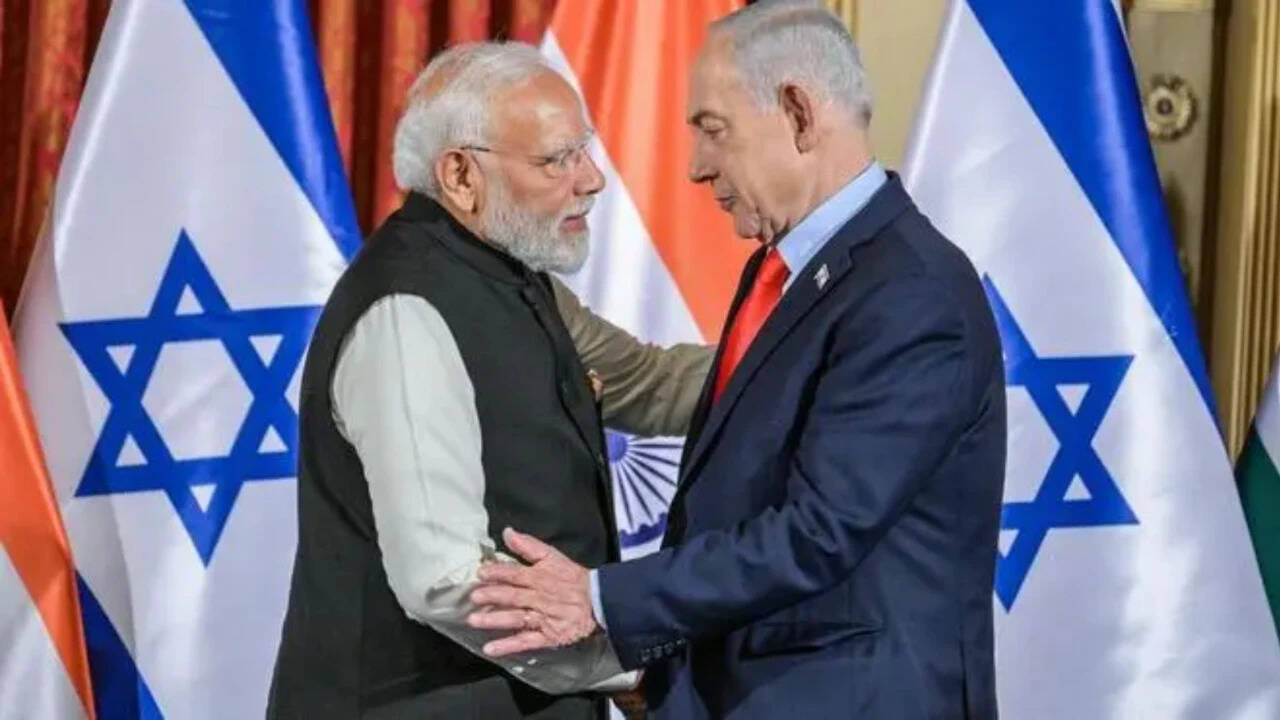
Prime Minister Narendra Modi received a telephone call from Israeli Prime Minister Benjamin Netanyahu on Thursday. The two leaders reviewed the progress of the India-Israel special strategic partnership and exchanged views on the current situation in West Asia, according to an official statement.
In a post on X, Modi said the India-Israel Special Strategic Partnership "continues to go from strength to strength." The government statement said both leaders "reaffirmed their commitment to further strengthening the bilateral cooperation across various sectors for the mutual benefit of both countries."
The call comes at a time when Israel faces increasing international criticism over its military offensive in Gaza, which was launched in response to the October 7 attack by Hamas that killed around 1,200 people in Israel. Israel's subsequent campaign has resulted in tens of thousands of Palestinian deaths, drawing condemnation from many nations and growing support for the Palestinian cause.
Even in the United States, Israel's principal ally, significant sections of opinion have turned against the Netanyahu government. Several traditional supporters of Israel have expressed unease over the conduct of the war and the humanitarian crisis in Gaza.
For India, the relationship with Israel is a careful balancing act. New Delhi has historically supported the Palestinian cause and continues to call for a two-state solution. At the same time, India has deepened defence and strategic cooperation with Israel over the past decade, viewing it as a key partner in counter-terrorism and military technology.
Modi's visit to Israel in 2017 was the first by an Indian prime minister, and he had addressed the Israeli Parliament, asserting that India would stand with Israel in its fight against terrorism. That stance, along with the recent timing of a Modi visit to Israel just before an Israeli-US strike on Iran, has drawn criticism from opposition parties, who accuse the government of tilting towards Israel.
However, the government appears undeterred. Israel has emerged as a major supplier of sophisticated weaponry to India and has provided assistance during conflicts. The two countries have also expanded cooperation in areas such as cyber security, agriculture, and water management.
The leaders did not release details of their discussion on West Asia. The region remains volatile, with ongoing conflict in Gaza, tensions with Iran, and broader instability affecting several countries.
The reaffirmation of the strategic partnership signals that India intends to maintain its ties with Israel despite international pressures. It also underscores the complex geopolitical landscape in which India operates, seeking to balance its traditional support for Palestine with its growing partnership with Israel.
Analysts note that India's position on West Asia has been consistent in its public calls for restraint and dialogue, but the practical cooperation with Israel has grown significantly. The latest phone call is likely to sustain this trajectory.
Observers will watch whether India uses its influence to encourage de-escalation in the region. Both leaders expressed commitment to continued cooperation, but no immediate outcomes were announced.
The call also took place against the backdrop of changing dynamics in the Middle East, including efforts to normalise relations between Israel and some Arab nations, and ongoing tensions with Iran. India's growing economic and strategic interests in the region make stability a key priority for New Delhi.
While the specifics of the West Asia discussion were not shared, it is clear that the two prime ministers are maintaining close communication. The statement said they exchanged views, indicating consultation rather than a detailed policy announcement.
For now, the India-Israel partnership remains strong, with both sides focusing on mutual benefits. Critics at home, however, continue to question the government's approach, arguing that it could undermine India's traditional credibility with the Arab world and the Palestinians.
The phone call thus illustrates India's careful navigation of a volatile region, seeking to maintain diverse relationships while advancing its strategic interests.