Merchant Ship Struck Near Strait of Hormuz: One Killed, Three Injured, Iran Says
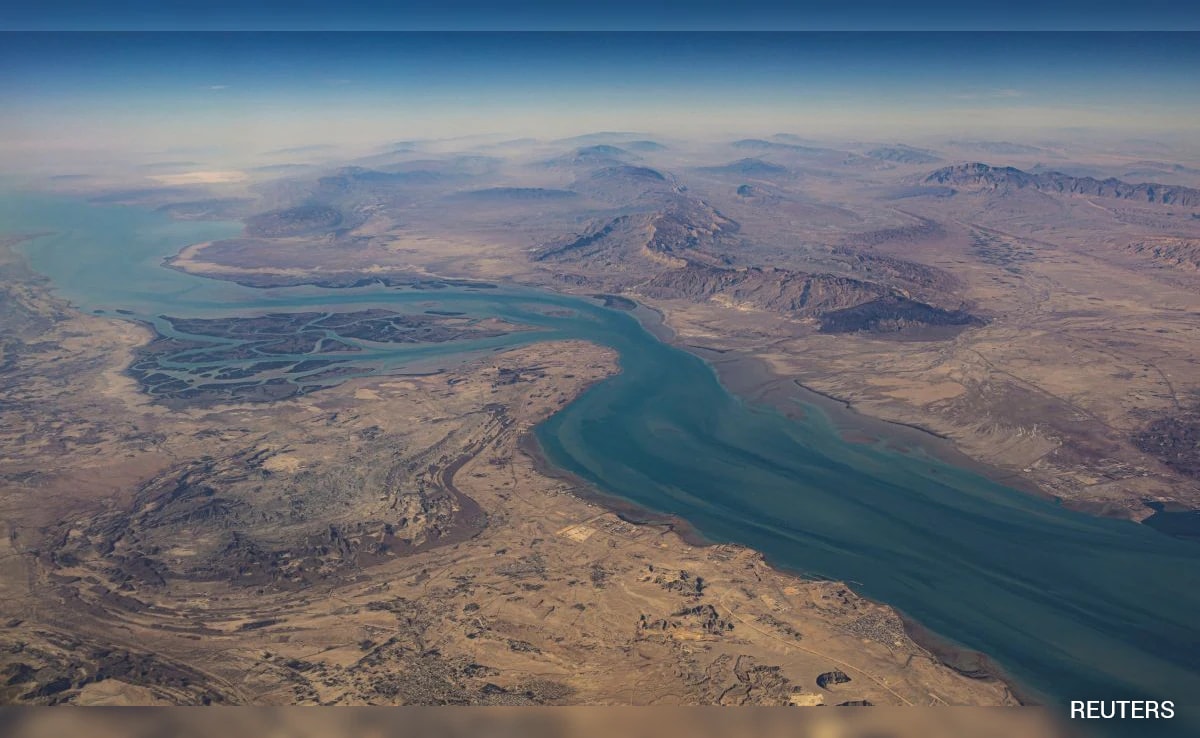
A merchant vessel was struck early on Sunday in the waters off the coasts of Hengam and Qeshm islands near the Strait of Hormuz, killing one person and injuring three, according to Iranian officials.
"A merchant vessel was struck around 5:00 am (0130 GMT) this morning off the coasts of Hengam and Qeshm islands. One person was killed and three others were injured," Qeshm city governor Amir Teymouri said, according to Iranian state television. He did not say what caused the strike, what kind of vessel was involved, or which flag it flew.
Several explosions were reported overnight around Qeshm, the largest island in the strait. Those reports could not be independently verified, and no group or government had claimed responsibility by Sunday evening.
The incident comes a day before a scheduled meeting between Iran and Gulf states in Oman, which also borders the strait, to discuss the waterway whose traffic has been severely restricted since the conflict began.
The Strait of Hormuz is a narrow channel connecting the Persian Gulf to the Gulf of Oman and the open ocean. At its narrowest it is roughly 33 kilometres wide, and it carries a large share of the world's seaborne crude oil as well as a substantial part of its liquefied natural gas. Any disruption there is felt quickly in energy markets far beyond the region.
Under the United Nations Convention on the Law of the Sea, ships of all countries enjoy the right of transit passage through straits used for international navigation. Iran signed the convention but has not ratified it, and the two sides disagree sharply over how its rules apply here. Washington and several other governments describe Hormuz as an international waterway; Tehran says its security and sovereignty concerns justify restrictions.
Iran says it shut the route after attacks by the United States and Israel began on 28 February, which it describes as the start of the war. The waterway had been open and unobstructed before the conflict. Tehran now requires vessels to obtain authorisation before passing through, and says it is considering a mechanism to charge service fees.
Vessels that do not comply have repeatedly come under attack. Iran is widely held responsible for many of those strikes, while the United States has carried out intermittent bombing raids along the Iranian coast in an effort to challenge Tehran's control of the strait. Accounts given by both sides of individual incidents have often been difficult to confirm, and journalists have only limited access to the area.
The strait has become the central flashpoint in the six-month conflict between Iran and the United States. Control over the passage affects not only the two countries directly involved but also the Gulf states, shipping companies, insurers and energy importers across Asia and Europe that depend on the route.
Sunday's casualties add to a toll that has been hard to verify independently. Neither Iranian authorities nor the United States had issued further statements about the strike by Sunday evening, and it was not immediately clear whether the vessel's remaining crew had been able to reach safety or whether the ship itself was still afloat.