LeT Militant Killed in Jammu and Kashmir; Security Forces Recover Arms and Explosives
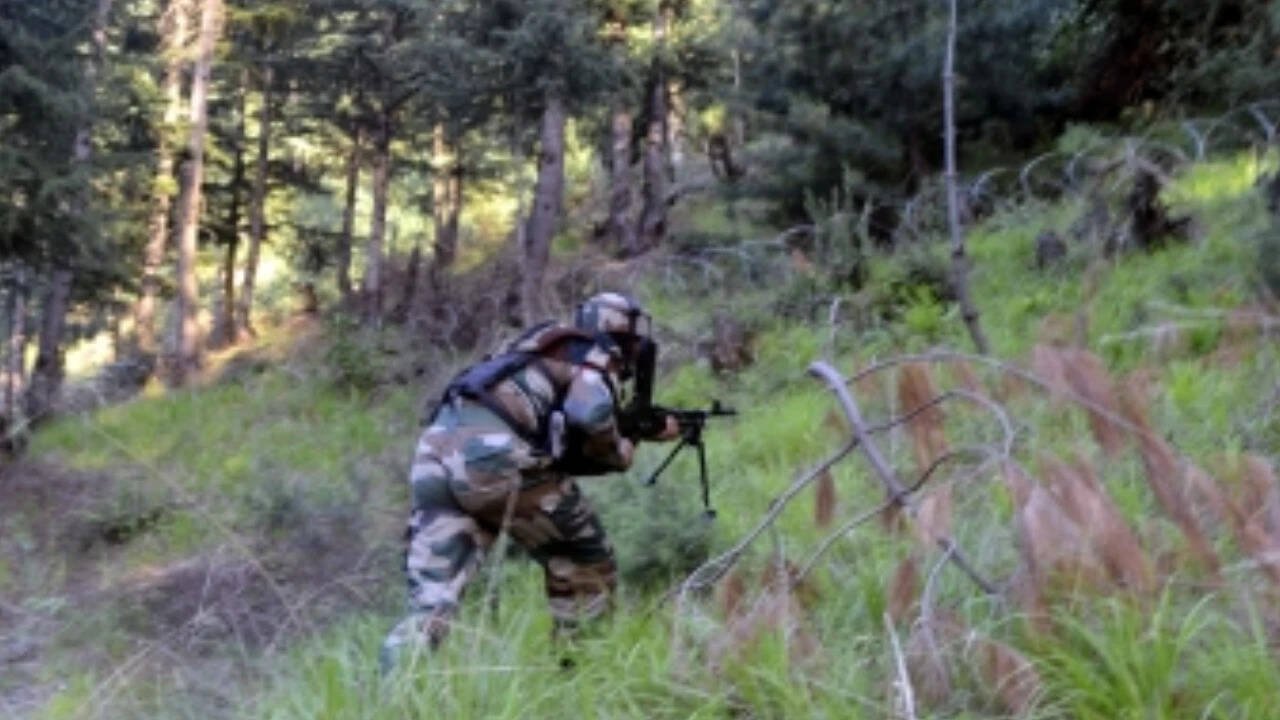
Security forces in Jammu and Kashmir have killed a man identified by officials as Mohammad Asif, described as a member of the banned organisation Lashkar-e-Taiba (LeT). His body was recovered from the site of the operation along with material that officials called "war-like stores".
The term "war-like stores" is used by Indian security agencies to describe military-grade material — typically automatic rifles, ammunition, grenades, explosives and components used to assemble improvised explosive devices (IEDs). Officials did not release further details about the quantity of the material recovered, the place of the operation, or any target that investigators believe may have been planned.
Lashkar-e-Taiba is a militant organisation that has operated from Pakistani territory since the early 1990s. India banned the group in 2001, and the United Nations Security Council listed it as a terrorist organisation in 2005. It has been held responsible for a number of attacks in India, including the 2008 assault on Mumbai.
Such operations in Jammu and Kashmir are usually carried out jointly by the Indian Army, the Central Reserve Police Force and the Jammu and Kashmir Police, based on specific intelligence inputs about the presence of armed men. Officials have in recent years reported a decline in the number of violent incidents in the Union Territory, but search-and-cordon operations, encounters and weapons recoveries continue in both the Kashmir valley and the hill districts of the Jammu region.
The conflict has taken a heavy toll on all sides. Security personnel, militants and civilians — including migrant workers, members of minority communities and political workers — have been killed in violence over the past three decades. Thousands of families, particularly in the Kashmir valley, have also been displaced or lost livelihoods because of the unrest. This wider human cost is often missing from brief reports of individual operations.
Deaths during security force operations are governed by specific procedures in India. Guidelines issued by the National Human Rights Commission, along with directions of the Supreme Court, require that such deaths be investigated — with a first information report registered, a post-mortem examination conducted and, in the case of police operations, a magisterial inquiry held. The family of the deceased is also to be informed.
The body of a person killed in an operation is normally identified and a post-mortem completed before it is handed over to relatives. Officials have not said whether these steps have been completed in this case, or when the body will be released.
Reports of encounters in Jammu and Kashmir rest largely on official accounts, because access to operational sites is restricted and independent verification is rarely possible. Readers should treat the details released so far — the identity of the deceased, his affiliation and the nature of the material recovered — as claims made by the security establishment, which may be supplemented or revised as more information becomes public.
The killing is likely to be cited by the government as evidence of continued pressure on militant networks in the region. It also adds to the record of violence that successive administrations in Jammu and Kashmir have promised to end through a combination of security operations, development spending and political outreach — a combination whose results remain contested.







