Kishan Reddy calls for indigenous EV manufacturing, critical mineral self-sufficiency

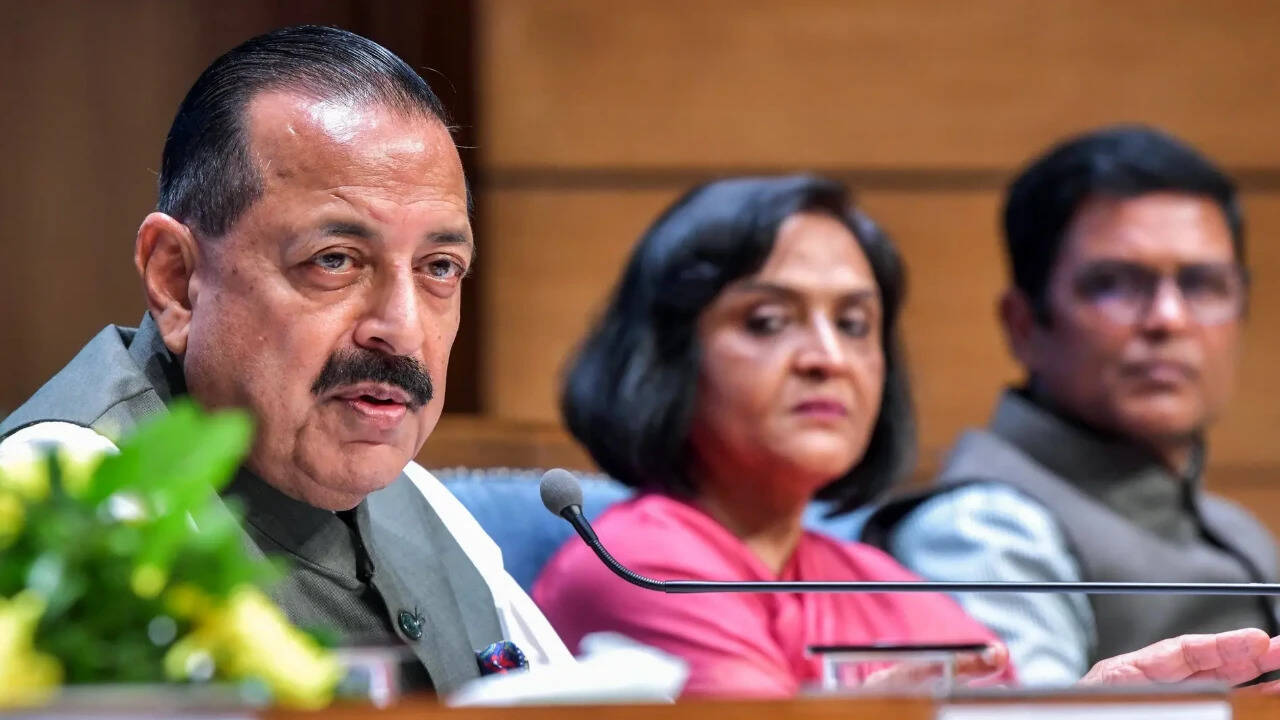
Union Coal and Mines Minister G. Kishan Reddy on Sunday emphasised the need to scale up indigenous manufacturing in the electric vehicle (EV) and allied sectors, while underscoring that India must achieve self-sufficiency in critical minerals used by the industry. He was speaking at the unveiling of KETO Motors' commercial bus in Hyderabad, which he flagged off along with Telangana State Road Transport Corporation (TGSRTC) Vice-Chairman and Managing Director Y. Nagi Reddy. Venkatesh Challa, Director of KETO Motors Limited, was also present at the event.
The Minister said India faced a supply issue for these minerals after Operation Sindoor, as China, from where they are imported, disrupted supplies for up to eight months. In order to achieve self-sufficiency, the National Critical Mineral Mission was launched with an outlay of ₹34,000 crore. The mission is aimed at ramping up exploration, mining, processing and recycling of critical minerals within the country, while also supporting overseas acquisitions of mineral assets to reduce import dependence.
"Critical minerals such as lithium, cobalt, nickel and copper, which will serve as the backbone for future sectors like electric vehicles, solar panels, semiconductors, defence and AI, hold strategic importance comparable to oil," Mr. Reddy said. He pointed out that the Government of India, along with other stakeholders, is acquiring mining blocks in countries where these minerals can be mined and processed for India.
The Union Minister reiterated full support for the electric vehicle sector, saying electric mobility is not merely an alternative to petrol and diesel vehicles. "It is paving a strong path for the country's energy security, pollution control, import reduction and technological self-reliance," he said.
Touching upon KETO Motors' progress, he said, "The success achieved by KETO Motors stands as a testament to indigenous capability. Let us hope that KETO Motors continues to contribute significantly to the nation's economic growth and employment generation by developing eco-friendly transportation systems through advanced research in the future."
Mr. Nagi Reddy, speaking on the occasion, said that the only way to address traffic congestion caused largely by the massive number of private vehicles was to improve public transport, including buses. Under the PM eDrive scheme, as many as 800 buses would join the TGSRTC fleet this December, and another 1,400 buses would be added the following December under the gross cost contract model. He added that in the coming years, very few internal combustion engine (ICE) buses would remain in the fleet.
The PM eDrive scheme is a central government initiative to accelerate the adoption of electric vehicles across the country. The addition of these buses is expected to enhance the eco-friendliness and reliability of public transport in Telangana. The Minister's remarks come at a time when India is actively seeking to reduce its dependence on imported critical minerals and boost domestic capabilities in advanced manufacturing, as global demand for these resources is projected to surge in the shift towards clean energy.