🏠 News Empire
india

Keralam dengue risk may rise 20% by 2040 as climate change shifts monsoon: IITM study

Published on: 16 Sep 2026, 01:51 PM
Keralam dengue risk may rise 20% by 2040 as climate change shifts monsoon: IITM study

Dengue in Keralam follows a sharply seasonal pattern, and a changing climate could make outbreaks more frequent and more intense, according to a study by the Centre for Climate Change Research at the Indian Institute of Tropical Meteorology (IITM), Pune.

The study, titled 'Climate-informed dengue prediction and future risks under a changing monsoon climate in Keralam', found that nearly 60% of the State's dengue cases are reported during the southwest monsoon, from June to September, closely mirroring the State's rainfall cycle. Case numbers begin to climb in May and peak in June and July. It was published in GeoHealth, a peer-reviewed, open-access journal.

The research was carried out with experts from the Department of Atmospheric and Space Sciences at Savitribai Phule Pune University; the ICMR-National Institute of Translational Virology and AIDS Research, Pune; the School of Public Health at the Kerala University of Health Sciences (KUHS); Government Medical College, Thrissur; and KUHS.

Rainfall, humidity and the El Niño-Southern Oscillation (ENSO) — a recurring shift in Pacific Ocean temperatures that influences weather worldwide, including India's monsoon — were identified as the main drivers of transmission. Locally, warmer pre-monsoon temperatures of 30.5°C to 32.5°C, moderate humidity of 66% to 79%, and monthly monsoon rainfall of about 180 mm to 450 mm were found to favour higher dengue incidence.

Simulations using different machine-learning models suggest that dengue risk in Keralam could rise by 16% to 20% during 2021-2040, and by up to 113% by 2081-2100 under low- to high-emission pathways. Such projections depend on the emissions trajectory the world follows, the assumptions built into each model and the quality of available data. They are intended to guide long-term planning rather than to predict a fixed number of cases.

The inclusion of ENSO as a predictor is a key contribution of the study, the authors say. Both El Niño and La Niña were found to influence dengue risk through their regional climate effects, though La Niña events — generally associated with cooler and wetter conditions — were linked to relatively lower risk than El Niño.

Climate scientist Roxy Mathew Koll of IITM, Pune, who led the study, said the model can identify the peak and weaker phases of transmission more accurately when high-resolution climate and epidemiological data are available. Block-level data matter in Keralam, he said, because maritime and orographic influences, monsoon rainfall and its active and break phases vary across the State. The southwest monsoon, for instance, is usually stronger in the northern districts, while the southern districts receive more intense rainfall during the northeast monsoon. Changes in atmospheric pressure, temperature and relative humidity during active and break phases can affect local mosquito breeding.

Post-monsoon dengue also varied considerably from year to year, possibly reflecting differences in how monsoon rainfall is distributed across the State.

The researchers cautioned that such projections carry uncertainties. Changes in circulating dengue virus strains could trigger sudden surges in cases, while future deployment of vaccines still under development could substantially reduce risk. The model, they said, could be strengthened through better disease surveillance, improved representation of vector biology and socio-demographic factors, and continuous validation. Even so, it showed reasonable forecasting accuracy and offered region-specific insights.

Dengue is transmitted by Aedes mosquitoes, which breed in stagnant water and are sensitive to temperature and rainfall. Early warnings that flag when and where risk is likely to rise can help health authorities time vector-control measures, such as clearing breeding sites and fogging, and prepare hospitals for a surge in patients.

Mr. Koll said the same modelling approach could potentially be extended to other vector-borne diseases by including detailed temperature, rainfall and epidemiological data.


Latest in India 10
Jarange ends 20-day fast, gives Maharashtra three months to act on Maratha quota
india

Jarange ends 20-day fast, gives Maharashtra three months to act on Maratha quota

Maratha quota activist Manoj Jarange called off his 20-day hunger strike on September 17, 2026, after a Maharashtra government delegation met him in Beed district and briefed him on the steps taken so far. He has given the State three months to act on his demand for official recognition of historical gazettes that would help Marathas prove Kunbi lineage, warning of a march to Mumbai if the assurance is not honoured.

The Hindu 17 Sep 2026, 02:55 AM
Read More →
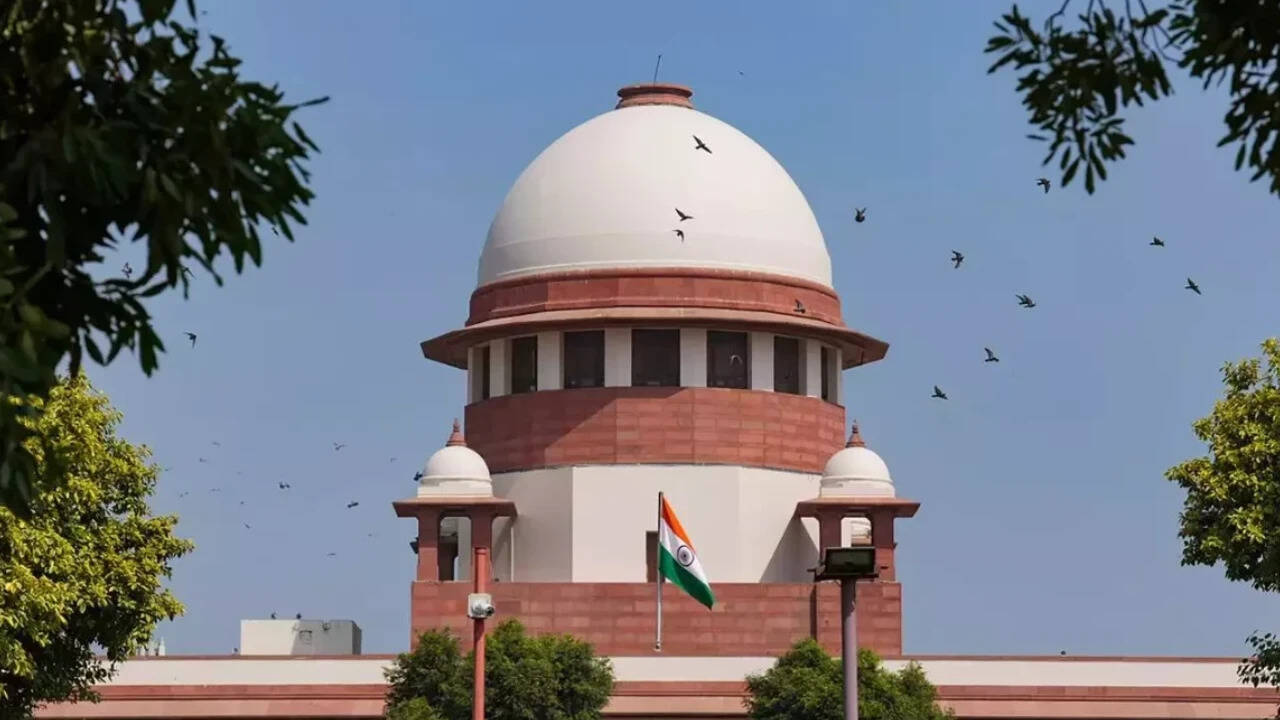
High Courts Buried Under 65 Lakh Pending Cases, Justice Delayed for Decades
india

High Courts Buried Under 65 Lakh Pending Cases, Justice Delayed for Decades

High Courts across India are burdened with over 65 lakh pending cases, with nearly 15 lakh cases pending for more than a decade. A daily wage worker from Rajasthan has been waiting for 22 years for his petition to be heard. The Supreme Court often cannot direct High Courts to expedite cases due to their constitutional independence, leaving litigants to wait indefinitely.

Times of India 17 Sep 2026, 02:56 AM
Read More →
Centre Moves Supreme Court and Tribunal to Untangle OBC Creamy Layer Knot
india

Centre Moves Supreme Court and Tribunal to Untangle OBC Creamy Layer Knot

The Union government has petitioned the Supreme Court over a judgement and asked the Central Administrative Tribunal to modify its 19 August order, in a fresh round of legal manoeuvring over the creamy layer principle for OBC reservation. Details of the judgement and the tribunal order are not yet clear from available reports. The outcome will shape how creamy layer verification applies in the case at hand.

Times of India 17 Sep 2026, 03:04 AM
Read More →
US House passes Russia sanctions Bill that could bring 100% tariffs on India
india

US House passes Russia sanctions Bill that could bring 100% tariffs on India

The US House of Representatives has passed a Bill that would let President Donald Trump impose tariffs of up to 100% on countries buying Russian oil and gas, a measure that could hit India hard. The Bill now goes to the President, even as New Delhi and Washington negotiate a preliminary trade deal. It passed 262-159, with opponents warning the law hands the President sweeping tariff powers.

The Hindu 17 Sep 2026, 03:35 AM
Read More →
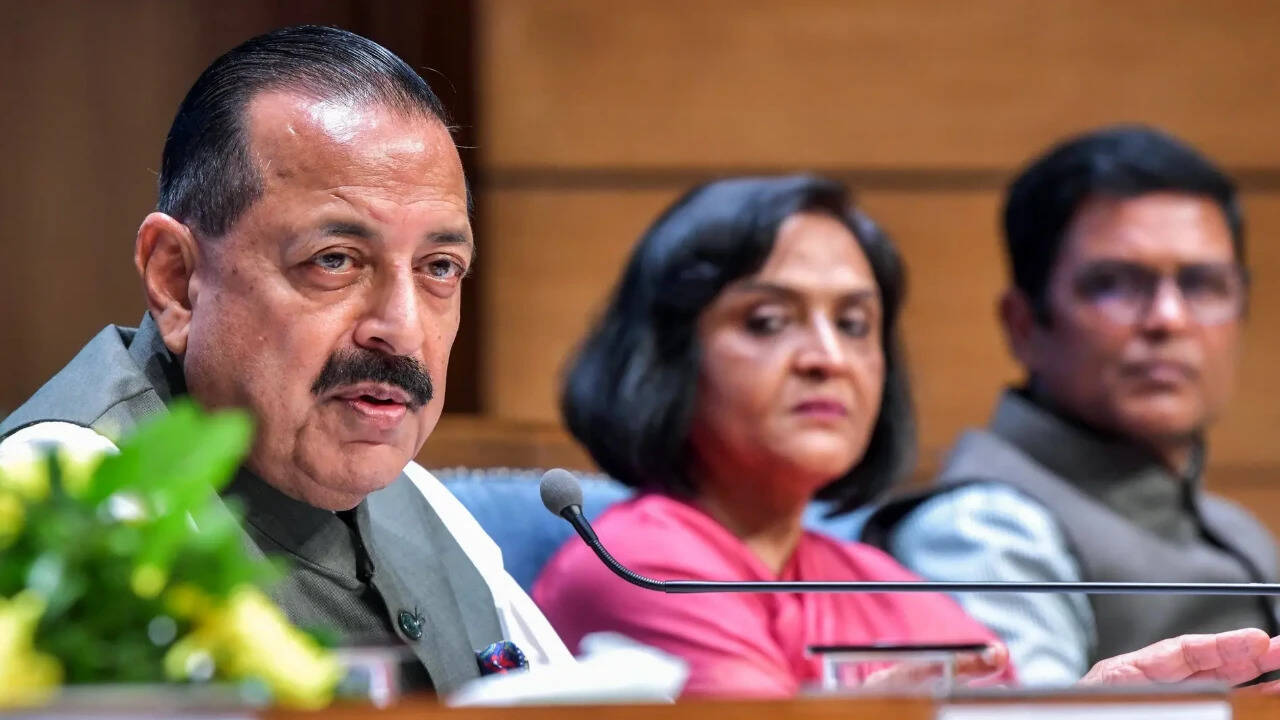
Govt offices' e-waste could fetch Rs 10,000 crore a year, says Minister Jitendra Singh
india

Govt offices' e-waste could fetch Rs 10,000 crore a year, says Minister Jitendra Singh

Union Minister of State Jitendra Singh has said that e-waste accumulated in government offices could fetch around Rs 10,000 crore a year if disposed of through organised channels. He made the remarks while launching a monitoring portal for Special Campaign 6, a cleanliness and pendency-reduction drive across departments. The figure is an indicative estimate of realisable value, not a budgeted receipt.

Times of India 17 Sep 2026, 03:42 AM
Read More →
Udhampur Encounter: Terrorists Open Heavy Fire to Break Cordon, Security Forces Retaliate
india

Udhampur Encounter: Terrorists Open Heavy Fire to Break Cordon, Security Forces Retaliate

An encounter broke out in the forested Majalta area of Jammu and Kashmir's Udhampur district after suspected terrorists opened heavy fire to break a security cordon on Thursday morning. The joint operation by the Army, police and CRPF began on Wednesday night following inputs about the movement of suspected terrorists. Officials said the exchange of fire was continuing, with reinforcements rushed to the spot, and no casualties have been confirmed so far.

The Hindu 17 Sep 2026, 03:48 AM
Read More →
After 17 Years, Meenakshi Temple Consecrated: Thousands Gather in Madurai for Kumbabishekam
india

After 17 Years, Meenakshi Temple Consecrated: Thousands Gather in Madurai for Kumbabishekam

The Sri Meenakshi Sundareswarar Temple in Madurai held its kumbabishekam on Thursday, the first consecration at the temple in 17 years, with thousands of devotees gathering to witness the ritual. The ceremony was performed around 7.40 a.m., with police and district officials making extensive crowd-management arrangements, including a colour-coded pass system and designated entry and exit points.

The Hindu 17 Sep 2026, 03:51 AM
Read More →
→ View All India News